Saad Ullah
⬤ U.S. consumer prices have risen about 24.21% since 2021, averaging roughly 4.4% per year, according to new CPI data. The steady climb shows how inflation has compounded over time rather than appearing as a short-term spike - and why it continues to fuel debate over Federal Reserve policy.
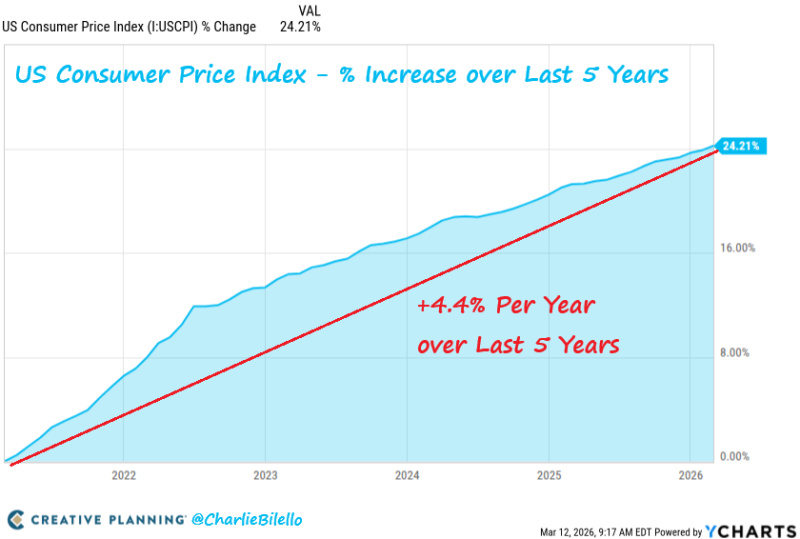
⬤ The CPI trajectory between 2021 and early 2026 shows a sharp initial surge followed by a slower but persistent upward trend. By early 2026, cumulative price growth had exceeded 24%, well above the Fed's long-term 2% annual target. That gap matters: five years of above-target inflation meaningfully erodes household purchasing power across goods and services.
The five-year inflation trajectory indicates that average price growth has run above the Fed's 2% benchmark for an extended period, keeping monetary policy debates firmly in play.
⬤ Sustained inflation above the Fed's benchmark has kept interest rate timing front and center for markets and policymakers alike. Price pressures influence everything from bond yields to equity valuations, and the longer CPI stays elevated, the more complex the case for rate cuts becomes. Recent data adds to that complexity - U.S. Inflation Hits 3%, Critics Question CPI Accuracy examined whether official measurements fully capture real-world price trends.
⬤ Goods prices have been a particular driver of recent readings. US Inflation Accelerates as Goods Prices Jump reported year-over-year CPI rising to around 2.6%, driven by physical goods rather than services. And as Inflation Holds Above Fed Target as CPI and PCE Flatten noted, both major price gauges remain stuck above the Fed's goal - leaving rate cut expectations uncertain heading into the rest of 2026.
 Saad Ullah