Usman Salis
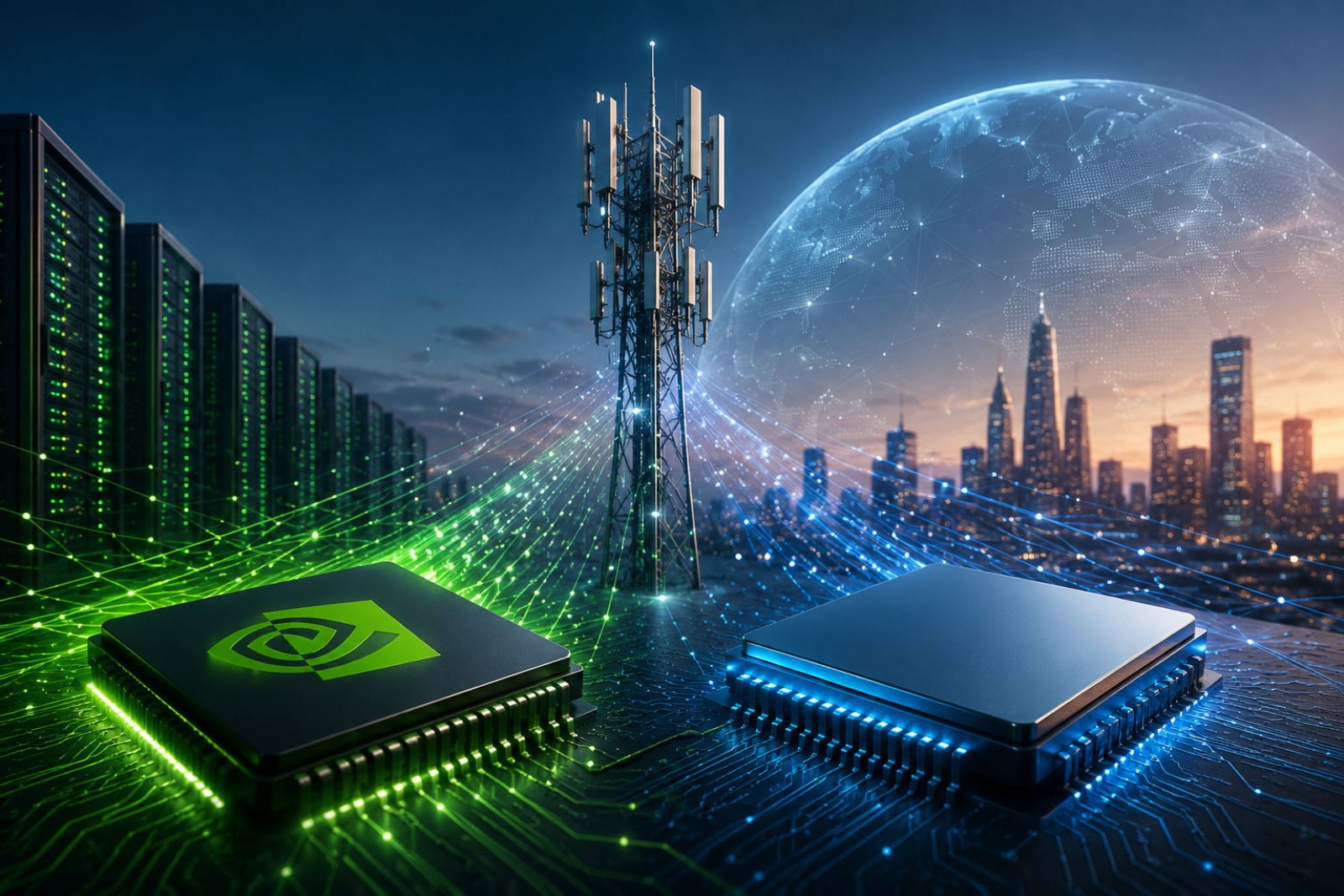
The deal gives Nvidia a strategic stake in the Finnish telecom giant and immediately triggered one of Nokia’s strongest stock rallies in years. At first glance, the transaction looks like a traditional strategic investment.
But inside the AI sector, many analysts believe something much larger is happening: the next stage of the AI boom may no longer be driven only by GPUs - it may be driven by the networks connecting them.
AI Is Becoming a Networking Problem
For the past two years, Nvidia dominated global markets through AI chips, hyperscale data centers, and explosive compute demand. Now the bottleneck is shifting. As AI models grow larger and inference workloads expand worldwide, the challenge increasingly becomes:
- moving AI data faster,
- reducing latency,
- scaling edge AI systems,
- and building telecom-grade AI infrastructure.
That is where Nokia suddenly becomes strategically important. The company spent years rebuilding itself around:
- optical networking,
- cloud-native telecom systems,
- private 5G infrastructure,
- and next-generation network architecture.
In the AI era, those capabilities may become critical.
Why Markets Reacted So Aggressively
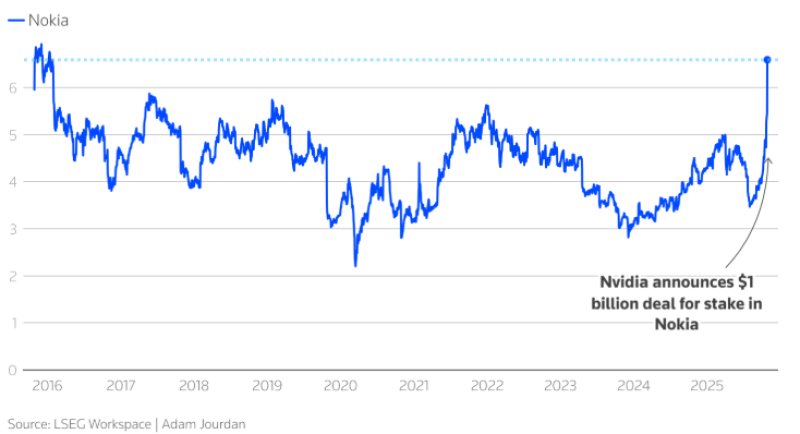
The chart shows Nokia stock breaking out immediately after the Nvidia announcement, reaching levels not seen in nearly a decade. That reaction reflects a growing market belief that telecom infrastructure companies could become unexpected beneficiaries of the AI spending cycle.
For years, Nokia was largely viewed as a mature telecom equipment business operating in a slow-growth environment. Now investors are reconsidering that thesis. Massive AI systems require enormous amounts of data to move between:
- GPUs,
- hyperscale data centers,
- edge devices,
- and enterprise networks.
That creates a major opportunity for companies specializing in high-throughput networking and low-latency infrastructure.
The Bigger Trend Behind the Deal
The Nvidia-Nokia partnership reinforces a broader shift happening across the technology sector:
AI is becoming physical infrastructure.
The first phase of the AI rally centered on models and semiconductors. The second phase focused on cloud providers and hyperscalers. The next phase may center on the companies enabling AI traffic, distributed inference, telecom-scale networking, and sovereign AI systems. That could place networking firms back at the center of one of the world’s largest technology investment cycles.
The Hidden Layer of the AI Boom
Investors are now watching whether Nvidia expands deeper into:
- AI-RAN systems,
- telecom AI infrastructure,
- sovereign AI projects,
- edge AI deployments,
- and AI-native networking architecture.
If that trend accelerates, companies once considered “legacy telecom” firms may become core AI infrastructure plays. And Nokia could become one of the clearest early examples of that transformation already beginning.
 Usman Salis