Victoria Bazir
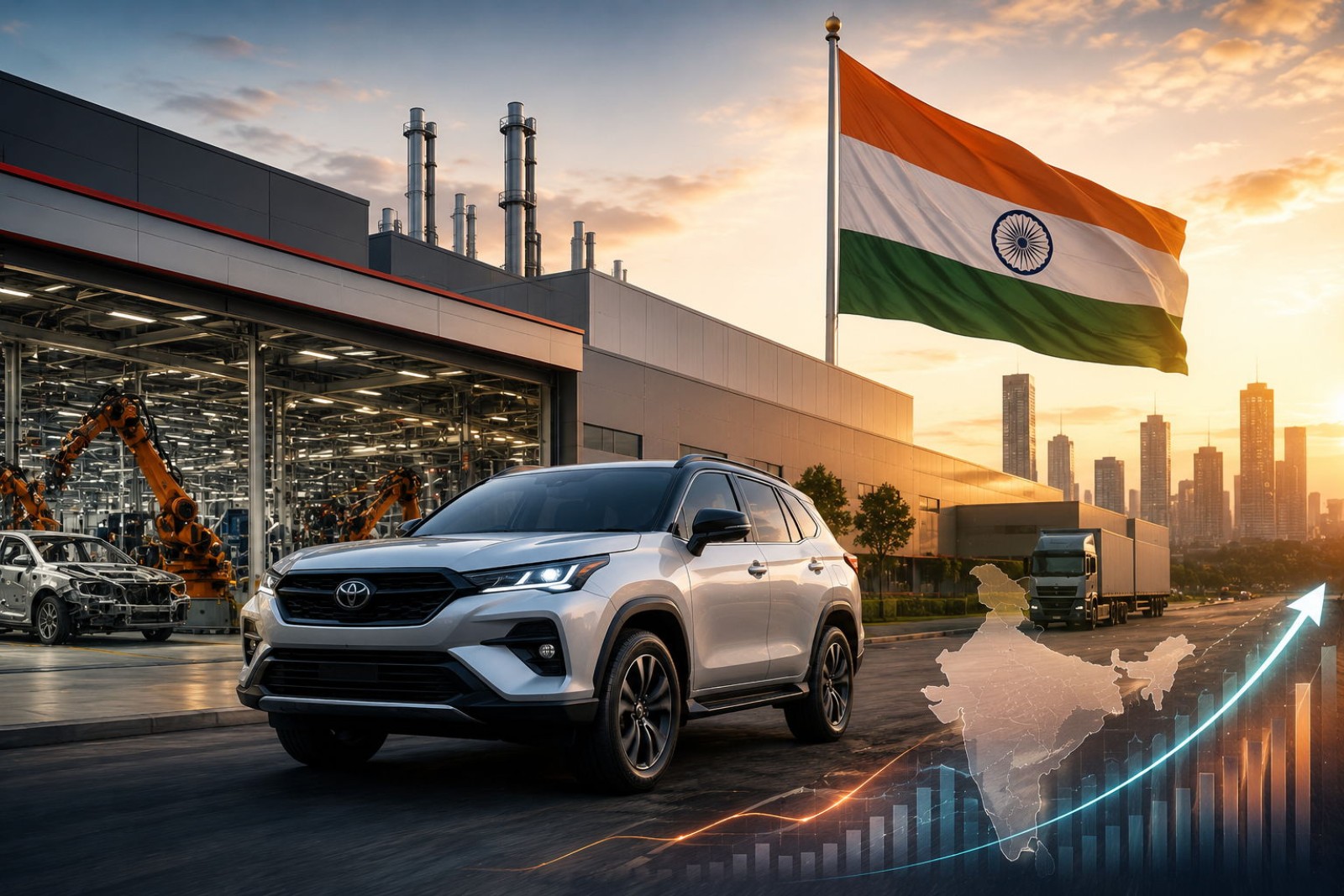
The new facility, expected to become operational by 2029, will reportedly produce up to 100,000 vehicles annually and focus on a new SUV platform for both the Indian market and exports. The project will also create around 2,800 direct jobs and include full-scale production operations such as:
- stamping,
- welding,
- painting,
- and final vehicle assembly.
But for global markets, the bigger story is not simply another factory expansion.
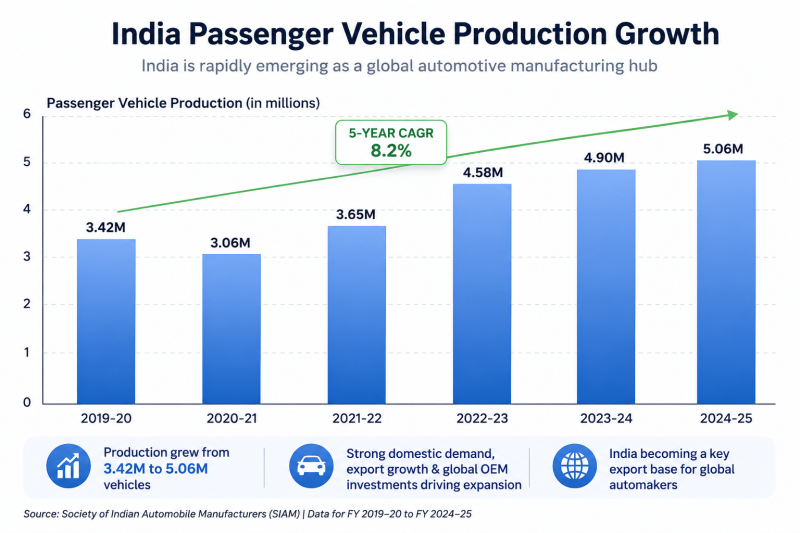
It is the accelerating transformation of India into one of the world’s most important automotive manufacturing hubs.
India Is Becoming the Auto Industry’s Next Strategic Battlefield
For years, China dominated discussions around automotive production scale and EV supply chains. Now global automakers are increasingly diversifying manufacturing footprints toward India.
The reasons are becoming difficult to ignore:
- rapidly growing domestic demand,
- lower production costs,
- expanding infrastructure,
- government manufacturing incentives,
- and rising geopolitical pressure to diversify supply chains away from single-country dependence.
Toyota’s latest investment fits directly into that shift. Instead of viewing India purely as a local sales market, major automakers increasingly see the country as:
- a global export base,
- a long-term manufacturing hub,
- and a strategic alternative within global automotive supply chains.
SUVs Continue Dominating Global Demand
Another key signal from the announcement is Toyota’s continued focus on SUVs.
The company’s new India-built platform is expected to target both domestic consumers and export markets, reinforcing how SUVs remain one of the strongest segments globally despite slowing growth in some traditional auto categories. That trend has become particularly important in emerging markets, where rising middle-class demand increasingly favors:
- larger vehicles,
- premium features,
- and hybrid-capable platforms.
For Toyota, India offers a rare combination of scale, affordability, and long-term consumption growth.
Why Global Investors Are Watching India More Closely
Toyota’s expansion comes amid a broader wave of international manufacturing investment flowing into India across:
- automotive,
- semiconductors,
- electronics,
- and industrial infrastructure.
Companies are increasingly repositioning supply chains around what many analysts call the “China+1” strategy - reducing dependence on a single manufacturing geography while maintaining access to Asian growth markets. India is emerging as one of the largest beneficiaries of that transition.
And unlike earlier outsourcing cycles focused mainly on low-cost labor, the new wave is increasingly centered on full industrial ecosystems:
- logistics,
- export infrastructure,
- advanced manufacturing,
- and long-term domestic demand.
The Bigger Trend Behind Toyota’s Move
Toyota’s new Maharashtra plant is not just an isolated expansion project. It reflects a deeper structural shift happening across global manufacturing.
The next decade of auto industry competition may be shaped not only by EV technology or software - but by which countries become the dominant production and export hubs of the post-China supply chain era.
And India is positioning itself to be at the center of that transition.
 Victoria Bazir