Usman Salis

After one of the most powerful recoveries in recent memory, the S&P 500 may be running out of steam. A fresh Elliott Wave analysis of the SPY ETF shows the index approaching a mature technical phase, with momentum slowing and corrective risk building heading into 2026. This does not mean the bull market is over, but a structured reset looks increasingly likely before the next leg higher takes shape.
Elliott Wave Structure Points to A-B-C Pullback Risk in Early 2026
The weekly SPY chart shows a complete first bullish cycle off the April 2025 lows, with wave counts now pointing to an unfolding A-B-C corrective sequence. The price has pushed toward the upper end of its projected range, and momentum indicators are showing early signs of peaking without breaking down entirely.
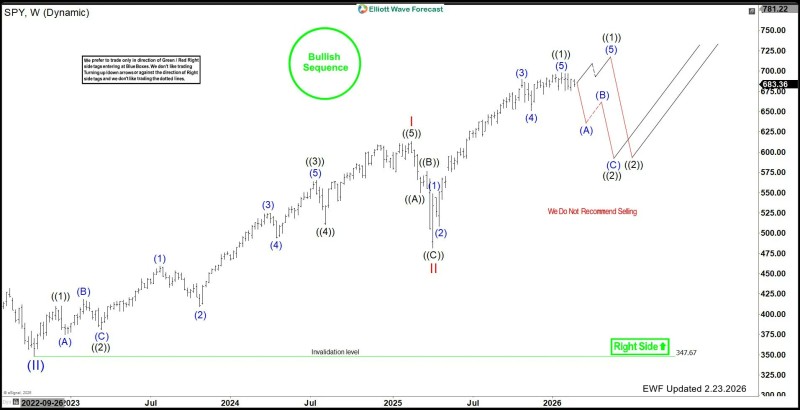
Analysts tracking the setup have noted that SPY pullbacks to key support while the broader wave structure holds, meaning recent weakness has not yet invalidated the larger uptrend. A correction within a bull market is a normal part of the cycle, and the current setup looks textbook.
Breadth Divergence and Internal Stress Add to the Case for Consolidation
What makes this technical picture more compelling is the internal market stress developing beneath the surface. Even as SPY has remained near record highs, cracks have been forming underneath. A recent report highlighted that 115+ S&P 500 stocks plunged while SPY trades near highs, a classic sign of breadth divergence that often precedes a broader pullback. When fewer stocks are holding up the index, the rally becomes fragile. At the same time, dip buying signals on the S&P 500 near recent highs suggest that short-term corrective moves are still being absorbed by buyers, keeping the larger trend intact for now.
Taken together, the technical roadmap heading into 2026 is one of caution, not panic. The wave structure anticipates a period of sideways or downward retracement before SPY sets up for its next significant advance. Investors watching the index would do well to treat any near-term pullback as a reset within a still-intact bullish cycle rather than the start of a major reversal.
 Usman Salis