Saad Ullah
The U.S. Strategic Petroleum Reserve just posted its largest weekly drawdown on record. After stabilizing through much of 2023–2025, reserve levels turned sharply lower again, with the latest decline standing out even against the historic depletion cycle that followed the 2022 energy shock.
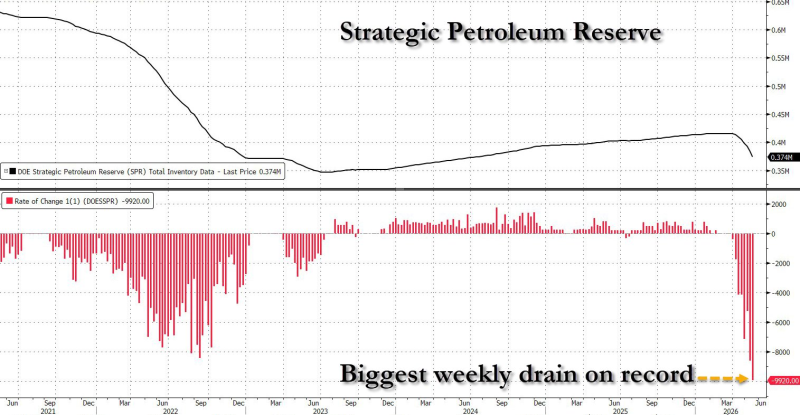
SPR inventories now sit near 374 million barrels, while the latest weekly decline approached 10 million barrels, according to the chart data. The move comes as oil prices rebound toward $100 per barrel again.
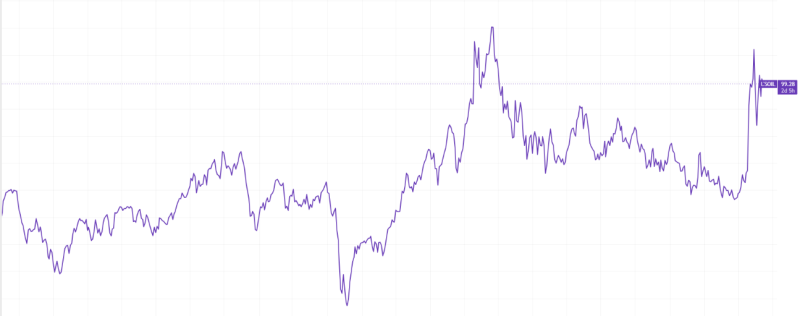
The latest chart shows crude trading near $99 after a sharp move higher from recent lows, reinforcing concerns that energy markets remain unstable despite years of reserve usage and supply management. That combination matters.
Strategic reserves are shrinking while geopolitical tensions, shipping instability and supply risks remain elevated across global energy markets. The SPR was designed as an emergency buffer during severe supply disruptions - not as a recurring market-balancing tool.
Markets largely assumed the depletion phase that followed the 2022 energy shock was over. The latest drawdown challenges that assumption. The broader issue is resilience. Strategic reserves only work as a credible backstop if governments retain enough capacity to respond to larger future disruptions. Repeated drawdowns during periods of structural tightness reduce that flexibility.
Current market pressure points include:
- geopolitical instability,
- fragile shipping routes,
- OPEC+ supply discipline,
- underinvestment in upstream production,
- and rising electricity demand tied to datacenters and AI infrastructure.
Emergency Reserves Are Becoming Part of Normal Market Management
The SPR is no longer functioning purely as emergency infrastructure. Markets increasingly view reserves as part of ongoing supply stabilization efforts during periods of elevated volatility. That changes the risk profile of the oil market itself.
A structurally smaller reserve leaves less room for policymakers to respond if another major supply shock emerges while global energy demand continues rising. Oil traders often focus on inventories, production quotas and near-term demand signals. But the larger issue may be how much buffer capacity still exists inside the system.
Strategic reserves can soften temporary shocks. They are far less effective against a market that remains structurally tight for extended periods.
 Saad Ullah