Marina Lyubimova
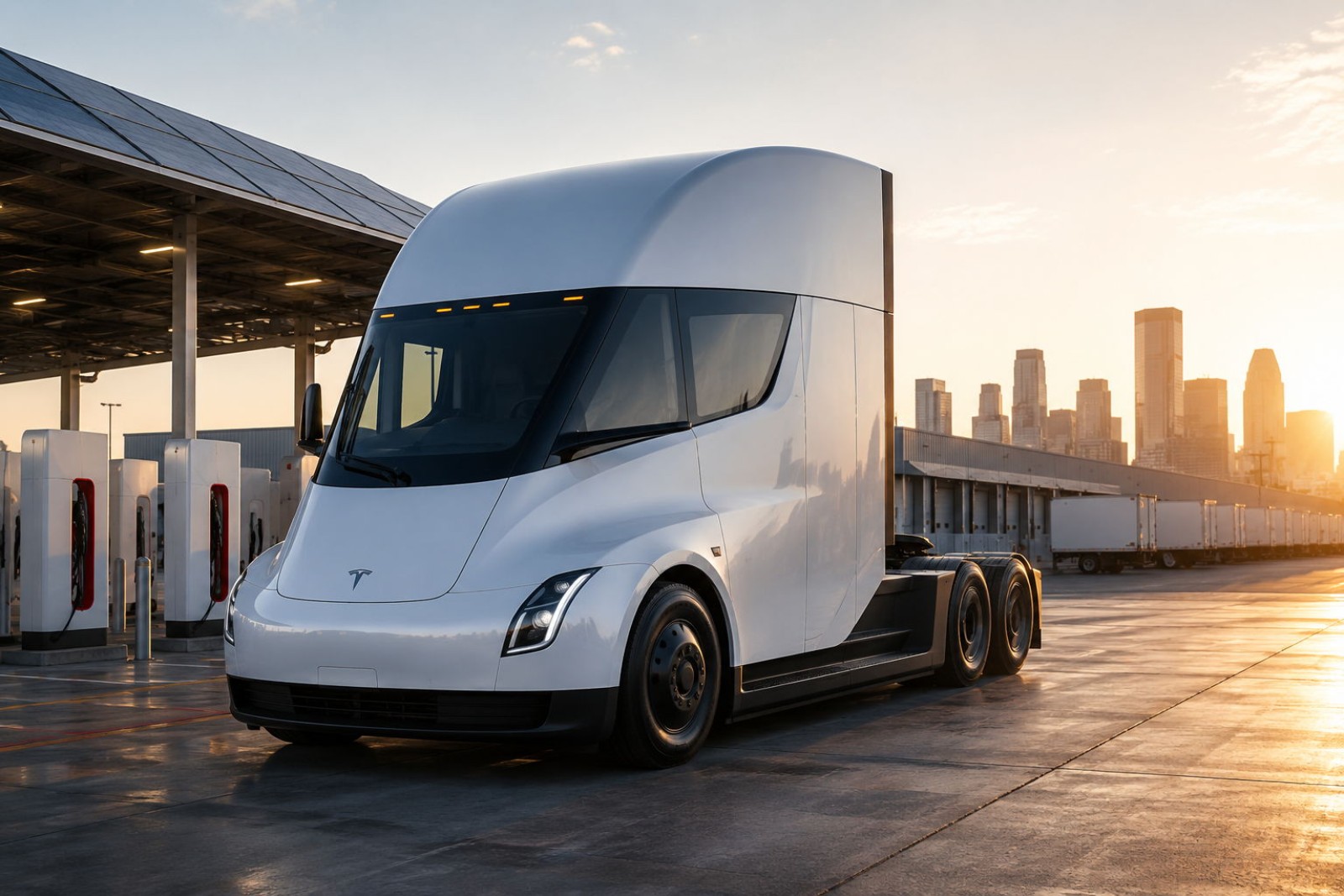
California fleets have applied for more than 1,200 Tesla Semis through the state’s incentive program, representing roughly $348 million in vehicles at current pricing. According to industry data cited by Canary Media, Tesla accounted for 965 of 1,067 voucher requests submitted during the latest California HVIP application window - more than any other heavy-duty electric truck manufacturer and more than the combined total of all zero-emission truck applications recorded in prior years of the program.
The demand spike is notable because Class 8 trucking was widely viewed as one of the hardest transport sectors to electrify. Long-haul freight routes, charging downtime, payload concerns, and tight fleet margins kept electric truck adoption limited even as passenger EV sales accelerated.
Tesla’s pricing strategy appears to be shifting that equation. The 500-mile Tesla Semi starts at around $290,000, according to California program documents and Tesla specifications, while competing electric trucks from Daimler and Volvo often exceed $400,000 despite offering substantially lower range figures. Tesla is also preparing a shorter-range version priced closer to $260,000.
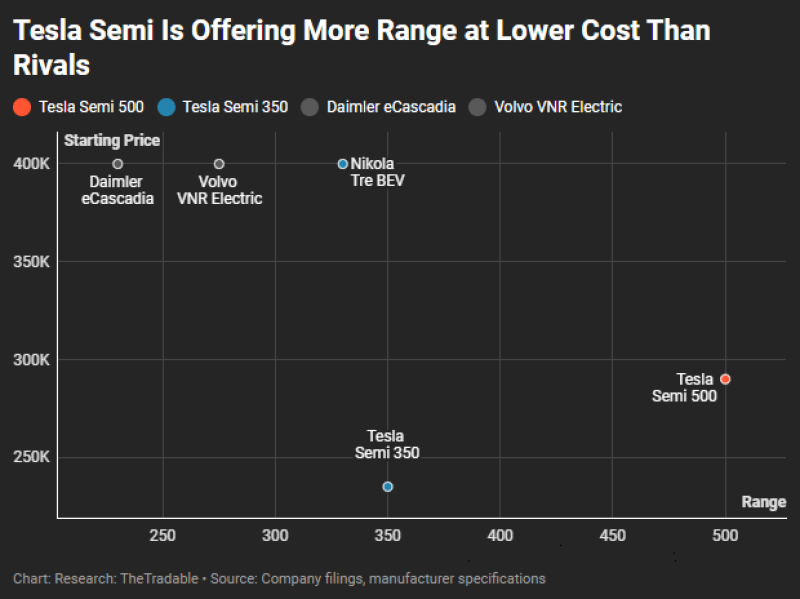
That price-to-range gap matters more in trucking than in consumer EV markets. Fleet operators optimize around utilization, downtime, and operating cost per mile rather than branding or early-adopter demand. A truck that can travel farther while reducing charging interruptions directly affects route economics and asset productivity.
Real-world pilot data is beginning to reinforce Tesla’s positioning. According to NACFE-linked reporting cited by Canary Media, PepsiCo-operated Tesla Semis achieved routes approaching 400 miles on a single charge, while one truck reportedly covered more than 1,000 miles in a 24-hour period using partial recharging cycles.
The Semi also gives Tesla an infrastructure advantage beyond vehicle sales. The company is simultaneously building out Megacharger corridors and scaling production capacity at its Nevada Semi factory, which Tesla expects to eventually reach 50,000 trucks annually. Reuters previously reported Tesla was hiring more than 1,000 workers tied to Semi production expansion.
Not everyone in the industry sees the California surge as organic market adoption. Critics have argued that Tesla benefited disproportionately from California’s clean-truck subsidy structure. The Los Angeles Times reported that roughly $165 million in state incentives had been reserved for Tesla Semi purchases, raising concerns among competing truck manufacturers about market distortion and certification standards.
Even with subsidies playing a major role, the application numbers suggest something larger may be changing inside the freight industry. Electric trucking adoption has historically been constrained by economics more than technology. Tesla’s strategy appears aimed directly at that bottleneck: longer range, lower pricing, and vertically integrated charging infrastructure arriving at the same time.
 Marina Lyubimova