Usman Salis
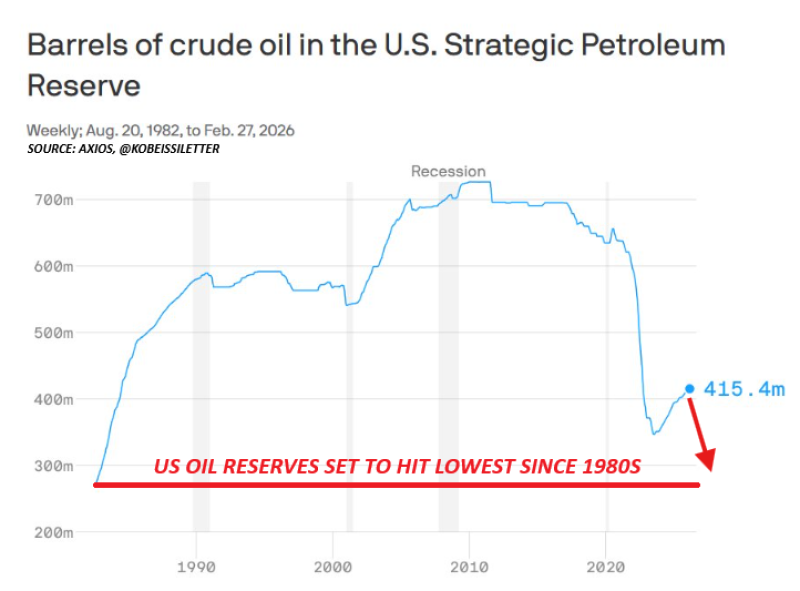
The US Strategic Petroleum Reserve is facing a dramatic drawdown that could push stockpiles to levels not seen since the 1980s. A newly announced 172-million-barrel release is set to reduce current inventories from around 415.4 million barrels to roughly 243.4 million barrels once the plan is fully executed - a drop of about 41%.
From 700M Barrels to Near Empty: How the SPR Got Here
It wasn't always like this. US crude reserves once topped 700 million barrels in the late 2000s, giving the country one of the largest emergency energy buffers on the planet. But repeated drawdowns have steadily eaten into that cushion. The sharpest decline started after Russia's invasion of Ukraine, when governments worldwide rushed to stabilize energy markets and WTI Crude Oil Crashes 12% After Strategic Reserve Shock headlines started appearing with alarming frequency. Since then, US strategic oil inventories have dropped by more than 400 million barrels.
Only 5 Days of Hormuz Supply Left for Emergencies
The numbers get more sobering when you factor in operational limits. The SPR must hold around 150 million barrels just to keep storage facilities and pipelines running smoothly. That means the projected 243.4-million-barrel level would leave only about 93 million barrels actually available for emergencies. To put that in perspective, that's less than five days of oil that normally flows through the Strait of Hormuz -- one of the world's most critical energy chokepoints. Developments like WTI Oil Near $100 After Historic 30% Intraday Reversal show how quickly supply fears can rattle markets.
Strategic reserves exist precisely to absorb shocks -- whether from geopolitical flare-ups, supply disruptions, or sudden market dislocations. With the buffer shrinking this fast, policymakers face growing questions about how much protection the SPR can realistically offer the next time a crisis hits. Events like WTI Oil Price Drops 13% in 40 Minutes After IEA Releases 400M Barrels underscore how reserve decisions can reshape market expectations almost overnight.
 Usman Salis