Eseandre Mordi
⬤ US economic growth took a visible hit as Q4 GDP was revised sharply lower, dropping to 0.7% from an initially reported 1.4%. That is roughly half the original estimate and a dramatic step down from the above-3% pace seen earlier in 2025. The revision signals that the economy slowed far more than markets anticipated heading into year-end.
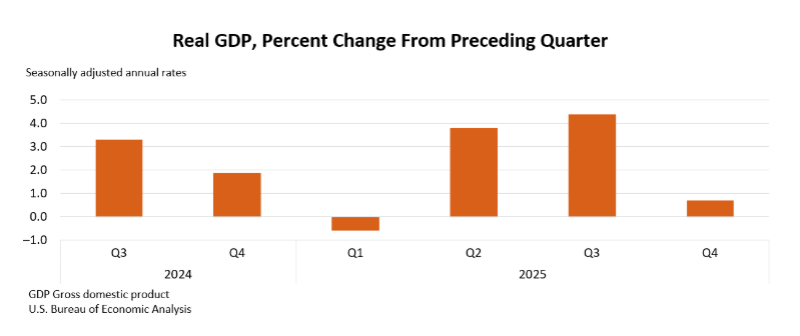
⬤ Just months before this reading, US GDP was running above 4% on a seasonally adjusted annualized basis. The chart of quarterly performance shows a clear loss of momentum across the cycle. Growth is still in positive territory, but the trend has shifted noticeably lower. A broader breakdown of how this trajectory developed is covered in U.S. GDP News Now Estimate: Atlanta Fed Sees 2.3% Growth for Q3 2025.
The 0.7% print is not a recession, but it is a warning sign - the gap between earlier momentum and where we are now is hard to ignore.
⬤ Alongside the GDP revision, durable goods orders came in flat at 0%, missing expectations of 1.1% growth. Weak manufacturing demand and softer business investment are piling on, reinforcing a picture of broad-based slowdown. These are the same dynamics analyzed in From Growth to Contraction: U.S. Economy Slides Into the Red, which examined how output deceleration can mark a turning point in the cycle.
⬤ Weaker data is now shifting Fed expectations. With growth slowing and multiple indicators missing forecasts, markets are pricing in a possible Federal Reserve rate cut as early as September. The interplay between GDP, employment, and central bank decisions is detailed in Fed Holds Rates Steady as USINTR Faces Inflation Concerns; Two Cuts Still Projected.
⬤ The revised GDP number is a reminder of how fast economic momentum can shift when new data rolls in. Slower growth, flat manufacturing orders, and softer labor figures together paint a more fragile macro backdrop. Upcoming releases will be critical in shaping whether this slowdown deepens or stabilizes heading into the next cycle.
 Eseandre Mordi