Marina Lyubimova

Morgan Stanley has raised its year-end 2026 target for the S&P 500 to 8,000 from 7,800, signaling growing confidence that U.S. equities can continue climbing despite persistent inflation concerns and elevated interest rates.
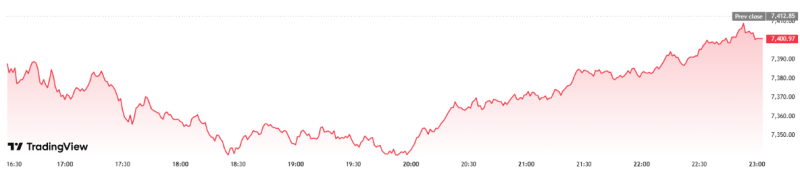
The chart highlights the market’s continued upward momentum, with the S&P 500 recovering strongly into the close and approaching fresh highs. The move reflects ongoing investor confidence in large-cap equities, particularly AI-driven technology companies that continue dominating market performance.
The upgrade suggests the bank still sees strong momentum in corporate earnings, artificial intelligence investment, and mega-cap technology leadership as key drivers for the broader market over the next year. The new target also reflects Wall Street’s growing belief that the U.S. economy may avoid a deep slowdown even as bond yields remain elevated and the Federal Reserve maintains a restrictive policy stance.
Mega-cap technology stocks continue carrying much of the market’s performance, especially companies tied to:
- AI infrastructure
- semiconductors
- cloud computing
- enterprise software
Analysts increasingly expect those sectors to remain dominant through 2026 as enterprise AI spending accelerates globally.
However, the revised forecast arrives during a period of growing macroeconomic tension. Recent CPI and PPI inflation data surprised to the upside, Treasury yields have moved higher, and traders continue scaling back expectations for aggressive Federal Reserve rate cuts.
That creates an increasingly narrow path for equities:
- earnings growth must stay strong
- inflation must avoid another major acceleration
- AI spending must continue expanding
- financial conditions cannot tighten too aggressively
Despite those risks, Morgan Stanley’s revised target reinforces the broader institutional view that long-term bullish momentum in U.S. equities remains intact — particularly if AI-driven productivity growth continues supporting corporate profits and keeping investor sentiment elevated.
 Marina Lyubimova