Marina Lyubimova
The U.S. economy is still growing - just not as fast as it once was. After clocking real GDP growth of 2.9% in 2023 and 2.8% in 2024, the pace dropped to 2.1% in 2025, according to data from the Bureau of Economic Analysis. The deceleration is gradual, but it signals a clear shift from post-recovery momentum toward steadier, more moderate expansion.
Growth Falls Short of Earlier 5% Projections
The slowdown stands out against earlier, more optimistic forecasts that discussed the possibility of real GDP reaching around 5%. Those projections, which assumed stronger fiscal tailwinds and consumer-led acceleration, have not materialized. Instead, the data shows the economy settling into a pattern more typical of long-term historical averages. Analysts tracking US GDP Surges 3.8% in Q2 2025 noted earlier this year how quarterly gains can mask a broader cooling trend when viewed in isolation.
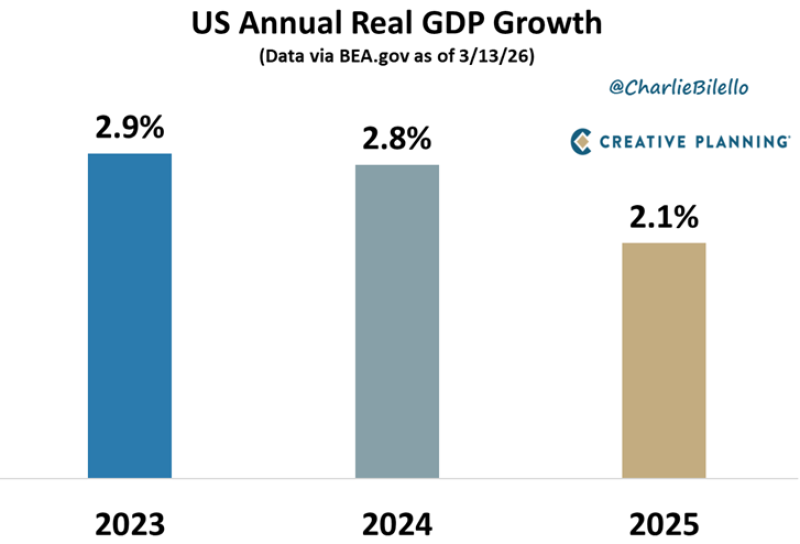
Fed Targets 2.3% Growth in 2026 as Expansion Levels Off
Looking ahead, the Federal Reserve's current outlook points to roughly 2.3% GDP growth in 2026 - modest, but consistent with a soft-landing scenario. The Fed Lifts 2026 GDP Forecast to 2.3% as policymakers balance inflation control with sustained labor market strength. Monetary policy, inflation trends, and consumer spending remain the key variables shaping where growth lands next year.
The broader context matters too. As explored in U.S. Market Cap Hits 225% of GDP, the divergence between financial market valuations and actual economic output raises questions about long-term sustainability. GDP remains the baseline metric against which equity markets, fiscal deficits, and debt levels are measured - and a slower-growing economy makes those comparisons harder to ignore.
The 2025 figures do not signal a recession or crisis. But they do confirm that the U.S. economy has moved past its post-pandemic growth phase and into something more measured. For policymakers and investors alike, 2.1% is the new normal - at least for now.
 Marina Lyubimova