Marina Lyubimova

Labour Commissioner Roxana Minzatu report, higher energy prices linked to tensions involving Iran could hit a wide range of industries this year. The automotive sector accounts for the largest share of the projected losses, with as many as 600,000 jobs at risk.
Construction, chemicals, metals and transport could lose another 56,000 positions. Battery projects face potential losses of 85,000 jobs, while solar manufacturing could shed nearly 59,000. Those figures point to a problem extending beyond the labor market.
Rising gas prices are hitting sectors Brussels wants to expand
The industries appearing on the Commission's list are not declining businesses being displaced by new technologies. They are the industries European policymakers have spent years trying to attract and protect. Battery manufacturing, solar production, low-carbon steel and electric vehicles sit at the center of the bloc's industrial agenda. All require large amounts of energy.
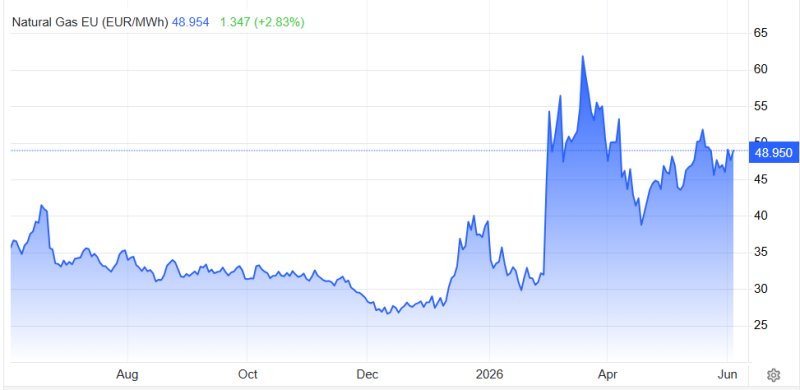
Dutch TTF gas prices rose from roughly €27/MWh in December 2025 to nearly €49/MWh in June 2026.
European gas prices have climbed roughly 80% since December. The move remains below the levels seen during the 2022 energy crisis, but manufacturers are once again dealing with rising costs after months of stabilization. For energy-intensive industries, margins were already under pressure from weak demand and competition from Asian producers. Higher fuel and electricity costs add another layer of strain.
Automotive manufacturing sits at the center of the problem
The Commission estimates that up to 600,000 automotive jobs could be affected. That number matters because Europe's car industry supports far more than vehicle assembly. Steel producers, chemical suppliers, logistics operators, industrial equipment makers and thousands of smaller manufacturers depend on automotive demand. Production cuts in one part of the chain quickly spread through the rest.
The pressure is arriving as European automakers are already spending heavily on electrification while competing with lower-cost Chinese EV manufacturers.
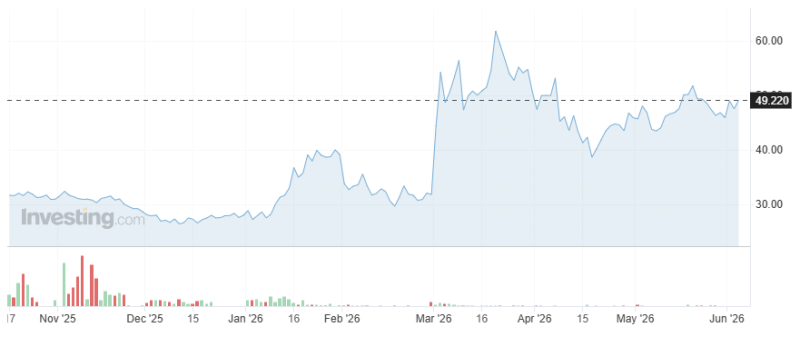
Dutch TTF gas prices remained close to €50/MWh through May and June after exceeding €60/MWh earlier this year.
The market is no longer reacting to a single spike. Gas prices have remained elevated for months, forcing manufacturers to assume that higher energy costs may persist longer than initially expected.
The investment question
Europe's manufacturing sector employs roughly 30 million people. Job losses attract political attention, but factory investment determines where those jobs exist in the future.
Battery plants, steel projects and chemical facilities require long planning horizons. Companies making multi-billion-euro investment decisions pay close attention to energy costs because those costs remain fixed long after political crises fade. If gas prices remain volatile, Europe risks losing more than jobs. It risks losing future industrial capacity to regions where energy remains cheaper and easier to secure.
That possibility explains why the Commission's warning reaches beyond employment statistics. The sectors under pressure today are the same sectors expected to anchor Europe's industrial strategy over the next decade.
 Marina Lyubimova