Artem Voloskovets
When Microsoft unveiled its new Cobalt 200 processor, the headline numbers were predictable: 132 Arm Neoverse V3 cores, a 3nm manufacturing process, and up to 50% higher performance than the previous generation. The more interesting story sits inside the architecture diagram.
While discussing Microsoft's new AI hardware, CEO Satya Nadella summarized the company's strategy in a single sentence: AI at scale isn't just a model story, it's a systems story.
That idea helps explain what makes Cobalt 200 important.
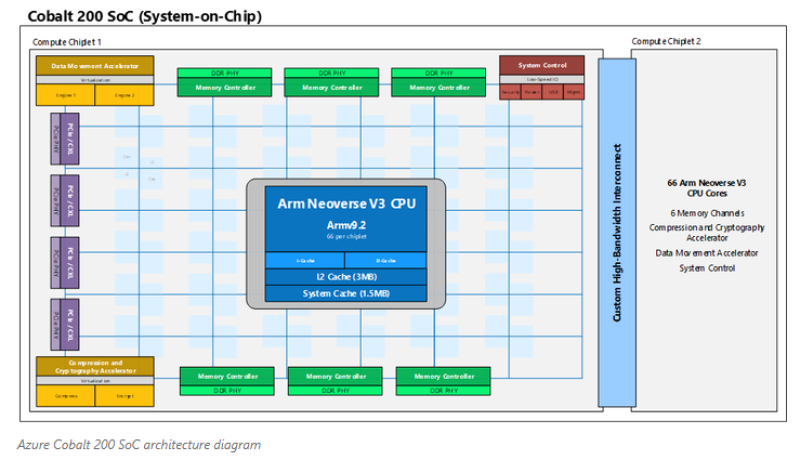
At first glance, the chip looks like another server CPU designed for Azure. But the architecture reveals something unusual. Microsoft dedicated significant portions of the design to data movement acceleration, memory management, compression, cryptography, and a custom high-bandwidth interconnect.
In other words, the company is spending silicon not just on computing power, but on moving data more efficiently. That reflects a growing challenge across the AI industry.
Technology companies competed by building faster processors. AI is changing the equation. Large models increasingly depend on how quickly information can move between memory, storage, networking, and compute resources. In many cases, data movement has become a bigger bottleneck than raw processing power.
The same shift is already visible in smartphones. Apple's Neural Engine, Google's Tensor chips, and Qualcomm's latest Snapdragon platforms all focus on specialized AI hardware and memory optimization rather than traditional CPU gains alone. The goal is not simply to make devices faster. It is to make AI workloads run more efficiently.
Microsoft appears to be reaching the same conclusion from the data-center side. Although Cobalt 200 is built for Azure rather than consumer devices, its design philosophy looks surprisingly familiar. The company is optimizing the entire system instead of chasing CPU performance alone.
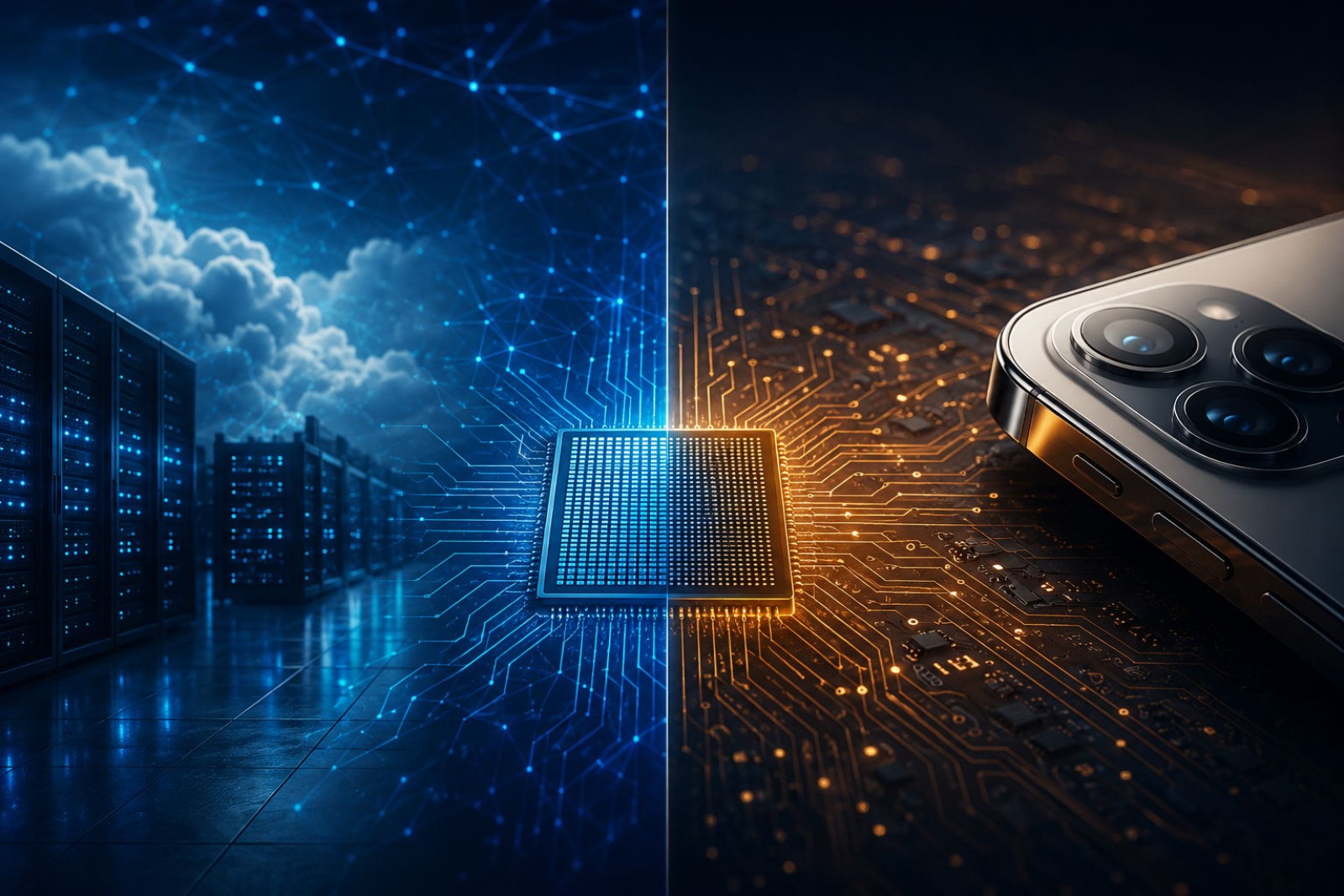
That matters because AI is gradually erasing the line between cloud infrastructure and edge devices. Whether a model runs in a hyperscale data center or on a smartphone, the same constraints increasingly apply: memory bandwidth, power efficiency, and data flow.
It is that the company is adapting to the same systems-first approach that has already transformed the smartphone industry. As AI workloads continue to grow, the next competitive advantage may come not from the smartest models, but from the companies that move data most efficiently.
 Artem Voloskovets