
 Eseandre Mordi
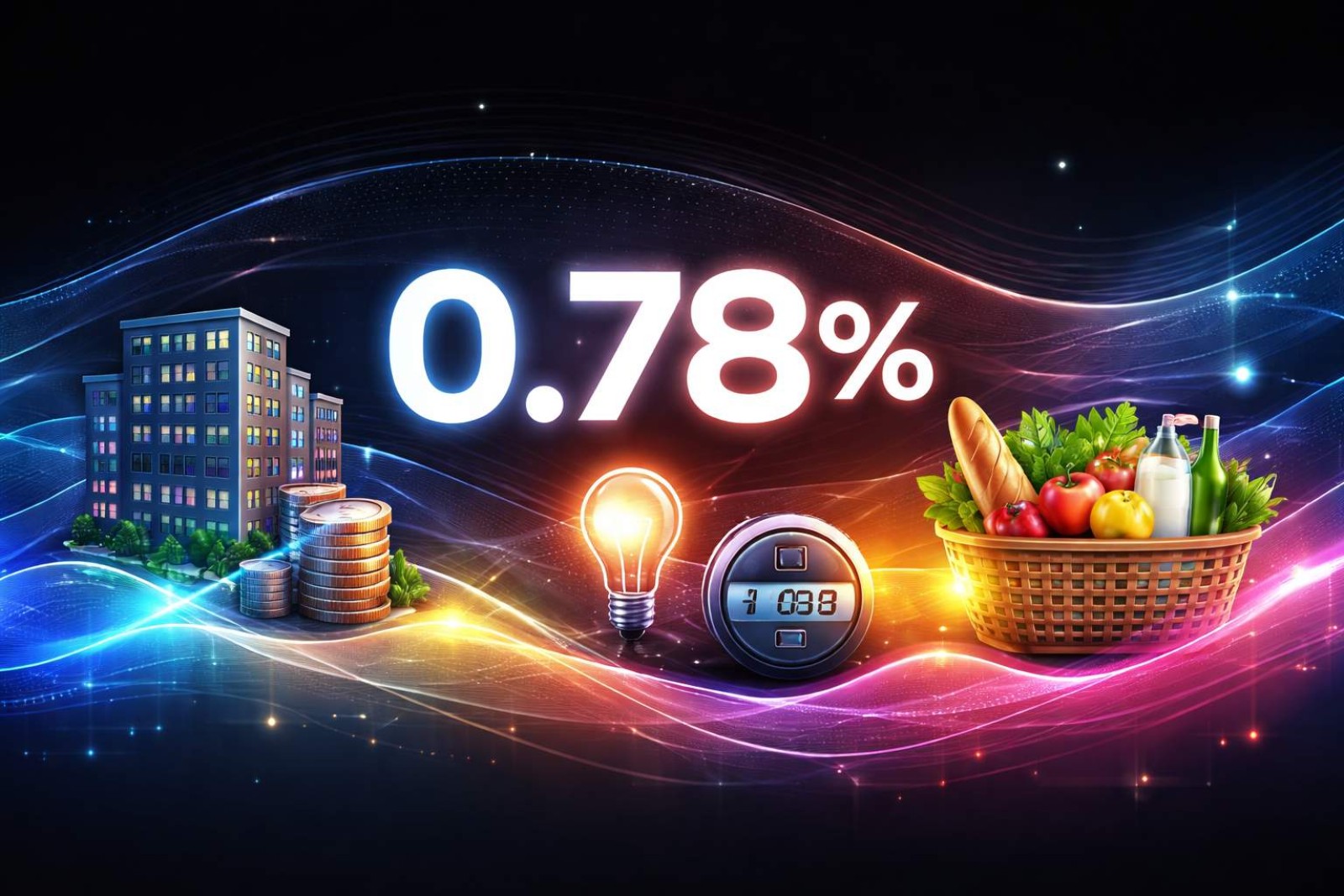
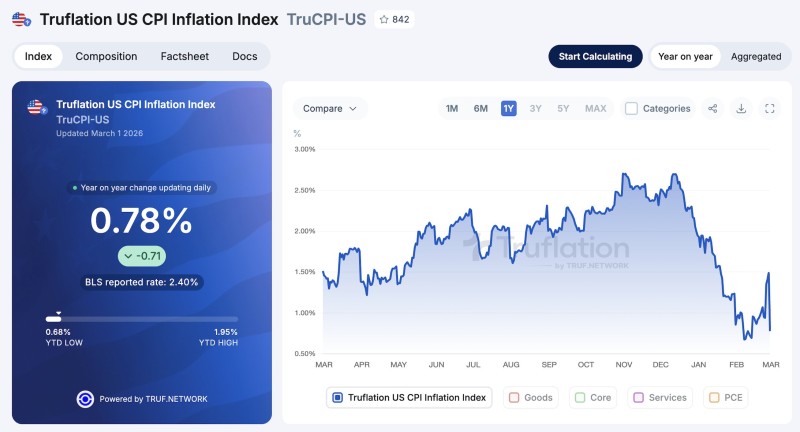
⬤ Truflation US CPI came in at 0.78% year over year, marking a fresh leg of disinflation across major consumer categories. The reading was published March 1, 2026, and as Truflation noted, the timing matters - the start of a new month tends to bring sharper swings as additional data inputs reset simultaneously. That includes rents, utilities, insurance, communications, and education fees, all of which refresh together and can produce short-term moves that don't necessarily reflect a sudden change in the underlying inflation trend. This pattern of inflation cooling well below the official 2.40% BLS rate has been building for months.
⬤ In the latest category breakdown, housing dropped 0.20%, utilities fell 0.16%, transport slipped 0.13%, and food declined 0.10%. These synchronized declines pulled the headline reading lower across the board. Truflation's own note on the update put it plainly:
Increased volatility on the 1st of the month is typical as multiple latest data streams flow in.
So while the numbers look sharp, part of the move is structural - a product of how the real-time index ingests data rather than a sudden macro shift. Earlier data already showed real-time CPI at 0.92% while official inflation stayed at 2.4%, and the gap has only widened since.
⬤ The divergence between Truflation's reading and official figures remains striking. The BLS currently reports inflation at 2.40%, more than three times Truflation's 0.78% print. The dashboard also shows a YTD low of 0.68% and a YTD high of 1.95%, with the index peaking in late 2025 before declining sharply into early 2026. TheTradable has previously covered utilities leading price cooling in prior CPI updates - a pattern that now continues into March 2026.
⬤ The 0.78% Truflation print is another reminder that measurement methodology shapes inflation perception as much as prices themselves. With housing and utilities both pulling lower on a heavy data ingestion day, the reading highlights how real-time trackers can diverge from official figures - and why that gap continues to influence macro sentiment heading into the new month.
 Eseandre Mordi



