Alex Dudov
US gasoline prices jumped to $4.229 per gallon as of April 28, rising from $2.98 just nine weeks ago. The +$1.25 increase marks a 42% surge, making it the fastest short-term spike in the past 30 years. As Charlie Bilello noted,
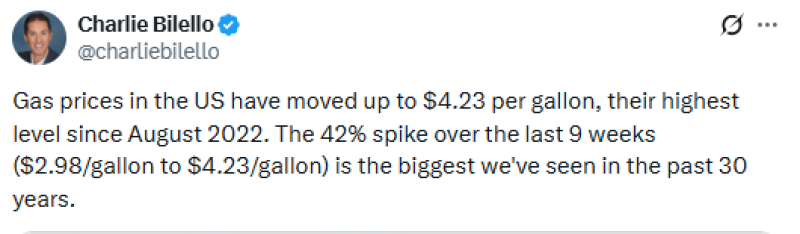
On average, prices climbed $0.14 per week, or roughly 4.6% weekly, signaling an unusually aggressive acceleration.
While prices remain below the 2022 peak (~$5.00+), the speed of this move is significantly higher. Unlike previous cycles that unfolded over months, this rally compressed similar gains into a much shorter timeframe, pointing to a rapid market repricing. This trend aligns with Brent Oil Outlook: Goldman Sees $115 as Inflation Risk Surges in 2026, where energy markets show renewed upside pressure.
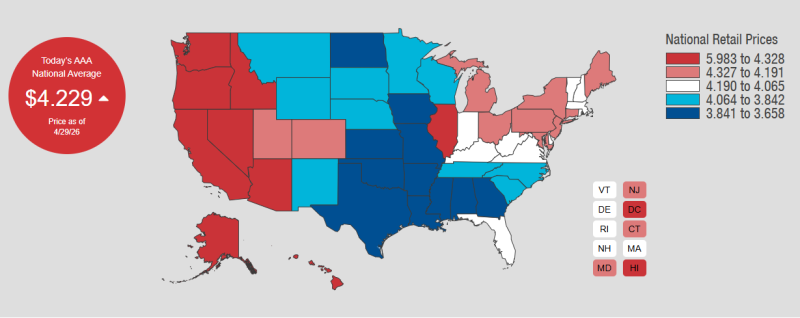
The price surge is highly uneven across the US. The West Coast and Northeast fall into the highest range ($4.32–$5.98), while the South remains in the lowest bracket ($3.65–$3.84). This creates a price gap of more than $2.30 per gallon, meaning some drivers are paying up to 60% more than others depending on location.
Despite this gap, prices are clustering upward in the $4.06–$4.32 range, suggesting that more states are catching up to higher levels. Historically, this pattern signals further nationwide increases ahead, reinforcing concerns about inflation. Similar dynamics are highlighted in Inflation Rebound Signals New Risk as US Rate Hits 1.77%, where energy costs play a central role.
Momentum remains the key signal. A sustained 4–5% weekly increase is extremely rare in fuel markets. At this pace, prices would double in roughly 16–18 weeks, underscoring how abnormal the current trend is and strengthening the near-term gas price forecast.
The combination of record speed, widening regional gaps, and upward convergence suggests this is not a typical seasonal move. Instead, the data points to structural pressure in energy markets, which could continue feeding into broader inflation. This is reinforced by US Inflation News: US Price Surge Defies Energy Relief as CPI Holds at 2.7%, showing how persistent energy costs remain a key macro driver.
 Alex Dudov