Usman Salis

A subtle but important shift is emerging in inflation data. The latest update shows US inflation increasing to 1.77%, reversing the prior decline. As reported by Truflation, the move is primarily driven by energy components, particularly gasoline. This development matters for the SPY stock and the broader S&P 500, where inflation direction remains a key macro driver.
The move from 1.68% to 1.77% represents a clear break in the downward structure we've been tracking.
The Turn That Interrupts the Inflation Downtrend
The chart confirms a clear pattern over the past year. Inflation climbed into late 2025, peaked above 2.5%, and then declined sharply into early 2026, briefly dropping near the 1% zone. The recent move from 1.68% to 1.77% breaks that downward structure.
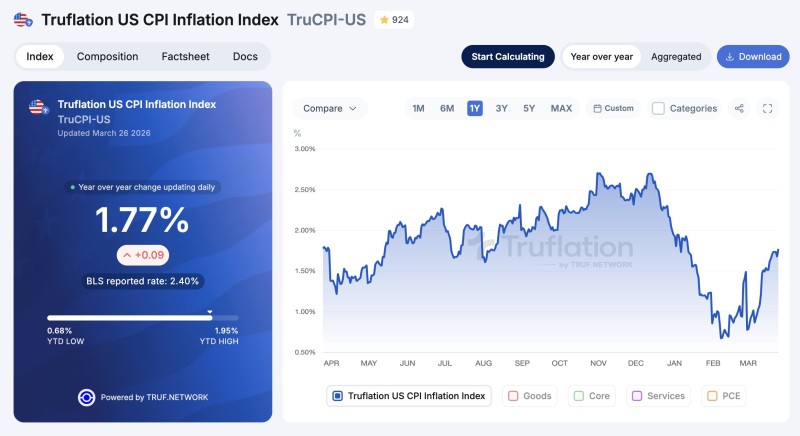
The Truflation panel clearly shows 1.77% current inflation and highlights that the BLS rate remains higher at 2.40%, confirming a visible divergence between real-time and official data. Similar dynamics of cooling followed by stabilization were also noted in Truflation US CPI shows inflation below official data, where real-time inflation dropped sharply before rebounding.
Energy Driving the Inflation Reversal in 2026
The main drivers cited are transport, utilities, and food, with gasoline contributing the largest impact. Gasoline alone added approximately 0.06% to headline inflation, despite its relatively small weight in the index.
Even moderate increases in oil can quickly feed into transportation and production costs - and that's exactly what we're seeing now.
This aligns with broader market observations. Rising energy prices have historically had a strong impact on inflation, as highlighted in oil-powered inflation risks and CPI sensitivity. At the same time, commodity-driven inflation pressure is becoming more visible again. As shown in commodity surge points to hidden inflation pressures, rising energy and raw material costs often precede broader inflation acceleration.
Why This S&P 500 Inflation Signal Could Matter
For the SPY stock and the S&P 500, the key factor is not just the level of inflation but its direction. A renewed upward move could delay expectations of easing financial conditions and shift sentiment across equities.
Markets are highly sensitive to inflation expectations. Rising energy prices have already been linked to higher inflation outlooks and pressure on equities, as noted in rising oil prices push inflation expectations higher. At the same time, inflation remains below official CPI levels, suggesting the broader disinflation trend may still be intact. This creates a mixed environment where short-term spikes can coexist with longer-term cooling.
- Inflation rising again after a decline
- Energy acting as the primary driver
- Trend direction still uncertain
If inflation continues higher, it may weigh on equities and risk assets. If it fades again, this could remain a short-term disruption within a broader cooling cycle.
The current move introduces a key inflection point. Whether this is a temporary blip or the start of a new upward leg will likely depend on where energy prices go from here.
 Usman Salis