Eseandre Mordi

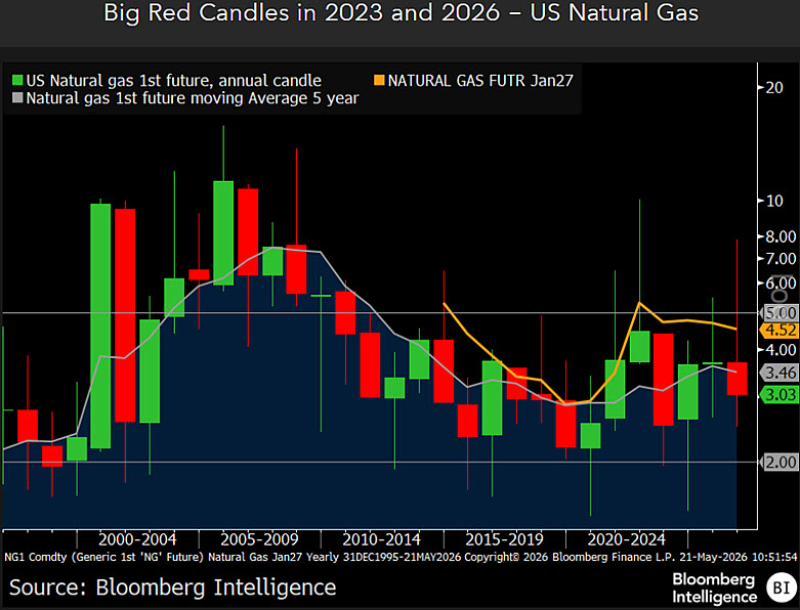
The natural gas market is sending a very different signal than it did a year ago. The January 2027 futures contract is trading around $4.52/MMBtu, yet annual price action has turned sharply negative. According to Bloomberg Intelligence, the current yearly candle is one of the largest bearish moves since the 2023 selloff.
A Rare Bearish Signal
Large annual red candles are unusual in natural gas. The chart highlights only two major examples over the past decade: the collapse in 2023 and the ongoing decline in 2026. In both cases, traders aggressively reduced expectations for future market tightness.
The key takeaway is not the absolute price level. Natural gas remains above its five-year moving average of approximately $3.03/MMBtu. What changed is sentiment. Traders appear increasingly unwilling to pay a premium for scarcity.
Storage Is Moving in the Wrong Direction for Bulls
The strongest clue comes from inventories.
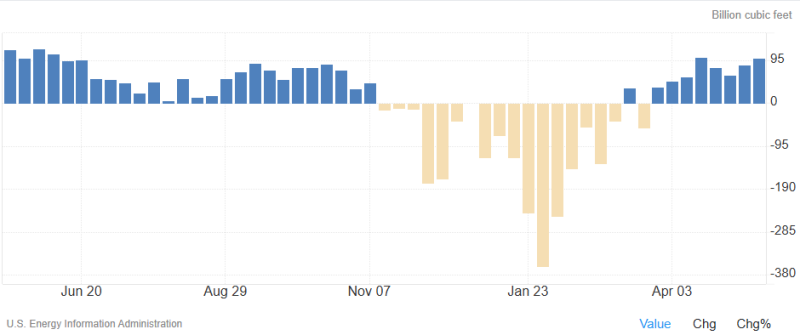
Recent storage injections have approached 95 Bcf, among the largest weekly builds shown on the chart. That follows the winter withdrawal season, when inventories declined by as much as 350 Bcf during peak demand periods.
The pace of replenishment suggests supply conditions are becoming more comfortable than many traders expected earlier in the year. Instead of debating whether there will be enough gas, the market is beginning to ask how quickly storage can refill.
The Market Is Repricing Risk
Natural gas bulls still have several arguments. LNG export capacity continues to expand. Electricity demand is growing. Industrial consumption remains relatively stable. Yet inventory data indicates those demand drivers are currently being matched by supply. That changes market psychology. When inventories rise rapidly, the fear of shortages fades. As that premium disappears, futures prices often come under pressure even if long-term demand trends remain intact.
What Happens Next?
The current setup does not guarantee a repeat of 2023. However, both charts point in the same direction. One shows a major deterioration in sentiment. The other shows improving supply conditions. Taken together, they suggest the natural gas market is moving away from scarcity and toward balance, a transition that historically has been associated with weaker price performance.
 Eseandre Mordi