Artem Voloskovets
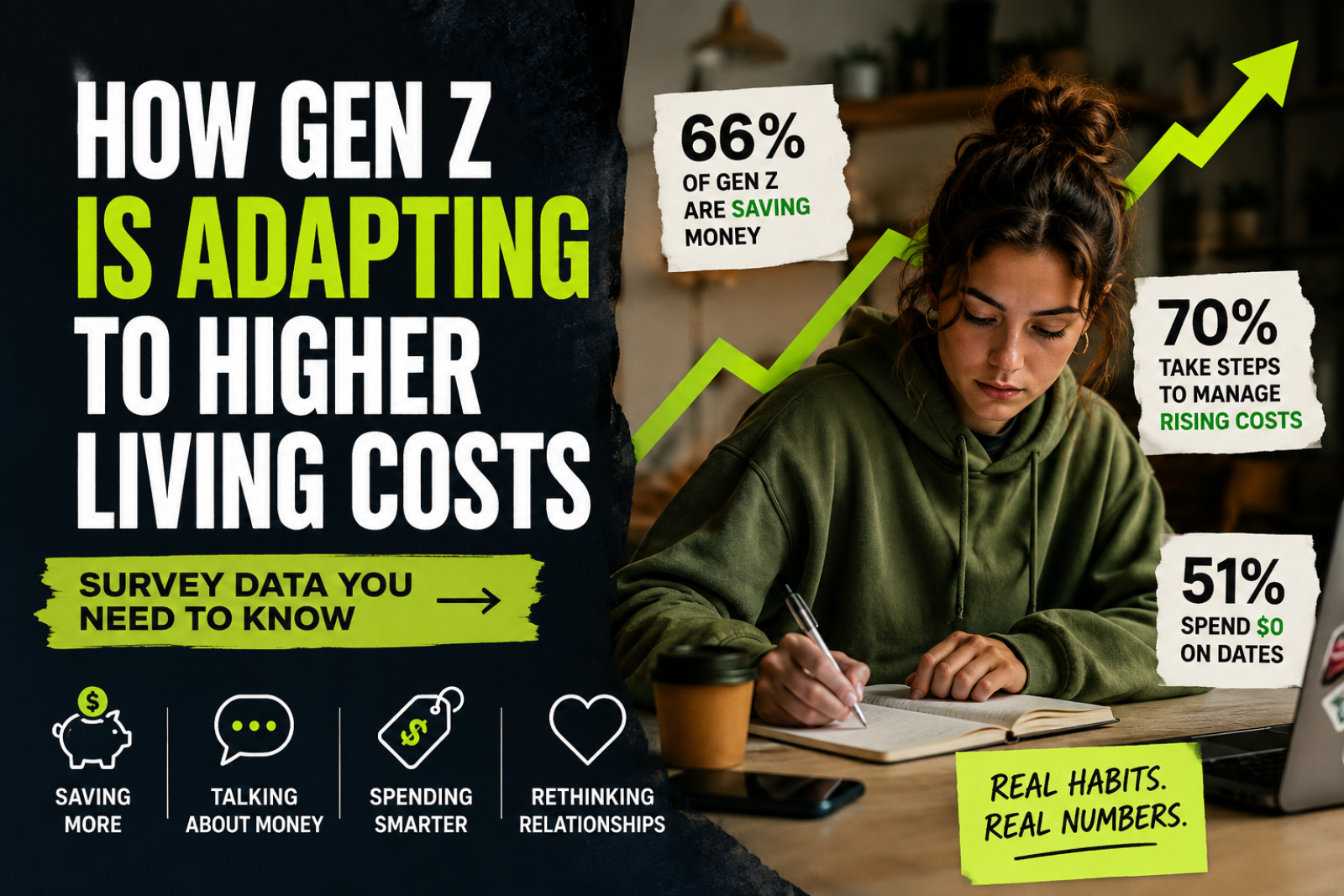
The shift is visible not only in bank accounts, but also in social life, dating habits, and daily spending choices.
Build a Financial Cushion
The share of Gen Z actively saving money continues to grow. Bank of America report, 66% of Gen Z are currently saving money, compared with 63% last year and 60% in 2024.
| Year | Saving Money |
| 2024 | 60% |
| 2025 | 63% |
| 2026 | 66% |
The increase comes despite continued pressure from housing, food, and transportation costs.
Cut Costs Before They Become a Problem
Many young adults have already adjusted their spending. Nearly 70% of Gen Z say they have taken concrete steps over the past year to manage rising costs. At the same time, 49% identify the cost of living as a major obstacle to financial success.
| Indicator | Share |
| Took action to manage rising costs | 70% |
| Cite cost of living as a barrier to success | 49% |
These actions range from reducing discretionary purchases to rethinking entertainment, travel, and monthly subscriptions.
Spend More Intentionally
Saving money does not necessarily mean spending less overall. Seventy-five percent of Gen Z say they actively look for ways to reduce costs when going out. Discounts, shared expenses, loyalty programs, and lower-cost alternatives have become part of routine spending decisions. For many young consumers, the question is no longer whether to spend, but whether the purchase is worth the cost.
Make Money a Normal Conversation
Financial discussions are becoming more common among younger adults. The survey found that 60% of Gen Z openly discuss money with friends. Budgeting, debt, savings goals, and financial mistakes are topics that increasingly move beyond private conversations.
| Behavior | Share |
| Discuss money with friends | 60% |
| Look for ways to save when going out | 75% |
The result is faster sharing of financial habits, tools, and cost-saving strategies.
Reconsider Dating Expenses
Financial pressure is also influencing relationships. According to the survey, 51% of Gen Z spend nothing on dates in a typical month. Another 24% say they have postponed relationship milestones because of financial concerns.
| Indicator | Share |
| Spend $0 per month on dates | 51% |
| Delayed relationship decisions due to finances | 24% |
The findings suggest that affordability now plays a role in decisions that were once driven primarily by personal circumstances.
What the Numbers Show
The data points to a practical response to higher living costs. More Gen Z consumers are building savings, adjusting spending habits, discussing money openly, and reducing expenses where possible. Rather than waiting for economic conditions to improve, they are changing behavior to fit the environment they face today. For a generation entering adulthood during a period of elevated costs, financial flexibility is becoming a priority rather than an afterthought.
 Artem Voloskovets