Victoria Bazir
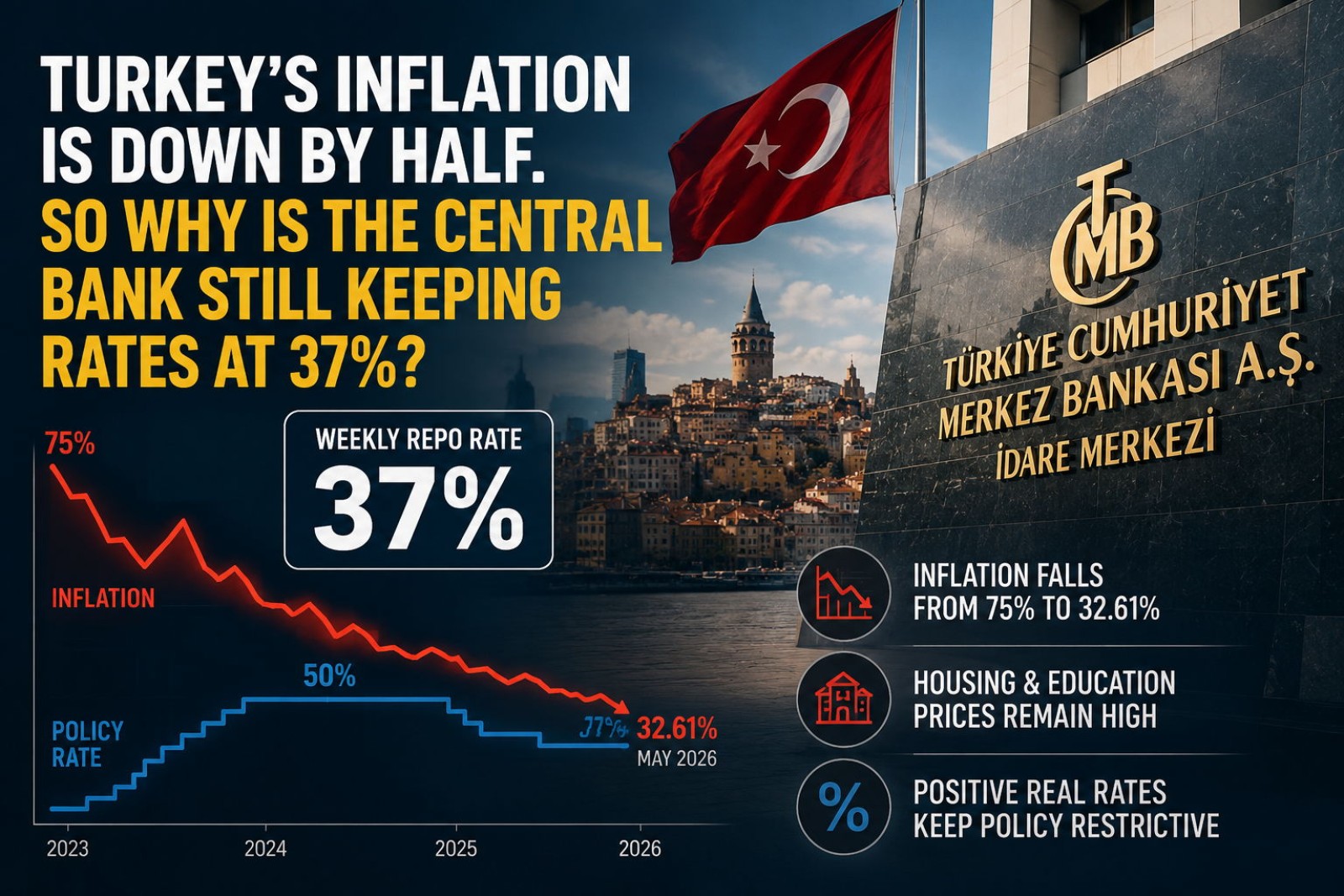
The decision comes despite a sharp decline in inflation. Annual consumer-price growth has fallen from around 75% in mid-2024 to 32.61% in May 2026. Yet policymakers are showing little urgency to accelerate rate cuts. The reason is visible in the data: inflation is no longer falling as quickly as it was a year ago.
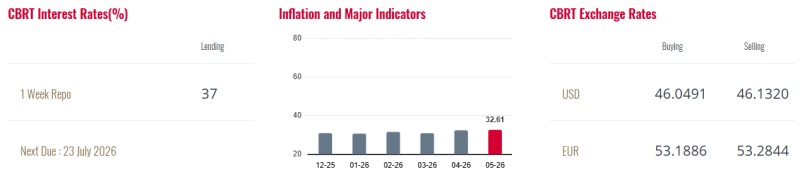
The chart shows how Turkey moved from emergency tightening to gradual normalization. As inflation accelerated through 2023 and 2024, the Central Bank of the Republic of Turkey (CBRT) raised rates to 50%. Since then, inflation has dropped by more than 40 percentage points, while the policy rate has been reduced to 37%. The pace of disinflation, however, has slowed considerably.
When Falling Inflation Stops Falling
The current challenge is not high inflation alone. It is the slowdown in disinflation.
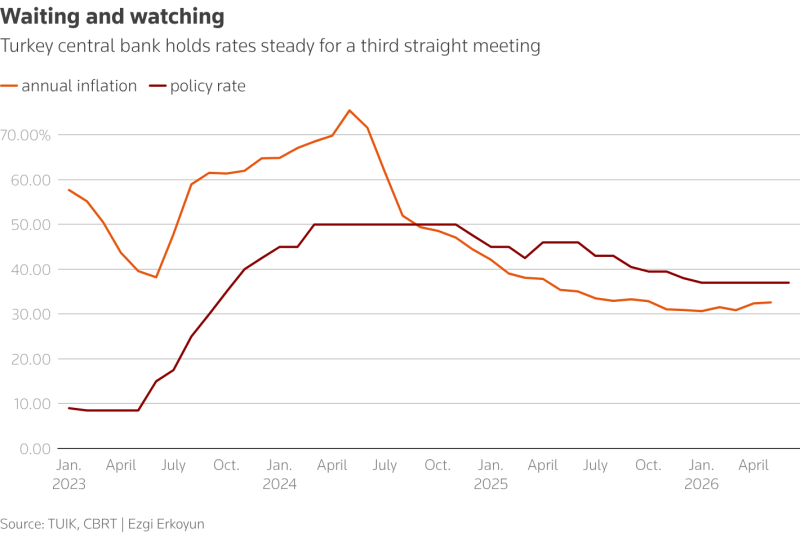
Inflation declined steadily from nearly 49% in late 2024 to around 30% at the start of 2026. Since then, progress has largely stalled.
Recent readings show:
- January 2026: ~30.5%
- February 2026: ~31.0%
- March 2026: ~30.6%
- April 2026: ~32.0%
- May 2026: 32.61%
Instead of moving lower, inflation has fluctuated within a narrow range and begun edging higher. For the central bank, that is enough reason to wait.
The Categories Keeping Inflation Elevated
Headline inflation masks significant differences across sectors.
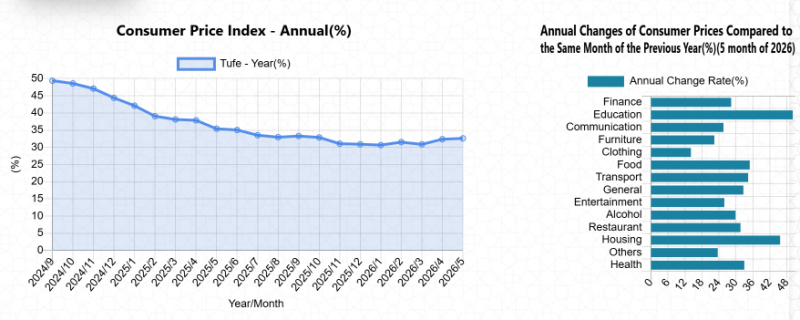
The latest data show persistent price growth in several essential categories:
| Category | Annual Inflation |
| Education | ~50% |
| Housing | ~45% |
| Food | ~34% |
| Transport | ~33% |
| Restaurants & Hotels | ~31% |
| Overall CPI | 32.61% |
Education and housing remain the biggest sources of pressure. Both categories tend to adjust more slowly than energy or imported goods, making them harder to bring under control. As long as these sectors continue to post elevated inflation, policymakers are unlikely to rush into additional easing.
Why the 37% Rate Matters
At current levels, Turkey's policy rate remains above inflation. With annual CPI at 32.61% and the repo rate at 37%, the real policy rate is approximately +4.4 percentage points. That gap is one of the few clear signs that monetary policy remains restrictive. Lowering rates too quickly would narrow it and risk slowing the disinflation process further. The central bank appears willing to sacrifice some short-term growth momentum to preserve the progress made since 2024.
What the Latest Decision Signals
The decision to hold rates steady suggests that the CBRT sees inflation as manageable, but not yet defeated. The rapid decline from 75% to 32% is already behind Turkey. The next stage will likely be slower and more difficult, particularly if housing, education and food prices continue to rise faster than the overall inflation rate.
 Victoria Bazir