Marina Lyubimova
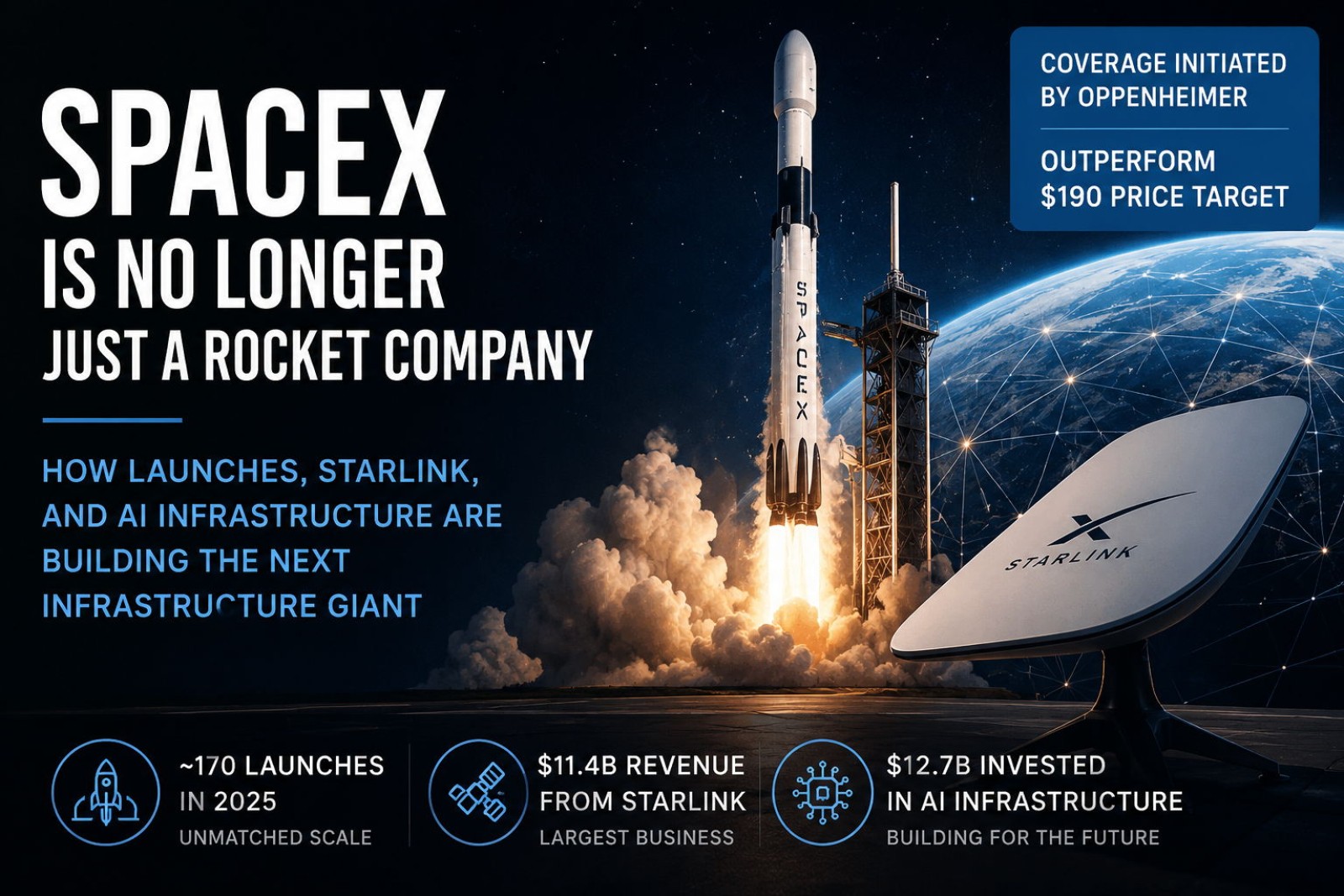
SpaceX still leads the launch industry, but launches are no longer the main story. The company now operates across satellite communications, AI infrastructure, and government services, creating several independent growth engines.
Launches Built the Foundation
SpaceX's launch business remains the backbone of its ecosystem. Annual launch activity has grown from a few missions per year in the late 2000s to roughly 170 launches in 2025. No other commercial launch provider currently operates at comparable scale.
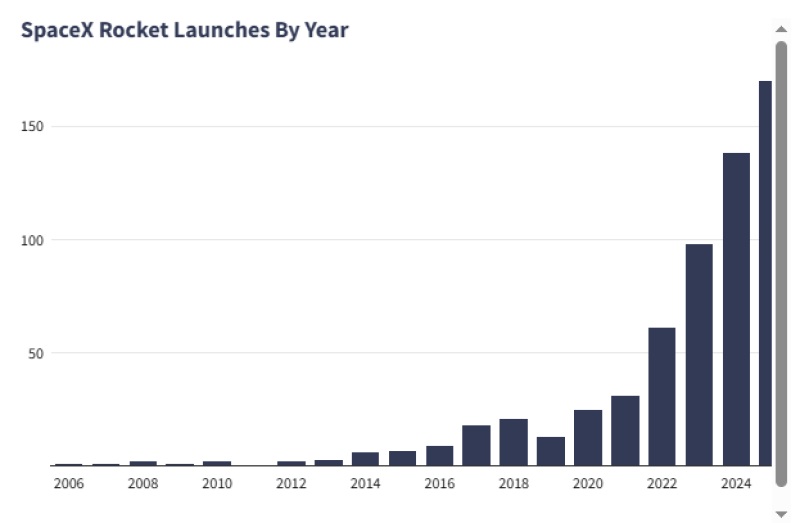
The significance of these numbers goes beyond launch records. High launch frequency lowers deployment costs, shortens satellite replacement cycles, and allows SpaceX to expand its own orbital infrastructure faster than competitors. The launch business increasingly functions as a platform supporting other services.
Starlink Generates Most of the Revenue
The largest business inside SpaceX is no longer rocket launches. According to the company's latest filing, Starlink is expected to generate approximately $11.4 billion in revenue during 2025, compared with $4.1 billion from launch operations.
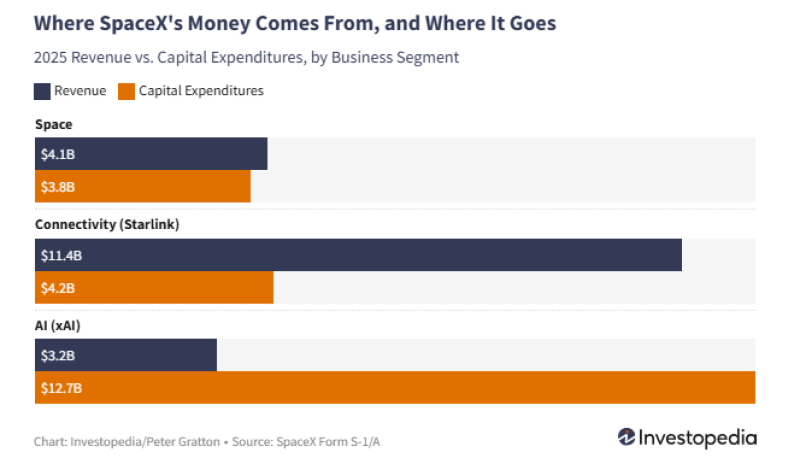
Where SpaceX's Money Comes From, and Where It Goes
| Segment | Revenue | Capital Expenditures |
| Space | $4.1B | $3.8B |
| Connectivity (Starlink) | $11.4B | $4.2B |
| AI (xAI) | $3.2B | $12.7B |
The chart shows how the company's business mix has changed. Starlink generates nearly three times more revenue than the launch segment while requiring significantly lower investment than AI operations. The result is a recurring revenue stream that is less dependent on launch schedules and contract timing.
As the satellite network expands, connectivity becomes a larger part of the company's overall economics.
AI Is the Largest Investment Area
The most striking figure in the data is not revenue but spending. The AI segment is expected to produce roughly $3.2 billion in revenue while consuming $12.7 billion in capital expenditures.
This indicates that SpaceX is allocating substantial resources toward future infrastructure rather than maximizing short-term profitability.
The strategy mirrors what cloud computing companies did during the early stages of data center expansion: build capacity first and monetize it later.
One Company, Three Infrastructure Businesses
SpaceX now operates across three distinct areas:
- Space transportation;
- Satellite communications;
- AI infrastructure.
Each business supports the others. Launches deploy satellites. Satellites generate connectivity revenue. Connectivity and AI services create demand for additional infrastructure. This structure makes the company less dependent on any single market and reduces reliance on launch revenue alone.
 Marina Lyubimova