Usman Salis

Brent crude oil climbed above $100 per barrel for the first time since 2022, putting renewed pressure on global energy markets. The rally came after the Strait of Hormuz was shut down, threatening a key corridor that moves around 20% of the world's oil. Prices rose steadily throughout early 2026, from the mid-$60 range in January to triple digits by mid-March. Oil Prices Jump 4.6% in January 2026 After Five-Month Slide provides useful context on how this rally built over months.
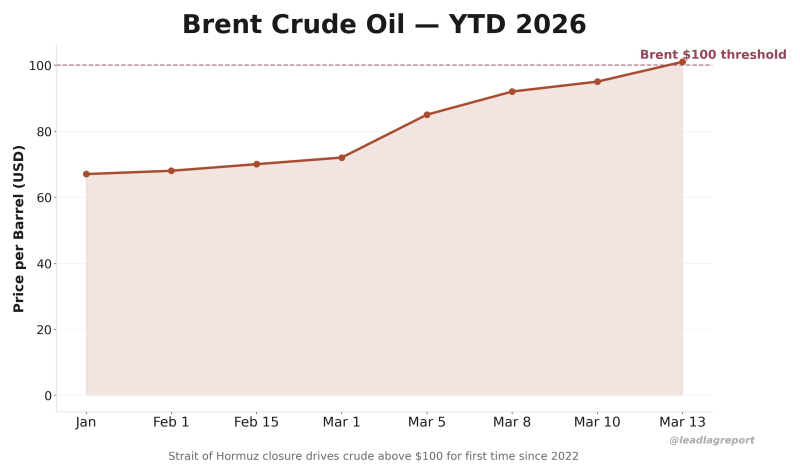
With the Hormuz route offline, WTI crude pushed close to $99 per barrel as traders priced in genuine supply risk. The Strait is the world's single most important oil chokepoint, linking Persian Gulf producers to international buyers. WTI Oil Risk: US Targets 1.5M Barrel Daily Iran-China Supply examines how geopolitical pressure on Iran was already squeezing flows before this latest disruption.
The International Energy Agency responded with its largest-ever emergency reserve release, coordinating 400 million barrels onto the market. Despite the historic scale of the intervention, price pressure held firm, signalling that markets see supply vulnerability in the Gulf as a structural concern rather than a temporary blip. For perspective on where oil stood before the latest shock, USOIL Crude at $76: Will the $90 Break Level Trigger Rally? tracked early momentum in the current cycle.
The Brent surge is a sharp reminder of how fast geopolitical shocks can reprice global commodities. Sustained triple-digit oil feeds directly into inflation, transport costs, and broader economic conditions. With the Hormuz situation unresolved, energy markets remain on high alert.
 Usman Salis