Alex Dudov
⬤ USOIL crude prices are trading below the critical $90 per barrel mark - a level market watchers identify as a potential breakout trigger. With a close above $90 labeled "War Is Real" and major support sitting around $44. The long-term chart reveals WTI trapped in tightening trend lines, making this upper resistance zone particularly significant. As covered in Oil Price Rally: Will the Surge Above $90 Continue?, this technical setup has been building for years within a contracting price pattern.
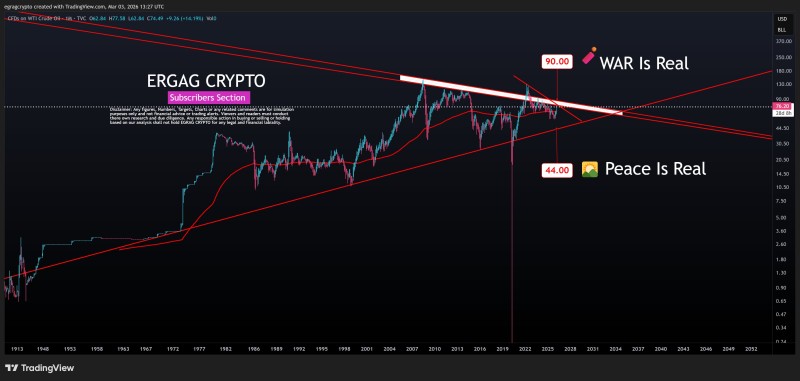
⬤ Recent market action shows both WTI and Brent climbing on geopolitical fears, with Brent pushing past $83 due to Middle East tensions threatening vital shipping lanes. The $90 pivot annotation matches perfectly with current market dynamics where geopolitical risk premiums are lifting crude across all benchmarks. A sustained break above this level could finally spring oil out of its multi-year technical channel. The situation mirrors earlier volatility discussed in WTI Crude Oil Hits Five-Month Low Amid Market Pressures, showing how quickly sentiment can shift.
⬤ Supply disruption fears from Venezuela and Iran, combined with OPEC+ production decisions, are adding a risk premium to oil markets. Multiple trading sessions have seen crude surge on conflict-driven concerns, proving supply narratives remain the dominant price driver. These fundamental forces align with technical frameworks suggesting momentum depends on clearing resistance zones like the $90 threshold - the dividing line between range-bound trading and potential extended rallies. Understanding these dynamics is crucial in the broader context of tradable commodities markets.
⬤ This price level matters because it combines technical resistance with real-world risk factors. A clean close above $90 would signal markets are pricing in geopolitical threats and could shift crude into higher trading ranges. Failure to break through reinforces the persistent cap that's held oil within its multi-year wedge. As geopolitical situations evolve, the $90 pivot will continue measuring how risk premiums and supply worries translate into energy prices.
 Alex Dudov