Artem Voloskovets

BlackRock's Bitcoin ETF sold roughly $1.41 billion worth of Bitcoin this month. The figure immediately attracted attention because ETF flows have become one of the market's primary demand drivers since spot Bitcoin funds launched in the United States. But the ETF data tells only part of the story.
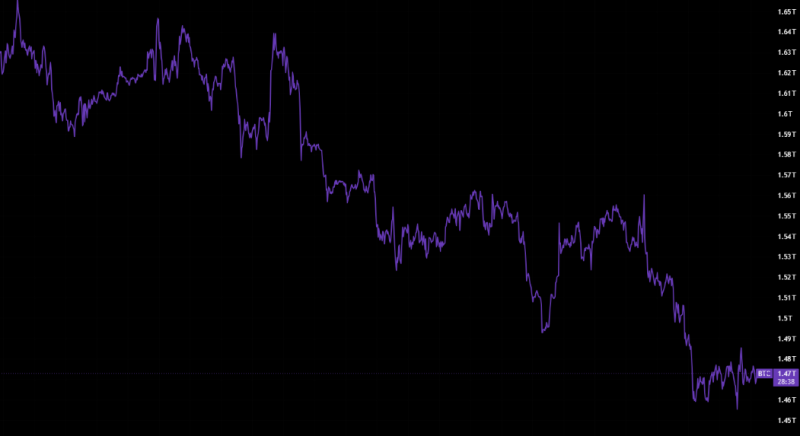
Bitcoin market capitalization fell from approximately $1.64 trillion to $1.47 trillion during the same period. Bitcoin's total market value declined by nearly $170 billion while BlackRock's ETF reduced exposure by $1.41 billion. Measured against the broader move, the ETF sale represents less than 1% of the capital that disappeared from the market.
That changes the interpretation. The market was already moving lower as the ETF recorded outflows. The decline was not limited to a single fund or a single group of investors. Capital left Bitcoin at a scale far larger than BlackRock's reduction alone.
ETF Flows Are No Longer a Side Story
During much of the previous rally, spot ETFs absorbed a significant portion of newly available Bitcoin supply. Strong inflows helped support prices as institutional investors gained exposure through traditional brokerage accounts.
The process works in reverse during periods of weaker demand. When ETF investors redeem shares, issuers reduce underlying Bitcoin holdings. The latest BlackRock data shows that mechanism in action. At the same time, the broader market decline suggests sellers extended well beyond ETF investors.
The gap between the two numbers is notable:
| Metric | Value |
| BlackRock ETF sale | $1.41 billion |
| Bitcoin market cap decline | ~$170 billion |
| ETF share of decline | <1% |
A sale of this size would have looked market-moving several years ago. Against a $170 billion contraction in network value, it looks more like one piece of a wider risk-off move.
A Different Signal Than Previous Months
The significance of the outflow comes less from its size and more from its timing. For most of the ETF era, investors were adding exposure as Bitcoin climbed toward new highs. The latest data marks a period where capital is leaving one of the industry's largest investment vehicles instead of entering it.
Whether that becomes a trend depends on what happens next. Consecutive months of outflows across multiple Bitcoin ETFs would suggest institutional demand is slowing. A return to positive flows would make the latest sale look more like profit-taking after an extended rally.
 Artem Voloskovets