Artem Voloskovets
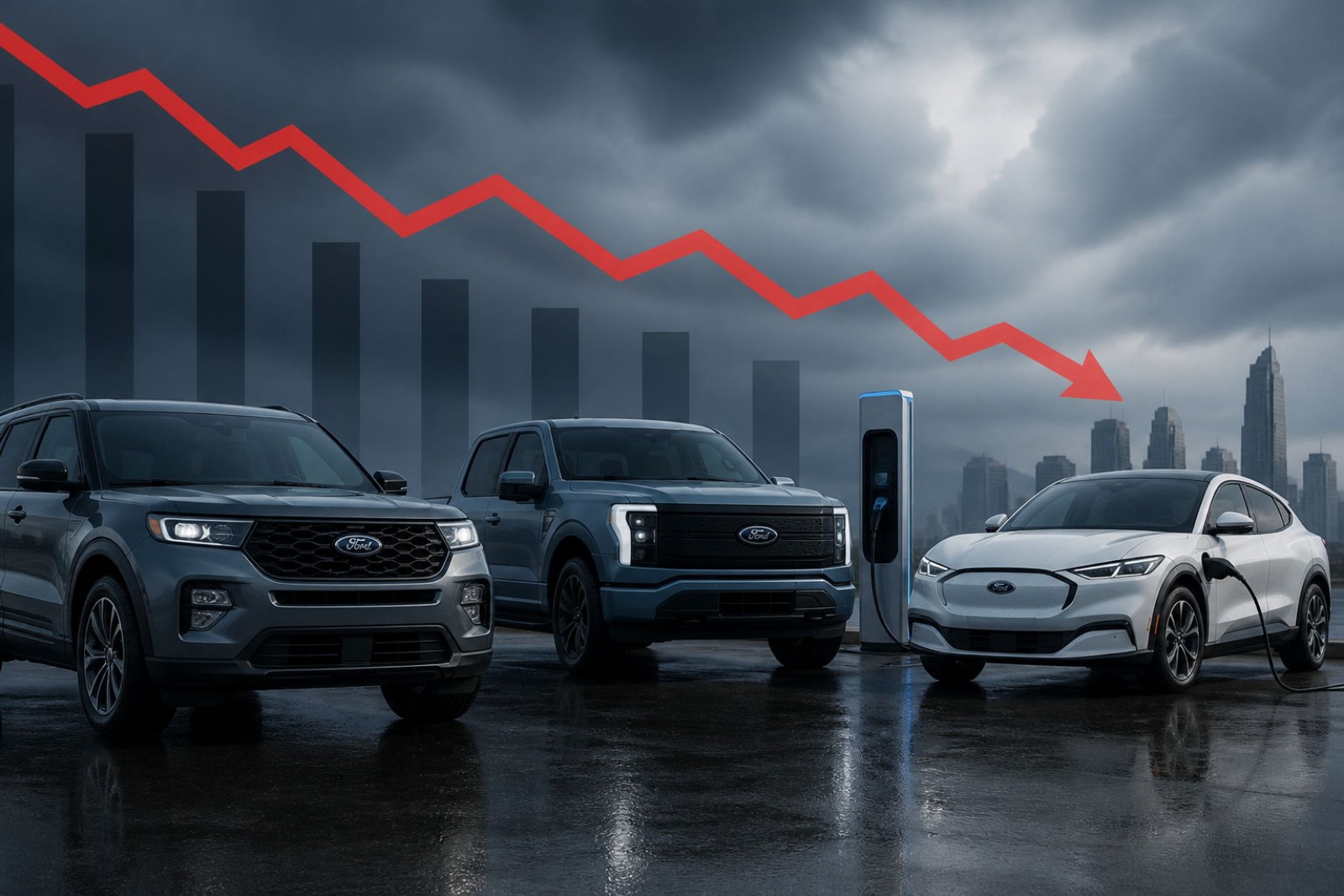
Ford Motor Company released its April 2026 U.S. sales report, showing a synchronized decline across its key vehicle categories. According to the official document, SUV sales fell to 72,378 units, down 16.6% year-over-year, while hybrid vehicles dropped to 15,758 units, marking a sharp 32.5% decline. Electric vehicle sales also weakened, decreasing 24.8% to 3,655 units. The full report is available via the company’s investor relations release:
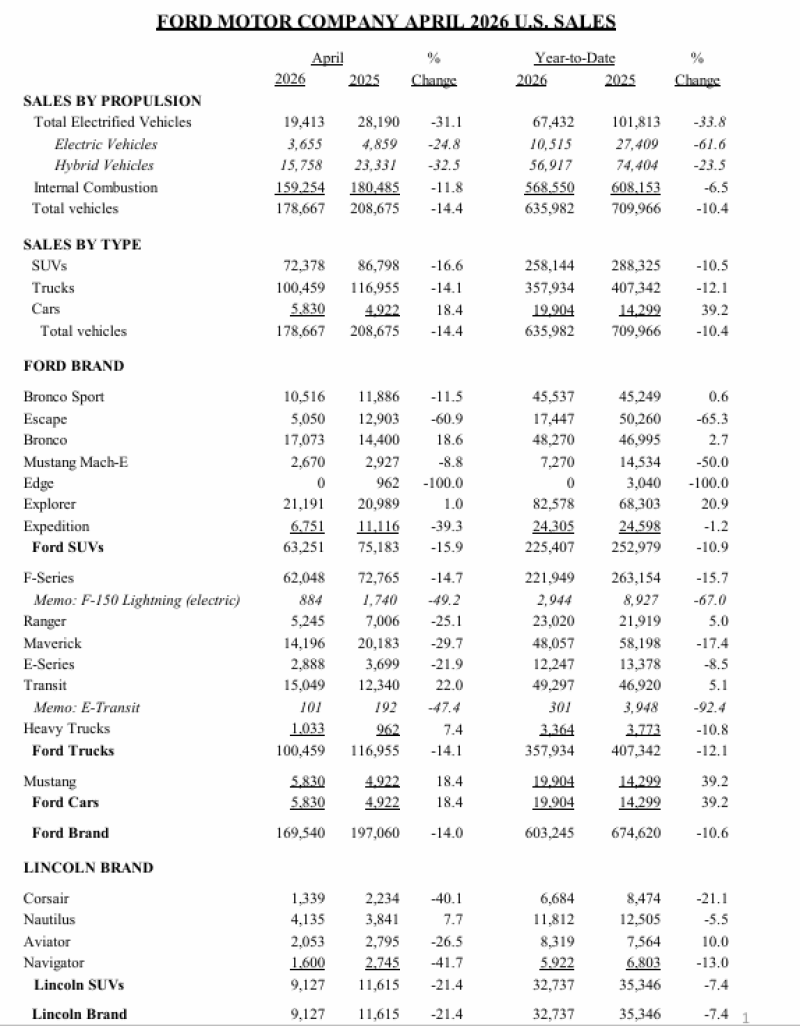
What makes the April data notable is not just the scale of the decline, but its breadth. SUVs, which have long served as the company’s primary profit driver, showed clear signs of weakening demand. Even within Ford’s branded SUV lineup, total volumes were down, reflecting softer consumer appetite in a segment that historically remained resilient even during broader market slowdowns.
The drop in hybrid sales stands out even more sharply. Hybrids had previously acted as a transitional solution for buyers hesitant to move fully into electric vehicles, but the latest data suggests that this middle-ground strategy may be losing momentum.
- Hybrid sales dropped to 15,758 units (–32.5%)
- Year-to-date hybrid sales also declined significantly
A decline of over 30% indicates that consumers are either delaying purchases altogether or reassessing the value proposition of hybrid technology amid pricing and market uncertainty.
Electric vehicles, while still a long-term strategic focus, continue to face volatility. Sales declines in April reflect persistent structural challenges, including cost concerns and uneven charging infrastructure. Even key models such as the Mustang Mach-E and the F-150 Lightning showed weakness, reinforcing the idea that EV adoption is entering a more cautious phase after the initial wave of early adopters.
Electric vehicle sales also declined:
- EV sales: 3,655 (–24.8% YoY)
- Year-to-date EV sales: down over 60%
Even flagship EV models showed weakness:
- Mustang Mach-E: –8.8%
- F-150 Lightning (memo line): –49.2%
The data reflects ongoing challenges in EV adoption, including:
- high upfront costs
- infrastructure limitations
- slowing demand after early adoption phase
Taken together, the report suggests that the U.S. auto market may be undergoing a broader reset. Total vehicle sales for Ford also declined, indicating that the slowdown is not limited to one segment or technology, but is instead affecting the entire portfolio. This kind of synchronized drop across internal combustion, hybrid, and electric vehicles is relatively rare and signals shifting consumer behavior under tighter economic conditions.
For Ford Motor Company, the implications are significant. The company must now navigate weakening demand in its most profitable segment while continuing to invest in electrification, a transition that is proving more uneven than previously expected. The April report ultimately underscores a key reality facing the industry: the path forward is unlikely to be linear, and short-term demand pressures may increasingly shape long-term strategy.
 Artem Voloskovets