Victoria Bazir

It is increasingly becoming a fight over who will control the next layer of financial infrastructure in the United States. Warren has joined major banking groups in criticizing crypto companies operating under OCC trust charters, arguing that some digital asset firms are effectively functioning as banks without accepting the same safeguards imposed on traditional financial institutions.
These companies are effectively crypto banks that want to evade the fundamental safeguards and obligations that come with being a bank, Warren said while discussing federally chartered crypto custody firms.
At the center of the dispute are trust charters issued by the Office of the Comptroller of the Currency (OCC), which allow certain crypto firms to operate under federal supervision instead of relying entirely on fragmented state-by-state licensing. But beneath the political rhetoric lies a much larger issue: the institutionalization of crypto.
Why Custody Has Become the Core Battlefield
The collapse of FTX in 2022 fundamentally changed how regulators and institutions approach digital assets. Before FTX, much of the industry debate focused on trading, speculation, and token valuations. After the collapse, the focus shifted toward infrastructure - particularly custody, asset segregation, compliance, and operational transparency.
That shift matters because custody is one of the few areas where crypto can realistically integrate into traditional finance. Institutional investors, banks, and payment firms are unlikely to allocate significant capital into digital assets without regulated frameworks governing how those assets are stored and protected.

CoinShares data shows that digital asset investment products have continued attracting capital despite increasing regulatory scrutiny. Several recent reporting periods recorded strong positive inflows, reinforcing the view that institutional demand for crypto exposure remains resilient even as political pressure on the sector intensifies.
The persistence of these inflows helps explain why custody infrastructure and banking access have become strategically important battlegrounds for the crypto industry.
Ripple and BitGo Are Defending More Than Crypto
Crypto firms are now openly pushing back against Warren’s position. BitGo CEO Mike Belshe criticized attacks on crypto trust charters, arguing that regulated custody structures are specifically designed to prevent another FTX-style collapse.
Industry participants argue that federally supervised custody models create clearer standards around reserve management, client asset segregation, compliance procedures, and operational audits than many offshore crypto exchanges previously offered.
Companies such as Ripple increasingly view federal trust frameworks as a path toward institutional legitimacy rather than regulatory avoidance. For much of the past decade, regulators viewed crypto as an industry attempting to bypass the financial system. Today, parts of the crypto sector are attempting the opposite strategy: integrating directly into it.
The Banking Industry’s Real Concern
The conflict also exposes growing tension between traditional banking institutions and crypto-native infrastructure providers. Critics of OCC trust charters argue that crypto firms could gain quasi-banking privileges without facing the same capital requirements and consumer protection obligations imposed on banks.
However, the banking industry may also face a more structural concern. If crypto custody firms successfully establish federally regulated infrastructure, they could begin competing directly with traditional financial institutions in areas such as payments, settlement, custody, and cross-border transfers.
That possibility helps explain why opposition to crypto trust charters is now extending beyond anti-crypto lawmakers alone.
Key Positions in the Debate
| Side | Main Argument | Core Concern |
| Elizabeth Warren | Crypto firms resemble banks | Consumer protection risks |
| Banking groups | OCC charters create unfair competition | Regulatory imbalance |
| Ripple / BitGo | Regulated custody improves transparency | Preventing another FTX |
| Crypto industry | Federal rules are better than fragmented oversight | Institutional adoption |
Timeline of the Conflict
| Year | Event |
| 2020 | SEC files lawsuit against Ripple |
| 2022 | FTX collapse shifts focus toward crypto custody |
| 2023 | Regulators tighten oversight of crypto infrastructure |
| 2025–2026 | Debate over OCC crypto trust charters intensifies |
Why Markets Are Paying Attention
The dispute has implications far beyond Ripple or XRP. The future of federally regulated crypto custody could influence:
- institutional participation in digital assets;
- banking access for crypto firms;
- the structure of future crypto ETFs and tokenized financial products;
- the long-term integration of blockchain infrastructure into the U.S. financial system.
If OCC trust structures survive political pressure, firms like Ripple and BitGo could strengthen relationships with banks, payment providers, and institutional investors.
If regulators move to restrict these frameworks, the industry could once again shift toward fragmented oversight and offshore infrastructure, the exact environment many policymakers blamed after the FTX collapse.
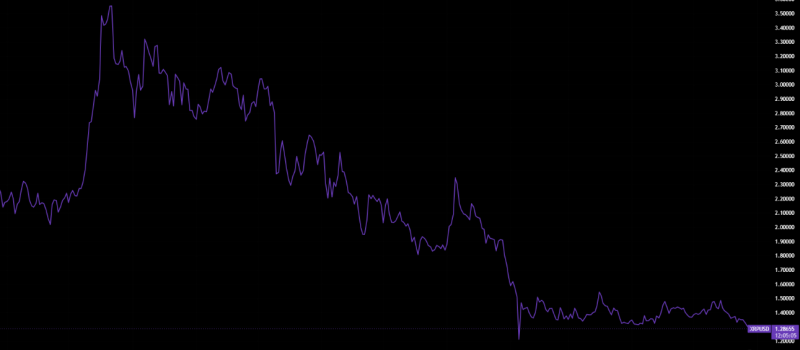
The XRP price trend over the past year highlights how closely crypto infrastructure-related assets remain tied to regulatory sentiment in the United States. Major moves in XRP have repeatedly coincided with periods of heightened discussion around SEC enforcement, banking access, and institutional adoption narratives.
The broader question is no longer whether crypto will be regulated. The real question is whether crypto firms will eventually become part of the regulated financial system or remain permanently outside it.
 Victoria Bazir