Eseandre Mordi

⬤ Global money growth is picking up speed at the start of 2026. The worldwide cash pile rose 18.6% year over year in the first two months of the year - an unusually fast expansion in the amount of cash circulating through the global system. The six-month chart paints a clear picture: a steady climb through late 2025 that steepens sharply into January 2026 before consolidating near its recent peak.
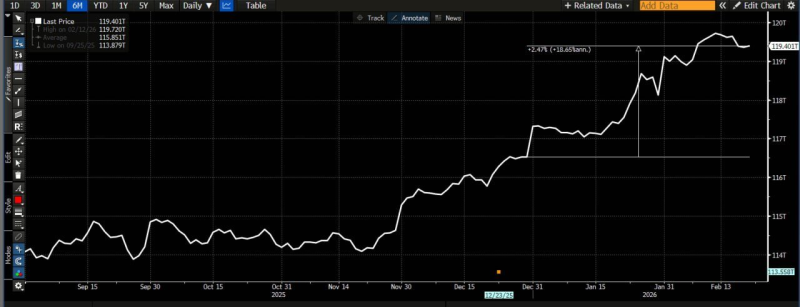
⬤ The numbers back it up. The latest reading on the "cash pile" metric landed around $119.401T, up from a six-month low near $113.879T, with an annualized growth rate of roughly 18.65% - closely matching the 18.6% figure cited in the source. That kind of pace is not a gradual drift. It reflects a macro backdrop where liquidity is genuinely shifting fast.
When cash levels expand this quickly, it changes how prices form across markets and intensifies debates around inflation persistence versus disinflation forces.
⬤ Speed matters here more than scale. The source text frames this as a "money explosion," not a steady trend. When $7.8 trillion is already parked in U.S. money market funds on top of a global pile nearing $119T, the question shifts from "how much cash is out there" to "where does it go next." Capital sitting idle at scale tends not to stay idle for long.
⬤ The macro implications are broad. A global cash pile growing near 19% annually can shift risk appetite, reprice assets, and pressure central banks to reconsider policy expectations. It also feeds directly into crypto markets - Bitcoin has already been lagging behind global liquidity growth, a divergence that tends to resolve rather than persist. As 2026 develops, this liquidity surge will likely stay front and center in macro conversations across every major asset class.
 Eseandre Mordi