Sergey Diakov
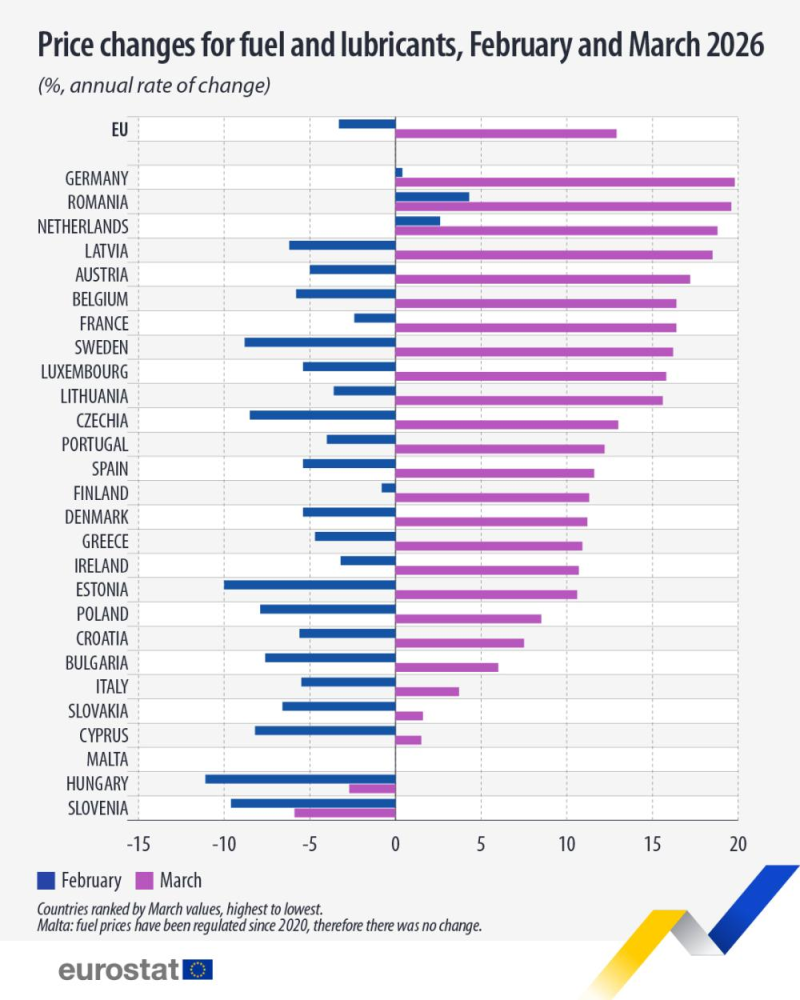
In March 2026, fuel prices in the European Union are higher than in previous periods, which stops the earlier period where prices were lower. As specified by recent data Eurostat, the mean price for fuels and lubricants for personal transport is 12.9% higher than the price in the same month of the previous year - this change indicates that the movement of inflation in the region is different than it was before.
Top annual increases across EU countries
For almost all countries in the European Union, prices are higher. The highest measurements for the year are in those countries:
- Germany +19.8%
- Romania +19.6%
- Netherlands +18.8%
- Latvia +18.5%
- Austria +17.2%
By looking at the data, Germany besides Romania are at the top of the list because they have the highest measured increase for the year in fuel and lubricant prices - but only Hungary & Slovenia have prices that are lower than the previous year, with decreases of 2.7% and 5.9%. To compare the to previous months, the size of those decreases is smaller.
If we look at the specific fuel types, diesel prices are much higher than petrol prices in both the monthly and yearly measurements. In the European Union, diesel is 19.8% more expensive than it was one year ago, while petrol is 9.4% more expensive. On a monthly basis, the speed of the change is even more visible, as diesel is 19.1% higher and petrol is 10.6% higher than the prices in February 2026.
Possible factors behind the price surge
Due to the size of the changes and the fact that they happen at the same time across many countries, there are multiple possible reasons for the higher prices, which include a return to higher levels after prices were low, higher costs for wholesale energy and a higher need for transport fuels. Because diesel is increasing more than petrol, there is likely more demand for fuel in the freight and industrial sectors.
At the level of individual countries, the prices for diesel are much higher in Central or Northern Europe. Czechia next to Sweden have the highest increases for the month at 27.6% and there are also high increases in Estonia at 26.8%, Latvia at 25.4%, Belgium at 25.2% and the Netherlands at 25.1%. With the smallest increases in Slovenia at 2.9%, Slovakia at 7.0% & Hungary at 7.0%, there is still a general trend where prices move upward across the entire group of countries.
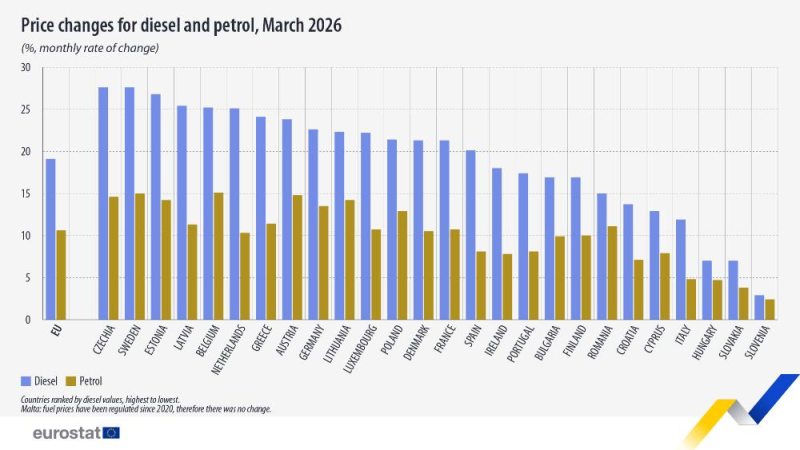
And petrol prices are also higher in all countries of the European Union, though the speed of the increase is lower than the speed for diesel. The highest monthly changes are in Belgium at 15.1%, Sweden at 15.0%, Austria at 14.8% & Czechia at 14.6%. In Estonia besides Lithuania, the price is 14.2% higher. The smallest changes for petrol are in Slovenia at 2.4%, Slovakia at 3.8%, Hungary at 4.7% & Italy at 4.8%.
Conclusion:
To conclude the data from March 2026 shows that the direction of fuel prices in the European Union has changed. Since diesel is the main driver and prices are higher in almost every member state, there are signs that transport and energy costs are creating new inflation. It is possible that this change will affect the prices that consumers pay for other goods in the future.
 Sergey Diakov