
 Usman Salis

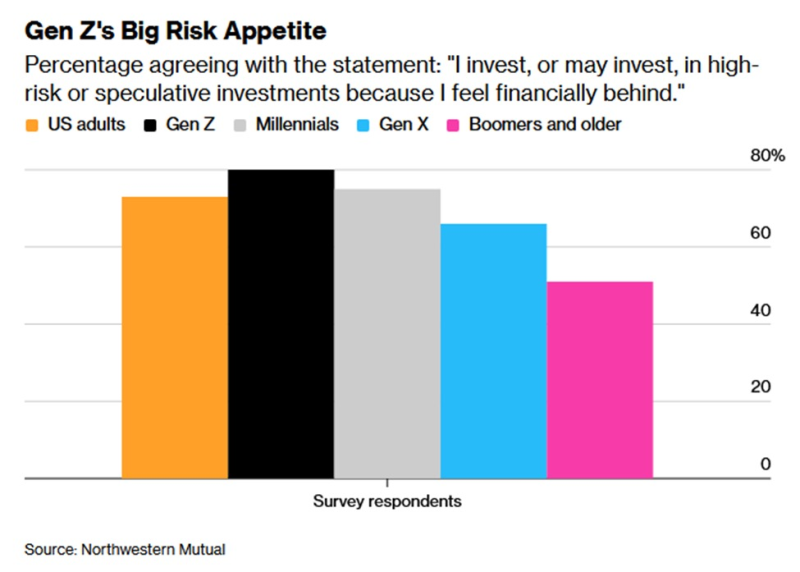
A new survey is changing our view of young investors. About 80% of Gen Z respondents say they already invest or plan to invest in high-risk assets. Their main reason is not excitement, but anxiety. Many feel they are falling behind financially and are looking for quicker ways to catch up. This is the highest percentage among all generations in the study.
A Generation Divided by Risk Tolerance
The generational gap in investing is clear. About 75% of Millennials show this behavior, compared to 66% of Gen X and only 51% of Boomers and older investors. On average, around 73% of all US adults surveyed report similar habits.
When people feel left out of the economy, they stop playing it safe. Taking risks on speculative assets starts to look less like gambling and more like a way to get by.- The Kobeissi Letter
The trend is steady: younger investors are more willing to take risks. As traditional ways to build wealth, like buying a home or investing in index funds, become harder to access, younger people are turning to new strategies that retail investors have had to reconsider as markets change.
Sports Betting, Options, and the Speed of Financial Desperation
The survey highlights another surprising trend: about one in three Gen Z respondents is either investing in or seriously thinking about sports betting as a way to manage their finances. Eight out of ten believe that taking risks with speculative investments could help them achieve their goals faster than traditional approaches. Still, only about half say they feel financially secure. This mix of bold bets and lingering uncertainty reflects the mindset of a generation that has seen retail investors put a record $100 billion into stocks all at once.
The downstream effects are already evident in derivatives markets. Retail participation in options trading continues to increase, with the number of retail options buyers reaching record levels. The heightened risk appetite among younger investors is not merely reflected in survey data; it is actively transforming trading volumes, volatility patterns, and market dynamics across various asset classes. As financial insecurity becomes more prevalent, speculative behavior increasingly becomes the norm rather than the exception.
 Usman Salis



