Usman Salis
⬤ US economic growth expectations for 2026 have been climbing steadily over the past year. Bloomberg data compiled by Apollo Chief Economist Torsten Slok shows consensus forecasts rising from around 1.5% earlier in 2025 to slightly above 2% heading into early 2026.
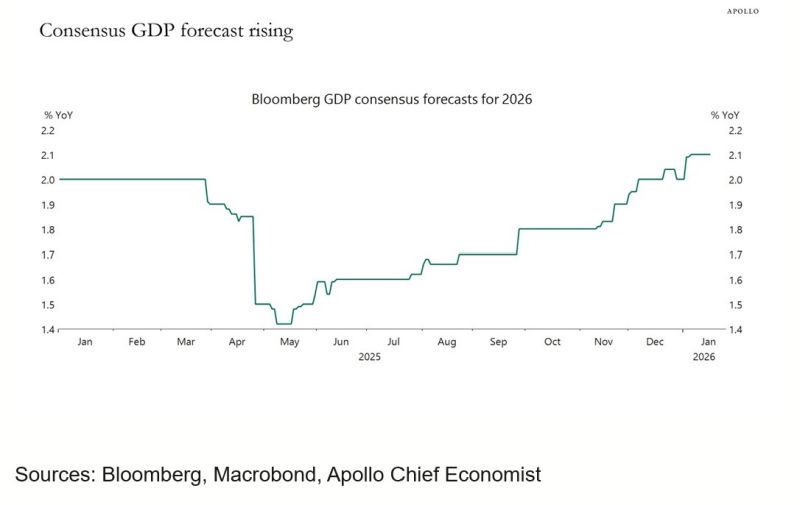
⬤ The improving outlook stems from stronger productivity trends, resilient private-sector activity, and fading recession fears. Still, these growth projections remain moderate by historical standards, suggesting cautious optimism rather than expectations of a boom. Economists note the economy appears capable of sustaining forward momentum even with elevated interest rates and structural headwinds.
⬤ Despite the upward trend, the 2026 outlook carries significant uncertainty. The range of possible outcomes remains unusually wide, with both stronger-than-expected growth and weaker scenarios still on the table. This dispersion reflects sensitivity to policy decisions, labor market shifts, and whether current financial market valuations align with real economic performance.
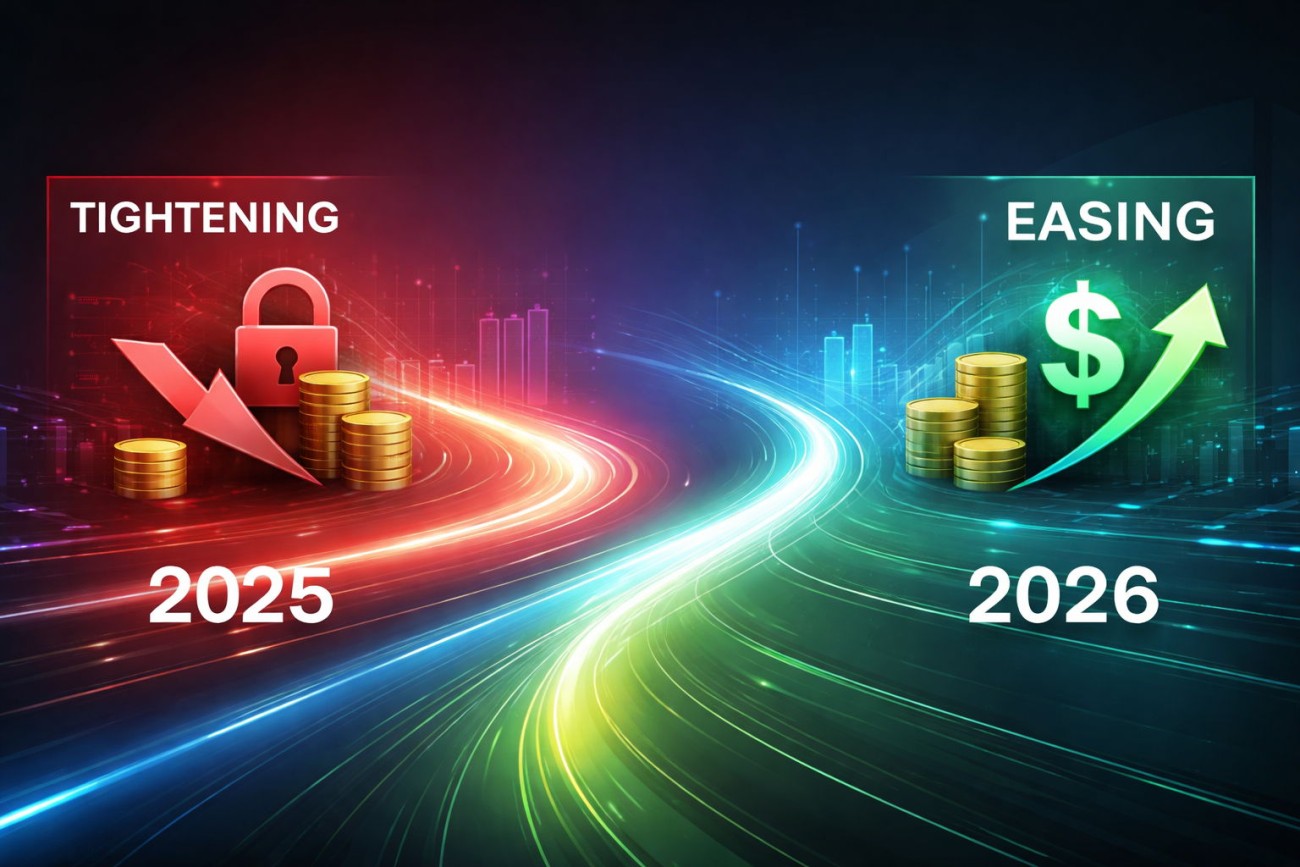
⬤ These evolving growth expectations matter because they influence employment, investment decisions, and overall financial stability. Whether the positive trajectory holds depends on maintaining productivity gains, avoiding policy mistakes, and keeping growth aligned with labor market health. As we move through 2026, balancing optimism with realistic risk assessment will be critical.
 Usman Salis