Saad Ullah
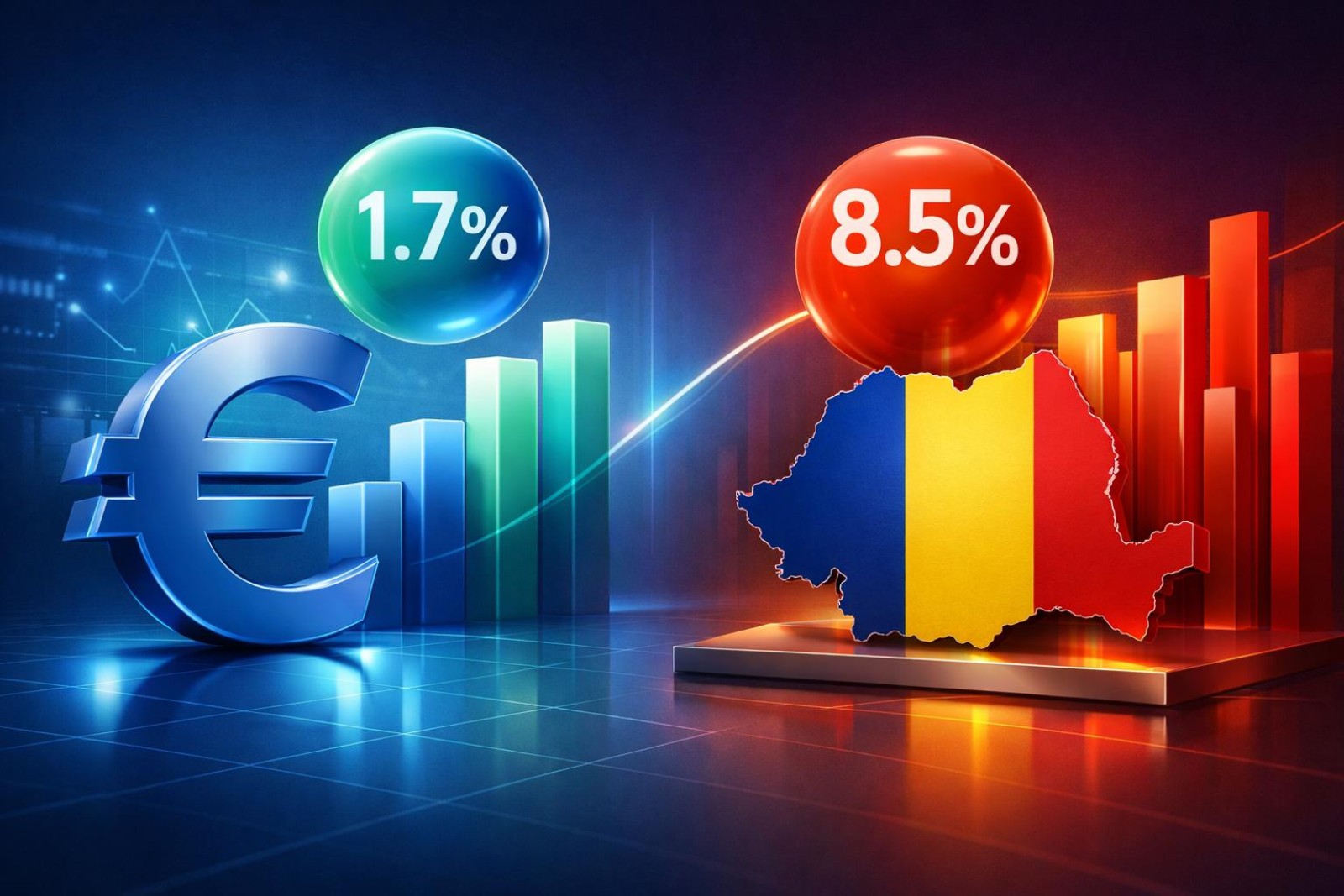
⬤ European inflation kicked off 2026 on a softer note. The euro area came in at 1.7% and the broader EU at 2.0% for January, per Eurostat. The regional split was hard to miss: France held the lowest rate at just 0.4%, followed by Denmark at 0.6%, while Romania surged to 8.5% and Slovakia reached 4.3%. Western Europe is clearly cooling faster than its eastern neighbors, and the Eurostat map makes that gap pretty obvious.
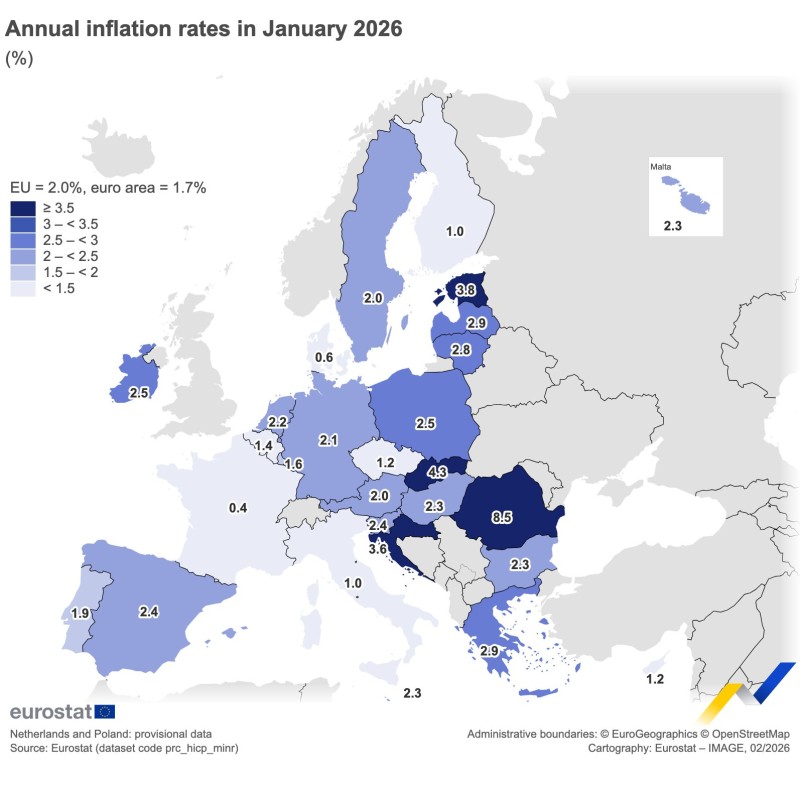
⬤ The bigger euro area economies showed a mixed but broadly contained picture. Germany came in at 2.1%, Spain at 2.4%, Belgium at 2.2%, Italy at 1.0%, and the Netherlands at 1.4%. Sweden matched the EU average at 2.0%. These numbers reflect a gradual drift toward the ECB's target, continuing the trend of inflation moving closer to the ECB's 2% target that shaped much of last year's policy conversation.
The gap between countries suggests uneven progress - a dynamic that continues to shape policy debates and market sentiment.
⬤ Eastern Europe is still driving most of the upward pressure. Romania's 8.5% rate dwarfs the bloc's average, with Slovakia at 4.3%, Estonia at 3.8%, and Croatia at 3.6% all running hot. These readings reflect domestic structural factors that have kept prices elevated even as EU inflation stabilized near target while regional disparities remained wide through much of 2025.
⬤ The January data confirms that disinflation is real, but it's not evenly spread. The euro area's 1.7% now sits below the ECB's medium-term goal - which is notable in itself - yet the wide variation across member states keeps the picture complicated. How eurozone inflation data reshapes expectations for monetary policy in the months ahead will depend a lot on whether that east-west divide starts to narrow or holds firm.
 Saad Ullah