Saad Ullah
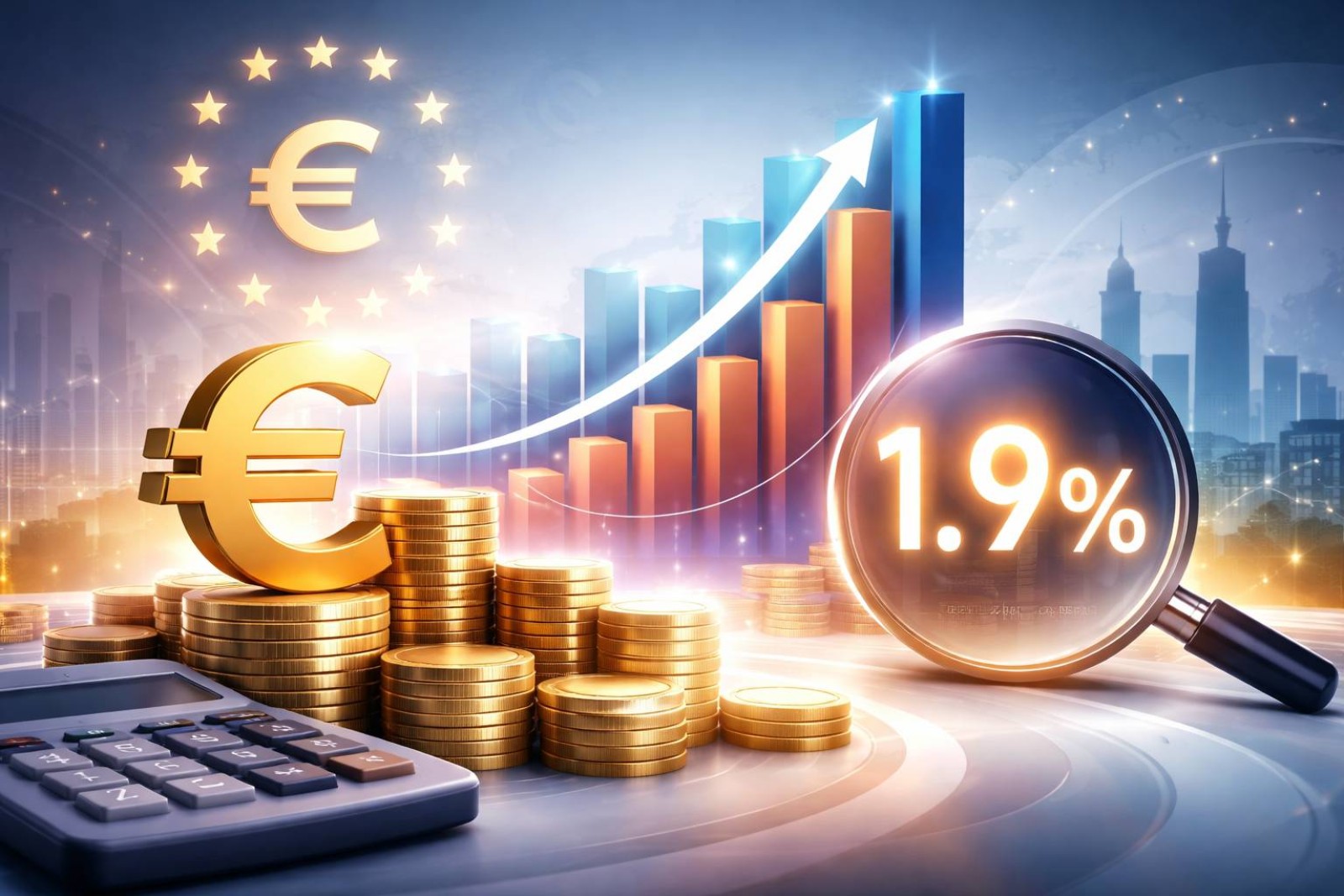
⬤ Euro area inflation edged higher in February 2026, with the flash estimate pointing to a 1.9% annual increase compared to 1.7% in January. The modest acceleration was driven primarily by services and food components, while energy prices continued to decline on a yearly basis. The latest data underscores how inflation dynamics remain uneven across major sectors of the euro area economy.
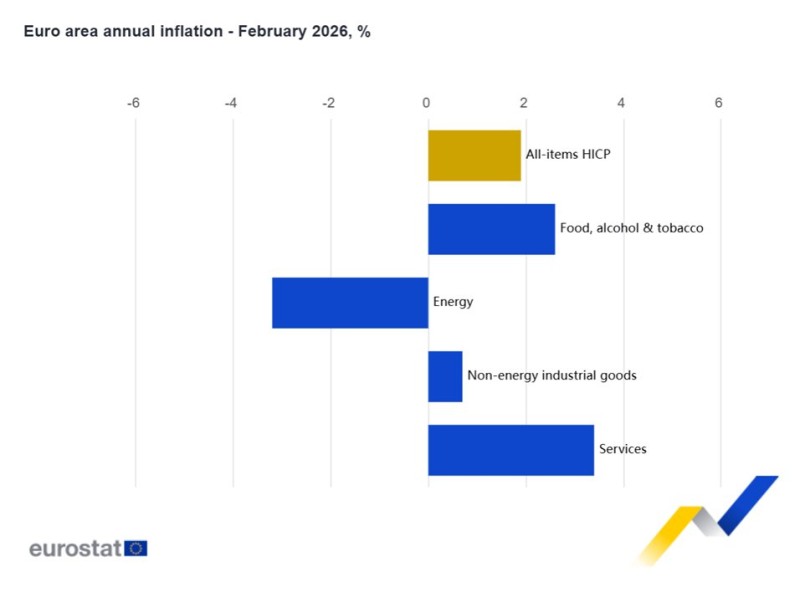
⬤ A breakdown of components shows services inflation at 3.4% year on year, making it the strongest contributor to overall price growth. Food, alcohol and tobacco rose by 2.6%, while non-energy industrial goods increased by 0.7%. Energy prices fell by 3.2%, continuing to exert downward pressure on the headline rate. The divergence between firm services inflation and negative energy readings highlights how domestic demand pressures remain stronger than externally driven cost factors.
Services remain the stickiest category, while energy continues to offset broader price gains.
⬤ The all-items HICP rate of 1.9% places inflation just below the European Central Bank's 2% medium-term target. The slight pickup from January suggests the previous disinflation trend may be stabilizing rather than accelerating further downward. Euro area annual inflation slowed to 1.7% in January 2026 amid uneven regional trends, illustrating how headline figures have recently fluctuated around the ECB benchmark.
⬤ Earlier analysis showed that inflation in the euro area slipped below the ECB's 2% target as deflation concerns briefly surfaced, reinforcing how price growth has remained close to the central bank's objective. A separate report added that energy effects can mask deeper pressure as services inflation stays stubborn, a theme that aligns with February's services-led increase despite negative energy readings.
⬤ The February reading of 1.9% reflects a delicate balance between cooling energy prices and persistent services inflation. With headline inflation hovering near the ECB's target and internal components moving at different speeds, upcoming data releases will be closely watched to assess whether price stability is becoming more entrenched or if renewed pressures emerge across key sectors.
 Saad Ullah