Sergey Diakov

XRP is sitting right on a critical support level while overhead resistance keeps pushing it down. The chart setup looks tight, and if this support cracks, the next stop could be somewhere between $1.30 and $1.20. Here's what's happening and why it matters.
XRP Trades Into Key Support Band as Triangle Resistance Holds
XRP is approaching a technical decision point. Price is trading into a marked horizontal support band while a descending "triangle resistance" line keeps blocking any attempts to push higher. A closing break below this support would open the door toward the next stabilization zones, with $1.30 and $1.20 highlighted as areas to watch if the current level gives way.
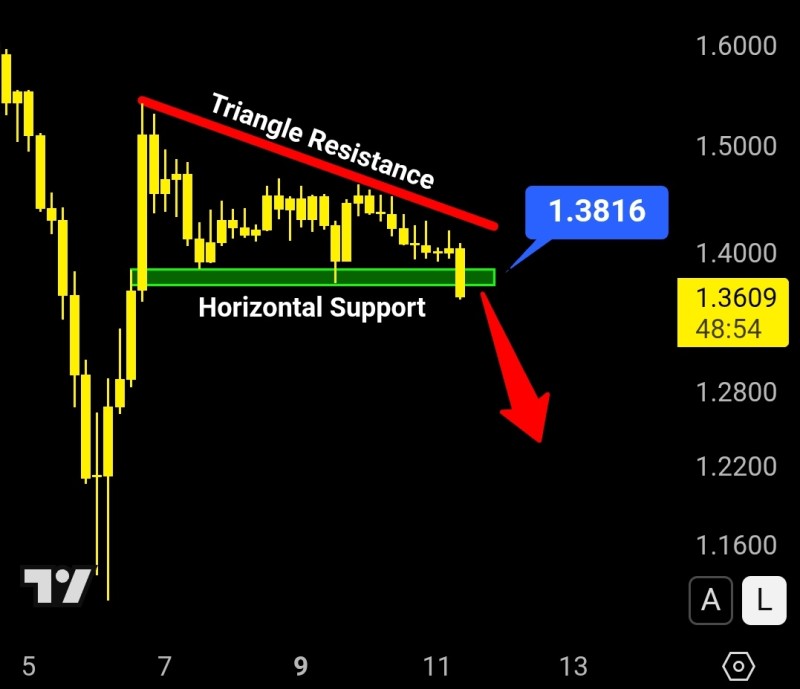
The chart shows repeated rejection under the down-sloping trendline, keeping XRP's rebound attempts locked down as candles squeeze toward the support shelf. The screenshot shows 1.3816 as a nearby reference point, while the live price sits around 1.3609, meaning XRP is already testing the support area rather than trading comfortably above it.
A closing break below support would be the first step toward unlocking a potential higher-low zone.
What Happens If Support Breaks?
If the support fails on a closing basis, the $1.30–$1.20 zone becomes the next region where the market might try to stabilize. This setup resembles the type of triangle squeeze volatility setups that often resolve with sharper moves once the market confirms a break.
That framing lines up with broader coverage of XRP retesting major long-term support zones, where reactions can be strong but depend on whether the breakdown sticks or quickly reverses. The current chart emphasis is on confirmation, with the horizontal base acting as the line between consolidation and continuation.
Why This Compression Matters for XRP's Next Move
This kind of compression matters because it concentrates liquidity and positioning around a single level, which can amplify short-term volatility if a close below support triggers momentum selling. At the same time, holding the support keeps XRP locked in a range, extending the standoff between triangle resistance and horizontal demand—similar to periods where critical support zones determine the next trend leg.
The setup is simple: either support holds and XRP stays rangebound, or it breaks and the market shifts focus to lower zones. Right now, price is sitting exactly where that decision gets made.
 Sergey Diakov