Victoria Bazir

As a new lawsuit begins against Fenwick & West, the legal consequences of the FTX bankruptcy are reaching more entities - this legal action raises a difficult question about the accountability of the professional organizations that supported the exchange. In a complaint filed in Washington, D.C., plaintiffs claim that lawyers at Fenwick helped organize the operational systems for FTX during the time when managers allegedly mishandled money belonging to customers.
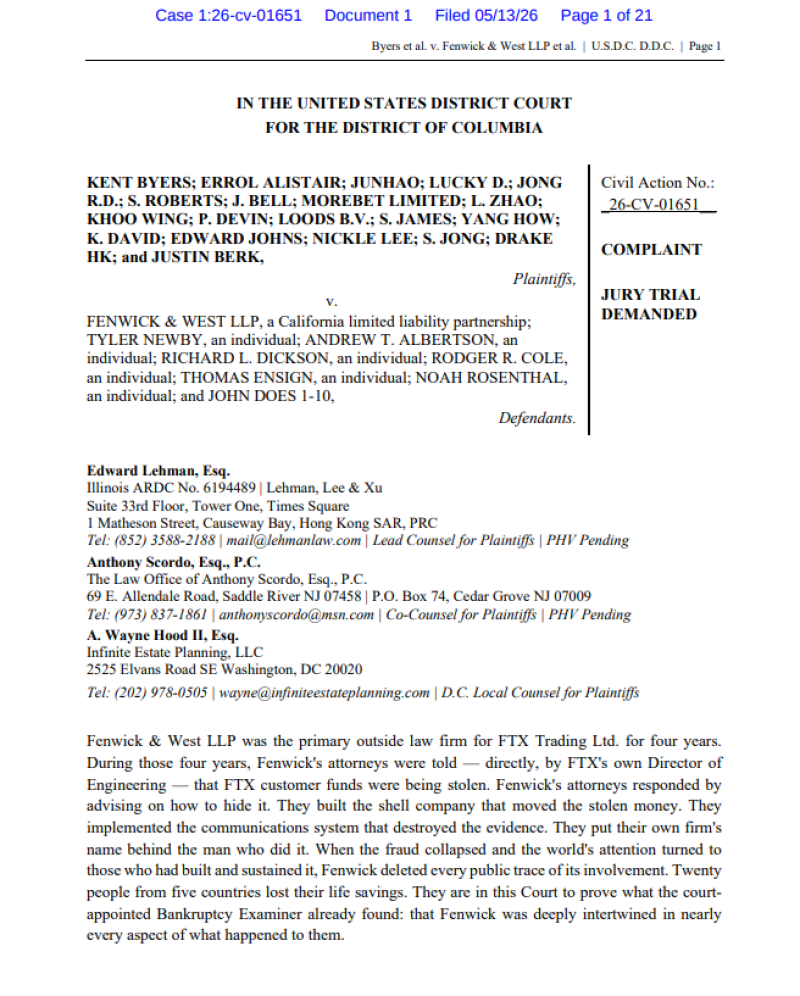
By the reasoning in this lawsuit, the legal framework was not separate but was instead integrated into how FTX functioned internally. And this development alters how people discuss the failure of the company. Firms in the cryptocurrency industry used traditional organizations to appear credible - those entities included:
- law firms;
- auditors;
- banking partners;
- compliance vendors;
- political advisers.
To achieve this FTX followed this strategy with high intensity. It is the case that the exchange did not present itself as a platform located offshore but instead acted as a financial company that is part of established professional networks.
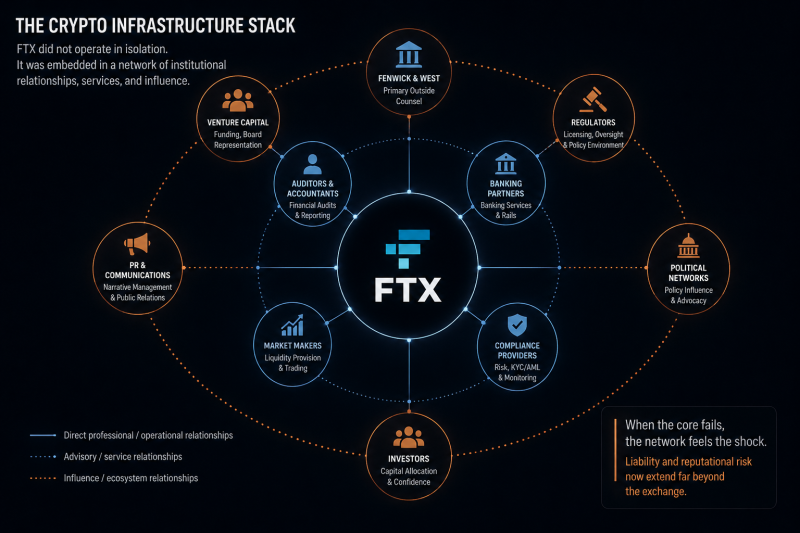
Because of those connections, FTX functioned within a larger network of institutions than earlier cryptocurrency exchanges. When this lawsuit proceeds, it is significant because it directs attention toward external parties. Because of this change, plaintiffs are now suing the professional groups that worked with the exchange instead of only suing the managers. In the filing the argument is that service providers are not just neutral parties when a platform fails.
There are likely to be lasting effects on the entire industry because of this case. When large law firms, auditors and banks started working in cryptocurrency, they did so because the potential for profit was high while the risk to their reputations seemed low - but the events at FTX are likely to change how the firms evaluate those risks.
As finance and technology undergo regulatory changes, this case shows a new trend. It is common for courts and government agencies to investigate if outside advisers made unstable companies seem reliable - participating in their business. And cryptocurrency firms are now being judged by the same requirements.
If this trend continues, the industry will move toward a more cautious way of operating. To protect themselves, institutional partners are likely to require that platforms use strict controls, share more data and keep business functions separate. In this situation, the legal case is not only about the actions of FTX. It is about the way that legal responsibility can move to the supporting organizations when a cryptocurrency company loses the trust of the public.
 Victoria Bazir