Marina Lyubimova

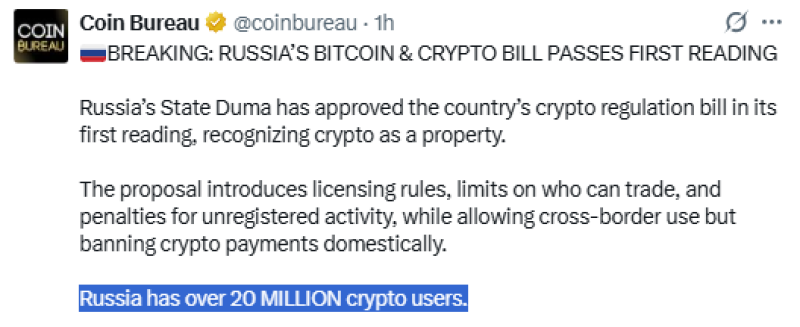
Russia's State Duma is moving forward with draft law No. 1194918-8 to create formal rules for cryptocurrency in the country. The proposal is a framework for digital assets that classifies them as property. By this definition, people may own and transfer those assets but they cannot use them to pay for goods or services within Russia.
Legal status and usage
In the proposed law, digital assets have a status that allows for legal protection - but everyday transactions with the assets are not allowed for residents. At the same time the rules allow people to use cryptocurrency for foreign trade - this shows that officials want to control the assets while using them for international purposes.
If the government adopts the law, the way that individuals and organizations use assets will change. There is more clarity about who owns an asset and how the law protects it. For users there are more requirements to report their activity to the government. To follow the law, people must use platforms and storage services that the state regulates. And the ban on using cryptocurrency for common payments inside the country remains in place.
The number of people affected by those changes is high because many individuals in the country participate in the market.
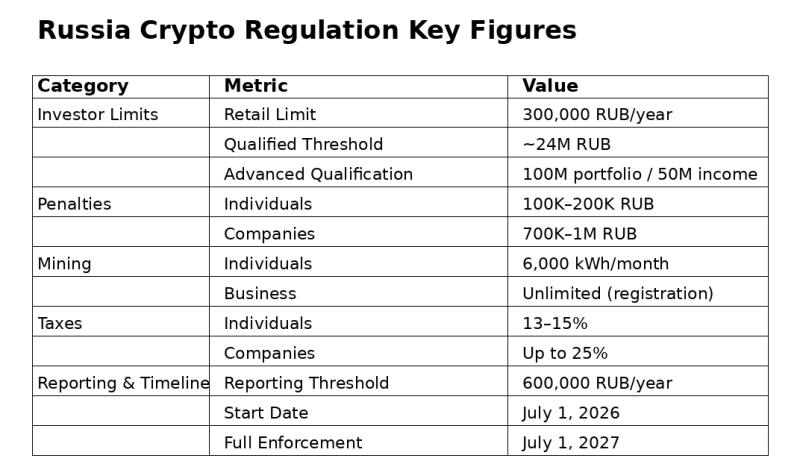
Key regulatory parameters
Policy direction
To manage the market, the government uses two different methods. It applies strict rules to domestic activity but allows some use in the global financial system. When authorities create the rules, they try to lower the chances of fraud and activity that they do not monitor. Then again they want to allow certain uses for transactions that happen outside the country.
The law is a sign that the market is becoming more organized. Under those rules, the state monitors activity and ensures that people use channels that follow the law.
 Marina Lyubimova