Editorial staff
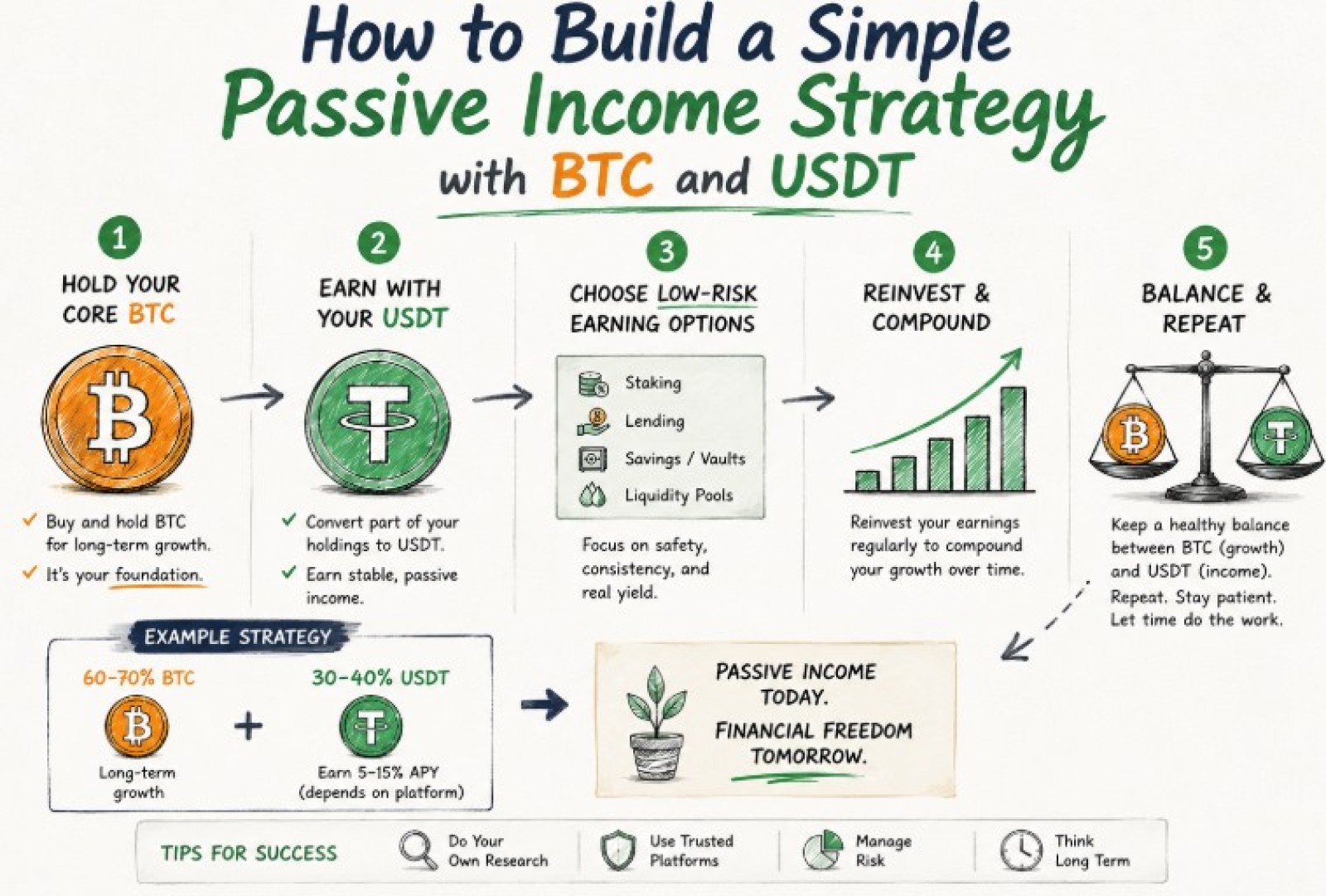
As the cryptocurrency market matures, more investors are looking beyond active trading and exploring ways to generate passive returns from digital assets they already hold. For many users, Bitcoin (BTC) and stablecoins such as USDT form the foundation of a crypto portfolio due to their liquidity, widespread adoption, and different risk profiles.
While active trading remains popular, passive income strategies have gained attention among users seeking a lower-maintenance approach to participating in the crypto ecosystem. By combining flexible stablecoin products with fixed-term BTC savings strategies, investors can potentially create a more balanced approach to managing idle digital assets.
Why BTC and USDT Are Commonly Combined
BTC and USDT serve very different purposes within a portfolio.
Bitcoin (BTC)
Bitcoin is often viewed as a long-term growth-oriented asset. Many holders choose to keep BTC for extended periods rather than actively trade short-term price movements.
USDT
USDT is a stablecoin designed to track the value of the U.S. dollar. It is commonly used for:
- Reducing portfolio volatility
- Preserving liquidity
- Managing short-term capital
- Accessing stablecoin earning products
Because of these differences, some investors combine BTC and USDT to balance long-term exposure with liquidity and stability.
The Goal of a Passive Income Strategy
A passive crypto strategy generally aims to:
- Reduce inactive capital
- Generate yield on held assets
- Minimize constant trading activity
- Improve portfolio efficiency
Rather than relying entirely on market timing, users allocate a portion of their holdings into savings or earning products that may provide returns over time.
This approach has become increasingly popular among investors seeking crypto passive income opportunities without full-time market participation.
Using Flexible Savings for USDT
Flexible stablecoin products are often used for liquidity-focused portfolio allocation.
Platforms such as CoinEx Flexible Savings allow users to deposit stablecoins into products designed to generate yield while maintaining relatively flexible access to funds.
For investors holding idle stablecoins, this can create an opportunity to potentially earn interest on USDT without committing to long-term lock-up periods.
Why Flexible Products Appeal to Stablecoin Holders
Flexible products may suit users who:
- Need regular liquidity access
- Want lower-maintenance earning strategies
- Hold short-term capital reserves
- Prefer reduced commitment periods
Because USDT is commonly used as a trading reserve or defensive asset, maintaining accessibility is often important for portfolio flexibility.
Using Fixed Savings for BTC
BTC holders often approach passive income differently than stablecoin holders.
Since many Bitcoin investors already follow long-term holding strategies, fixed-duration savings products may align naturally with their investment horizon.
Platforms such as CoinEx Fixed Savings provide structured products that allow users to potentially earn on idle BTC through fixed-term savings participation.
Why Long-Term Holders Use Fixed Savings
Fixed BTC products may appeal to users who:
- Already plan to hold BTC for months or years
- Do not require immediate liquidity
- Prefer passive portfolio management
- Want structured savings periods
This type of strategy allows long-term investors to explore passive earning opportunities while maintaining BTC exposure.
Building a Simple Allocation Structure
There is no universal portfolio structure, but some investors divide assets based on liquidity needs and investment goals.
A simplified example could include:
- A liquid USDT allocation in flexible savings
- A longer-term BTC allocation in fixed savings
- A separate reserve held outside savings products for emergencies or active trading
This approach may help balance:
- Accessibility
- Long-term holding goals
- Yield generation
- Risk management
Each investor’s allocation should reflect their own financial situation and risk tolerance.
Risk Management Matters
Even passive crypto strategies involve risk.
Before participating in any savings product, users should carefully evaluate:
- Platform security
- Custodial structure
- Redemption policies
- Historical reliability
- Regulatory environment
Crypto savings products are not equivalent to insured bank accounts, and returns are not guaranteed permanently.
Diversification and responsible position sizing remain important parts of managing digital asset exposure.
Flexible vs. Fixed Savings: Key Differences
Flexible Savings
Flexible products prioritize liquidity and accessibility.
They may suit:
- Stablecoin holders
- Short-term capital management
- Users wanting withdrawal flexibility
Fixed Savings
Fixed-term products prioritize commitment duration and structured holding periods.
They may suit:
- Long-term BTC investors
- Passive accumulation strategies
- Users comfortable with lock-up periods
Many investors combine both approaches depending on portfolio objectives.
Avoiding Common Mistakes
When building passive crypto strategies, users should avoid:
- Chasing unrealistic yield claims
- Concentrating excessive funds on one platform
- Ignoring withdrawal restrictions
- Overcommitting liquid capital into long lock-up products
A sustainable strategy is usually built around realistic expectations and consistent risk management rather than short-term hype.
Final Thoughts
Passive income strategies involving BTC and USDT have become increasingly common as crypto savings products continue to evolve. By combining stablecoin flexibility with longer-term BTC savings approaches, investors can explore ways to improve portfolio efficiency without relying entirely on active trading.
For users interested in flexible stablecoin earning opportunities, CoinEx Flexible Savings offers products focused on accessible crypto savings participation.
Meanwhile, long-term Bitcoin holders exploring structured earning strategies may consider products such as CoinEx Fixed Savings as part of a broader passive portfolio approach.
As always, careful research, realistic expectations, and disciplined risk management remain essential when participating in crypto savings products.
 Editorial staff