Alex Dudov

- ETH Market Reaction
- Tokenization Is Moving From Narrative to Infrastructure
- Tokenized Treasury Assets Surge
- Why Ethereum Keeps Winning Institutional Capital
- Real-World Assets Move On-Chain
- Wall Street Is Quietly Building On-Chain Finance
- Stablecoin Liquidity Hits New Highs
- ETH Bulls See Momentum Building
BlackRock is deepening its commitment to Ethereum as Wall Street’s tokenization race accelerates.
The world’s largest asset manager is preparing new tokenized money-market products on Ethereum, building on the momentum of its rapidly growing BUIDL fund, which has already reached roughly $2.5 billion in assets. The expansion includes a digital share class tied to BlackRock’s $6.1 billion Treasury liquidity fund, alongside a new product designed specifically for stablecoin holders.
Both initiatives will issue blockchain-based ownership tokens directly on Ethereum, allowing institutions to transfer, settle, and potentially use the assets across decentralized finance infrastructure.
The move reinforces a trend that has become increasingly clear in 2026: Ethereum is emerging as Wall Street’s preferred settlement layer for tokenized real-world assets.
ETH Market Reaction
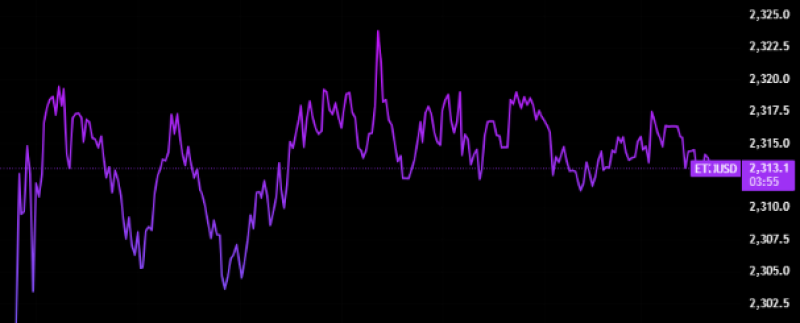
Ethereum remained resilient as institutional tokenization narratives strengthened around BlackRock’s expansion into on-chain Treasury products.
Tokenization Is Moving From Narrative to Infrastructure
For years, tokenization was treated as a long-term blockchain experiment. Now major financial institutions are beginning to operationalize it.
BlackRock’s latest Ethereum expansion signals that tokenized Treasury products are no longer niche crypto instruments. Instead, they are becoming programmable financial infrastructure capable of moving traditional capital markets on-chain.
Unlike speculative crypto assets, tokenized money-market funds generate real-world yield backed by Treasury exposure. By placing these products on Ethereum, institutions gain faster settlement, improved collateral mobility, and interoperability with digital financial systems.
That changes how capital can move.
Instead of waiting through legacy settlement rails, tokenized fund shares can theoretically be transferred, pledged as collateral, integrated into lending systems, or used inside DeFi applications almost instantly. For Ethereum, that creates something more important than hype: persistent financial activity.
Tokenized Treasury Assets Surge
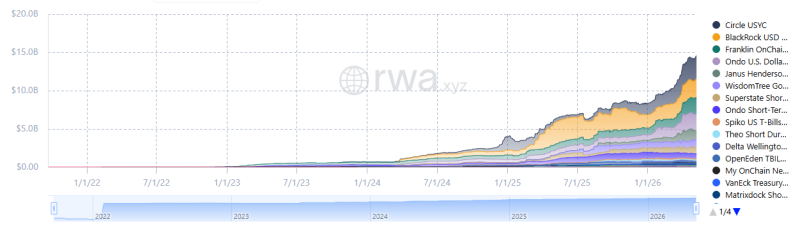
Tokenized Treasury products expanded rapidly as institutional investors accelerated adoption of blockchain-based financial infrastructure.
Why Ethereum Keeps Winning Institutional Capital
BlackRock’s decision also highlights a broader institutional preference that has become increasingly difficult to ignore.
When large financial firms launch tokenized products, Ethereum continues to dominate as the default network. There are several reasons for this:
- deep liquidity
- mature developer infrastructure
- regulatory familiarity
- strong security history
- existing institutional integrations
More importantly, Ethereum already hosts much of the stablecoin economy and tokenized asset ecosystem. That creates a network effect traditional finance firms increasingly want access to.
Each new institutional product strengthens Ethereum’s position as the core infrastructure layer for on-chain finance. And unlike short-lived crypto trends, tokenized Treasury products generate recurring activity:
- transfers
- settlements
- collateralization
- lending
- liquidity provisioning
That translates into sustained demand for Ethereum block space and potentially higher long-term network revenue.
Real-World Assets Move On-Chain
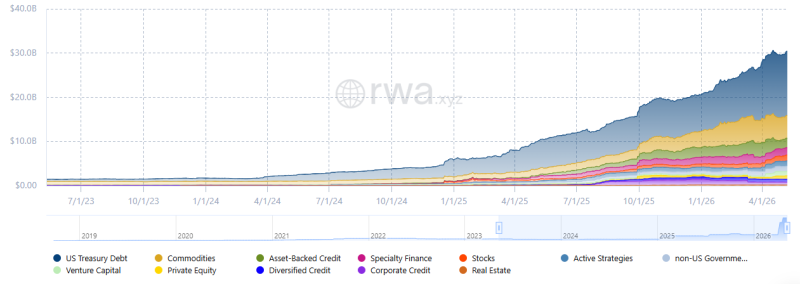
Tokenized real-world assets excluding stablecoins surpassed $30 billion as institutional capital increasingly moved onto blockchain infrastructure.
Wall Street Is Quietly Building On-Chain Finance
The significance of BlackRock’s expansion goes beyond one asset manager. Traditional finance is gradually rebuilding portions of the financial system directly on blockchain infrastructure. The transition is still early, but the direction is becoming clearer:
- tokenized Treasuries
- tokenized funds
- stablecoin settlement
- on-chain collateral
- programmable financial assets
Ethereum sits at the center of that transition. BlackRock itself has increasingly referenced tokenization and real-world assets as major long-term growth areas for digital finance. Its continued expansion on Ethereum acts as institutional validation not only for the blockchain, but also for the broader thesis that traditional markets may eventually migrate partially on-chain.
That is why many analysts view tokenized finance as one of Ethereum’s strongest structural growth drivers over the next decade.
Stablecoin Liquidity Hits New Highs
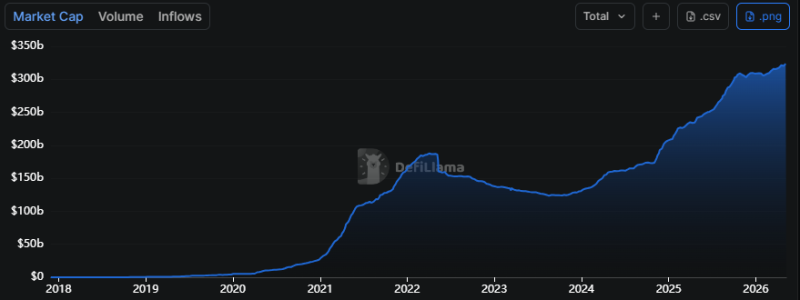
Stablecoin market capitalization climbed above $300 billion, reinforcing the liquidity foundation behind tokenized finance and on-chain settlement systems.
ETH Bulls See Momentum Building
The market reaction reflects growing optimism that institutional adoption could become Ethereum’s next major catalyst. As more tokenized assets move onto Ethereum, network usage could rise independently of retail speculation cycles. That distinction matters because it ties blockchain demand directly to real financial activity rather than purely trading momentum.
Some bullish analysts now argue that Ethereum could eventually revisit the $5,000 level if broader crypto market conditions remain supportive and tokenization adoption continues accelerating. While price forecasts remain speculative, BlackRock’s expansion strengthens one important narrative: the world’s largest asset managers are no longer experimenting with blockchain infrastructure.
They are actively building on it. And increasingly, they are choosing Ethereum to do it.
 Alex Dudov