Victoria Bazir

The approval comes as Bitcoin ETF adoption continues to accelerate. BlackRock’s iShares Bitcoin Trust (IBIT), launched in January 2024, has become the largest Bitcoin ETF globally, with more than $22 billion in assets under management and average daily trading volume exceeding 25 million shares.
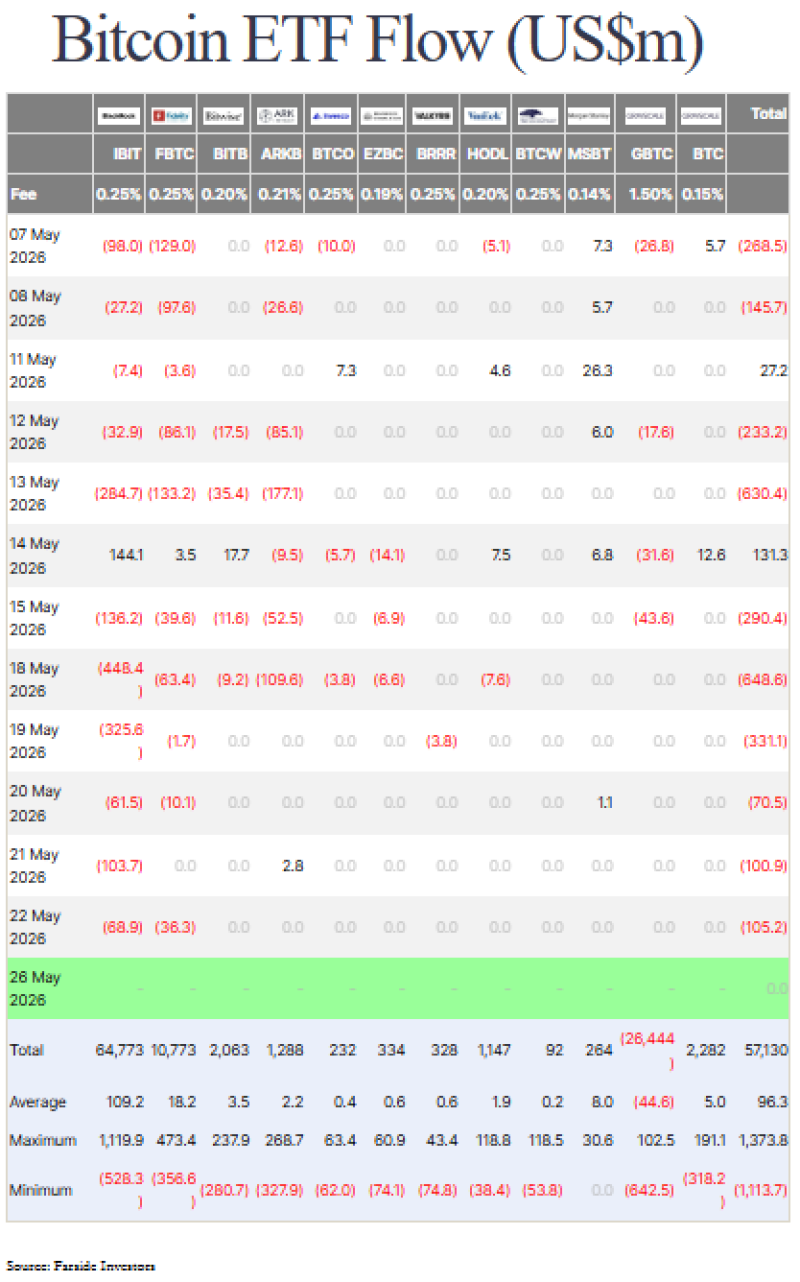
The broader ETF market is now worth more than $57 billion in assets, according to Farside Investors data. That scale gives exchanges and institutional investors a liquid base market for additional derivatives products, including the newly approved Bitcoin index options.
The move extends a trend that has gradually brought Bitcoin into traditional market infrastructure. After spot ETFs and options on Bitcoin ETFs, investors will now gain access to index-based options tied directly to Bitcoin benchmarks. While the U.S. expands crypto derivatives, South Korea is preparing to launch its first single-stock leveraged ETFs.

The products will initially target Samsung Electronics and SK Hynix. Analysts estimate that net inflows into 14 leveraged ETFs linked to the two companies could reach 5.3 trillion won ($3.5 billion).
New Products, Same Goal
| Market | Product | Key Figure |
| United States | Bitcoin Index Options | $57.1B in spot Bitcoin ETF assets |
| South Korea | Single-Stock Leveraged ETFs | Up to $3.5B expected inflows |
The Korean launch follows a broader global expansion of leveraged investment products. In the United States, trading volume in leveraged ETFs has been growing by roughly 29% annually since the category debuted in late 2022, outpacing growth in stock and options trading. For exchanges and issuers, both developments point to the same opportunity: building new products around assets that already attract liquidity and investor attention.
Bitcoin has evolved from a standalone cryptocurrency into a market supported by ETFs, options and now index-based derivatives. South Korea’s leveraged ETF launch applies a similar playbook to individual equities, allowing investors to take amplified exposure to the country’s largest technology companies through exchange-traded products.
Neither development introduces a new asset. Both expand the ways investors can trade existing ones.
 Victoria Bazir