Artem Voloskovets
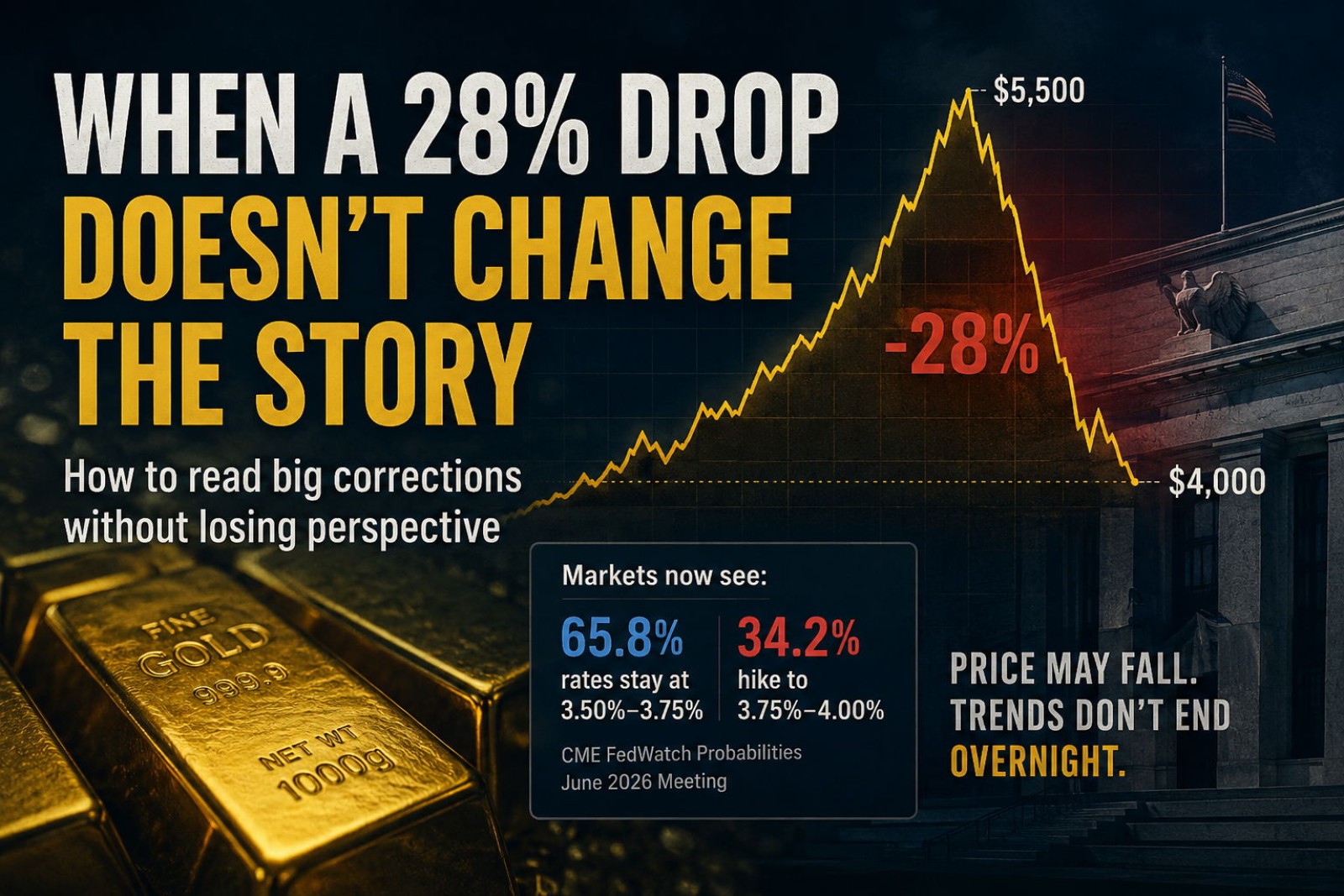
The size of the decline has revived fears that the rally is over. Yet the more important question is not how far gold has fallen, but what actually changed.
What Triggered the Selloff
The answer begins with interest rates. Markets have spent recent weeks adjusting to a more hawkish Federal Reserve. As rate expectations moved higher, the U.S. dollar strengthened and pressure on gold increased.
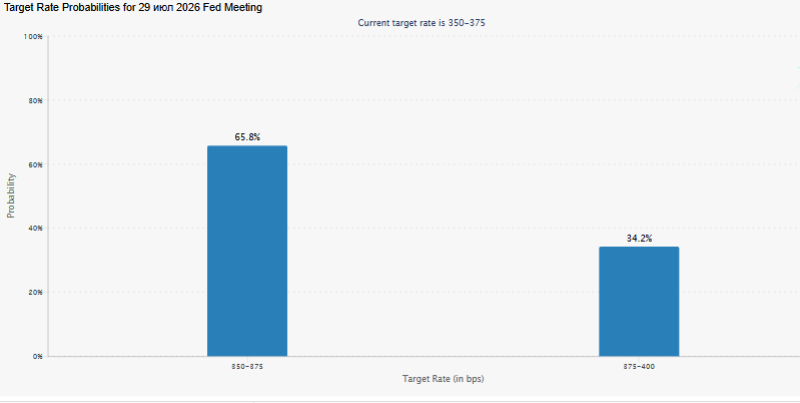
Current pricing implies:
- 65.8% probability that rates remain at 3.50%-3.75%
- 34.2% probability of a hike to 3.75%-4.00%
Gold is reacting to tighter monetary expectations, not necessarily to a collapse in its long-term fundamentals.
A Matter of Perspective
Thorsten Polleit, Honorary Professor of Economics at the University of Bayreuth, argues that gold's rise toward $5,500 pushed well beyond its long-term trend. From that perspective, the recent decline looks more like a reset than a breakdown.
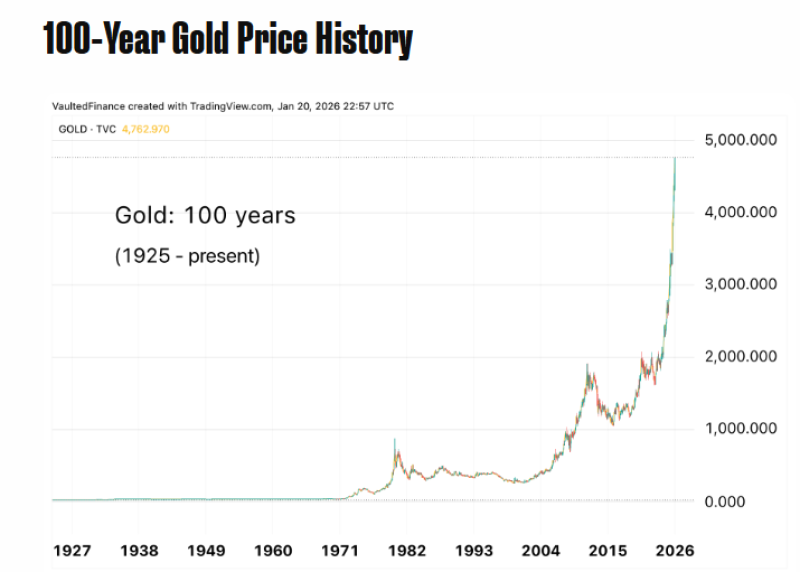
The century-long chart shows that sharp corrections have repeatedly occurred during much larger advances. What appears dramatic on a short-term chart often looks far less significant over a longer horizon.
What Hasn't Changed
Several forces that supported gold's rally remain in place:
- Rising government debt
- Persistent fiscal deficits
- Inflation concerns
- Long-term pressure on fiat currencies
These factors do not guarantee higher prices, but they suggest the broader backdrop has not fundamentally changed.
The Better Question
During any selloff, attention focuses on price. A more useful question is whether the underlying narrative has changed. Gold's correction may continue, and prices could test lower levels. But a falling price and a broken trend are not always the same thing. That distinction is often easier to see after the correction is over than while it is happening.
 Artem Voloskovets