Usman Salis

Oil markets had a rough week. The latest EIA figures showed U.S. commercial crude inventories surged by roughly 16 million barrels in the week ending February 20, catching many traders off guard and reinforcing near-term bearish sentiment around WTI Crude Oil, which already hit a five-month low amid broader market pressures. That kind of one-week jump hasn't been seen in three years.
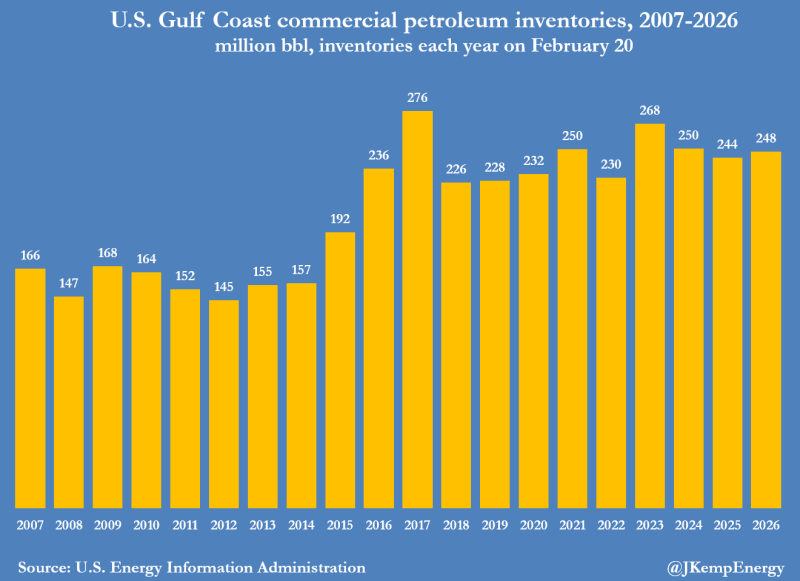
Gulf Coast Stocks Cross Above the 10-Year Seasonal Average
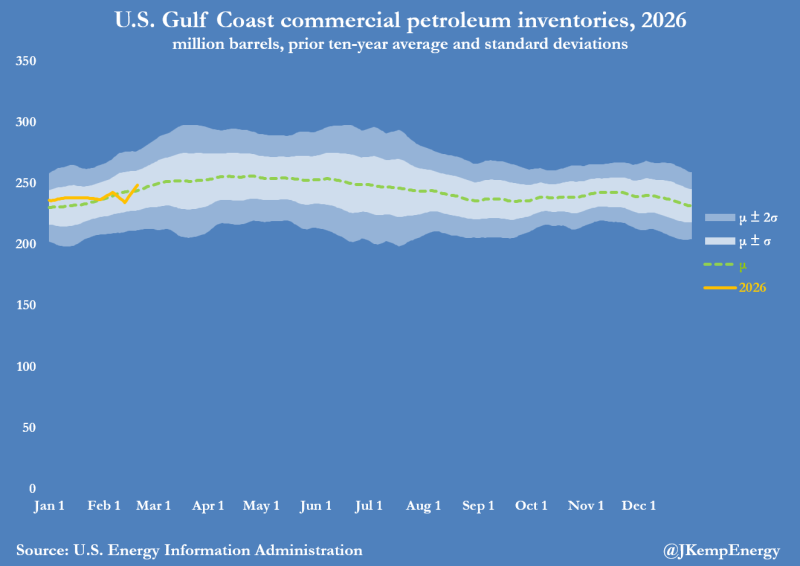
The bulk of the build landed in PADD 3 — the U.S. Gulf Coast region — where crude sitting at refineries and tank farms climbed sharply. By February 20, total Gulf Coast commercial petroleum inventories stood near 248 million barrels, nudging the region from a modest deficit versus historical norms into a slight surplus.
Changes in U.S. crude stock levels are key inputs into market pricing models and can help shape risk outlooks across the entire energy complex.
That's a meaningful reversal in a short window. Just the prior week, inventory levels were noted to be below the seasonal average, highlighting how quickly the supply picture can flip.
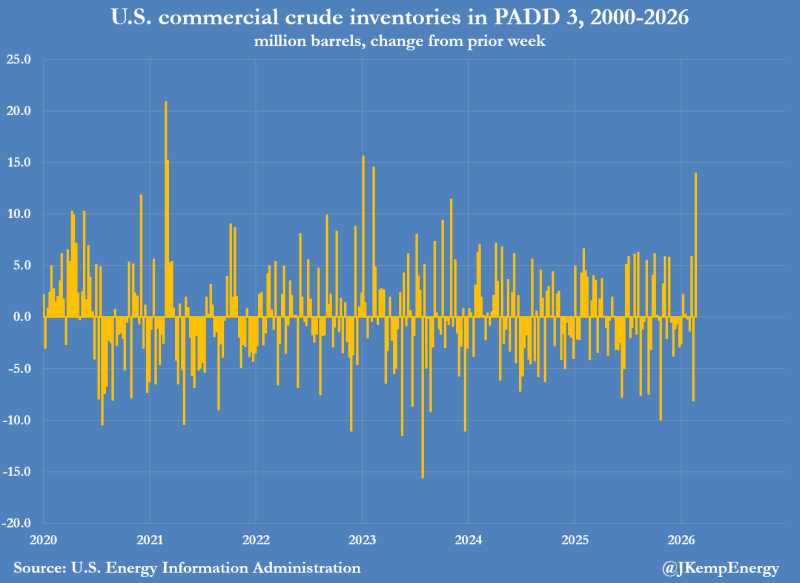
Why a 16M-Barrel Build Moves WTI Prices
Inventory data is one of the most closely watched signals in crude oil markets — and for good reason. A build this large signals that supply growth may be outrunning near-term demand, which puts downward pressure on prices. The dynamics at play here include a mix of refinery run rates, import flows, and domestic production trends. U.S. refineries have been processing more crude oil as supplies build, a trend that can temporarily amplify inventory swings before demand catches up.
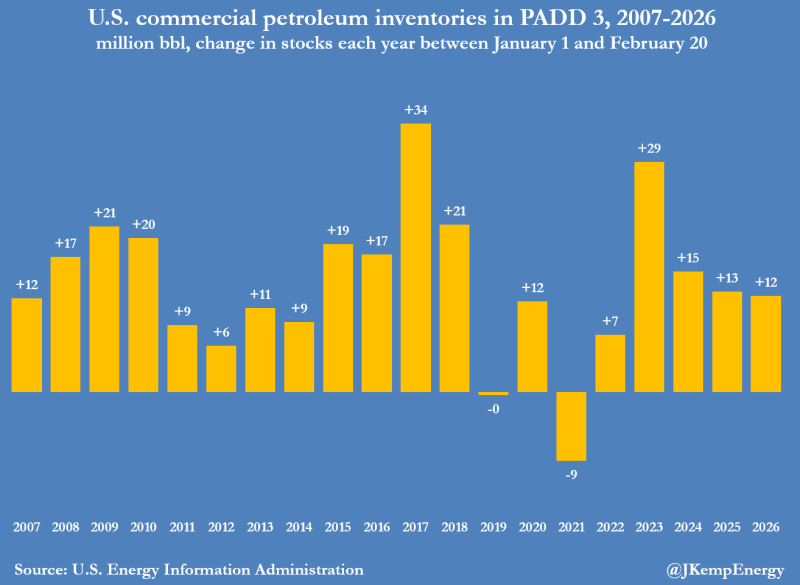
Looked at over the full January-to-February stretch, the 2026 inventory trajectory is still roughly in line with seasonal norms — but last week's 16 million-barrel spike stands out clearly against the typical week-to-week moves seen early in the year. A retrospective look at oil price history shows that sudden inventory surprises of this magnitude have historically coincided with short-term price dislocations, even when longer-term fundamentals remain intact. For now, the data adds another headwind for WTI as markets weigh supply builds against geopolitical factors and evolving demand signals.
 Usman Salis