Artem Voloskovets

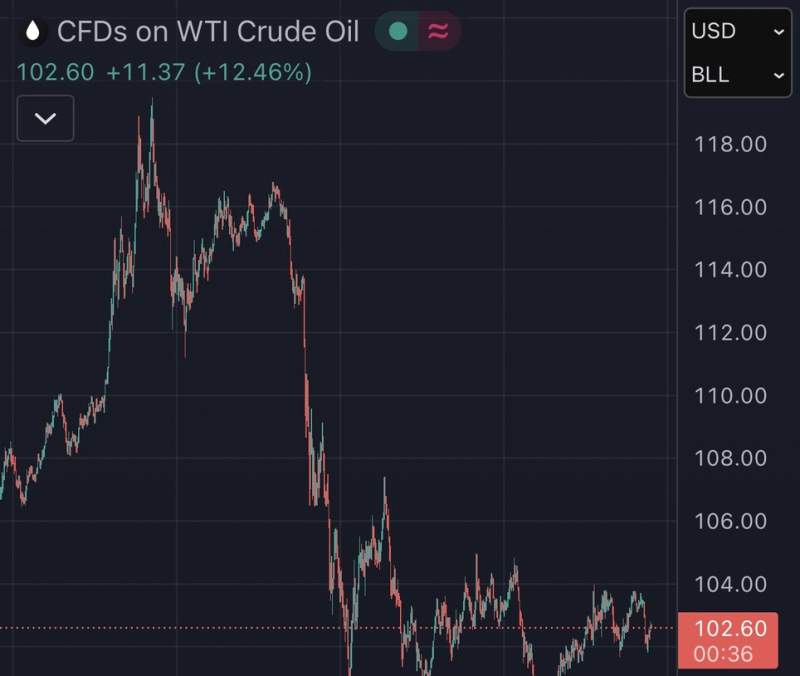
WTI crude oil saw a rapid selloff during a highly volatile session, with prices falling sharply from recent highs before stabilizing around$102 per barrel. The sudden wave of selling pressure swept across energy markets as traders scrambled to reprice risk in real time.
IEA Emergency Reserve Release Sparks Immediate Selloff
The trigger was a significant policy move: the International Energy Agency approved an emergency release of approximately400 million barrelsfrom strategic reserves. The announcement immediately shifted the perceived supply outlook, and market reactions were swift.WTI Oil Price Analysis: Crude Breaks $65.39, Eyes $68-$69 Levelhad already flagged growing sensitivity to supply shifts -- and this latest episode confirmed exactly that. Oil dropped more than 13% in roughly 40 minutes, a reminder of how quickly commodity futures can reprice when supply expectations change."Rapid supply adjustments often force traders to reprice futures contracts almost instantly."
Leverage and Margin Calls Amplified the Price Crash
The speed of the selloff was not just about supply math -- it exposed the heavy leverage embedded in energy markets. When prices swing sharply, leveraged positions can be forced to close automatically as margin requirements rise, amplifying the decline in a feedback loop.Brent Crude Holds Near $72 as Oil Benchmarks Approach Multi-Month Highsdocumented a similarly fragile equilibrium just weeks earlier. In one notable prior episode, WTI tumbled to$58.58as macro pressures mounted, showing how quickly sentiment can flip in the energy sector.Despite the dramatic drop, WTI crude has begun consolidating near the $102 region, suggesting a temporary stabilization after the initial shock. Energy markets remain highly sensitive to supply signals, geopolitical developments, and policy decisions -- any of which can trigger rapid repricing.Oil Price News: WTI Falls Below $60 With Deeper Risksexplored how macro conditions continue to weigh on crude benchmarks, and that risk remains present as the market digests this latest round of volatility.
 Artem Voloskovets