Usman Salis

Global crude markets are fracturing along geographic lines. While Brent and WTI continue trading in relatively familiar ranges, Asian-linked benchmarks have broken well above them, signaling a supply crisis that is hitting some regions far harder than others. The gap between Oman crude at $150+ and WTI near $95 is not a rounding error - it is the market pricing in a structural problem.
Oman Crude Tops $150 as Strait of Hormuz Squeezes Asian Supply
The divergence comes down to geography and dependency. Asia sources the bulk of its crude from the Middle East, making it acutely exposed to any disruption around the Strait of Hormuz, the chokepoint through which roughly 20% of global oil supply flows. When that corridor comes under pressure, Asian buyers face immediate shortage risk and bid prices up sharply. WTI Crude Oil Spikes to $110-$120 as Strait of Hormuz Closes showed exactly this dynamic in action, with geopolitical stress triggering rapid repricing across the region.
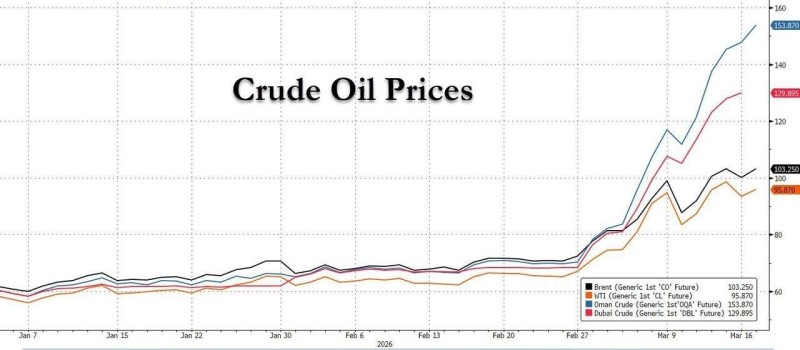
The United States faces a different reality. Domestic shale output provides a meaningful buffer against external shocks, and WTI pricing reflects that insulation. The spread between Asian and Western benchmarks is therefore not simply about global demand, but about who has access to alternative supply and who does not.
How Hormuz Risk Premiums Drive the $55 Gap Between Oman and WTI
The current pricing structure - with Oman crude running more than $55 above WTI - captures the full risk premium that Asia must pay for its geographic exposure. Dubai crude near $130 tells a similar story. These are not speculative spikes; they reflect real supply constraints hitting real buyers who have limited alternatives. WTI Oil in Focus as Strait of Hormuz Disruptions Intensify provides further context on how the Hormuz dynamic is reshaping refinery demand and trade flows across the region.
Risk premiums in oil can reverse quickly. As covered in WTI crude oil falls to $95 as Hormuz tensions ease, once supply fears recede, spreads can compress in a matter of days. For now, however, the market is sending a clear signal - Asia is in a supply crunch, and the price is reflecting that reality in full.
 Usman Salis