Saad Ullah

⬤ WTI crude oil pulled back sharply toward the $95 level after geopolitical pressure across the Middle East showed clear signs of easing. The catalyst was confirmation that Iranian oil tankers would be permitted to transit the Strait of Hormuz without interference, removing the immediate threat of a supply shock. As analyst Nehal noted, the shift in market sentiment quickly stripped out the risk premium that had kept prices elevated near recent highs.
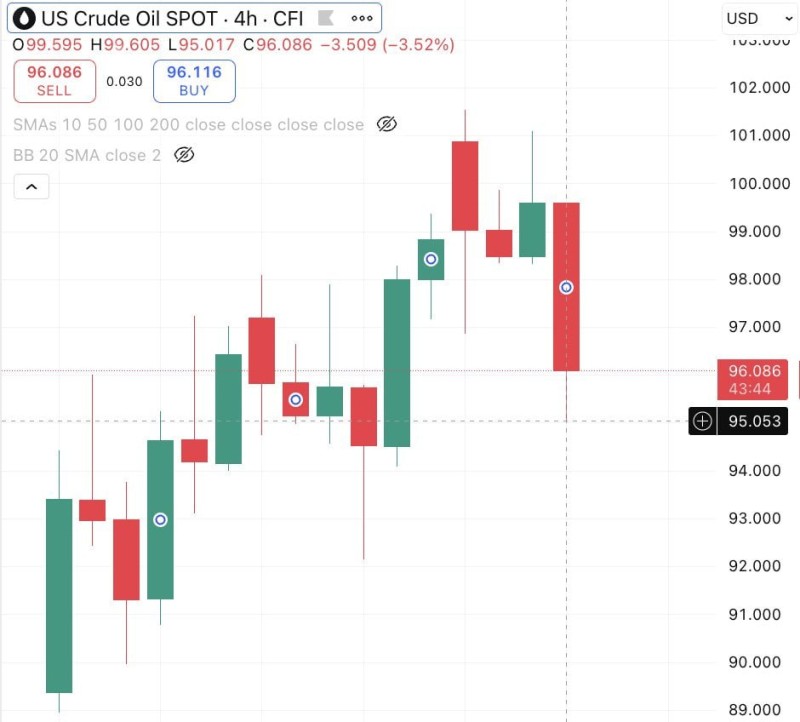
⬤ On the 4-hour chart, WTI was trading around $96.08, down more than 3.5% after printing highs near $99.60. A prominent bearish candle signals aggressive selling, with price breaking below the $98-$100 consolidation range. The rejection near the psychological $100 mark aligns with the broader oil narrative detailed in WTI Crude Oil Spikes to $110-$120 as Strait of Hormuz Closes, Brent Curve Signals Drop to $70, which had outlined the scale of potential upside if flows were disrupted.
⬤ In prior sessions, oil had rallied sharply on fears that the Strait of Hormuz, a critical chokepoint for global crude flows, could be shut down. That fear drove elevated volatility and heavy hedging activity, a setup thoroughly examined in WTI Oil Analysis: Options Skew Hits 4-Year High, Signals Upside Risk for Crude. Cross-commodity contagion was equally visible, as described in Oil and Commodities Surge 20% After Middle East Escalation: Brent and Gold Rally.
⬤ The latest reversal in WTI underscores just how reactive energy markets remain to geopolitical headlines, especially those tied to major transport chokepoints. With Hormuz fears fading, short-term price action is likely to stay headline-driven, while broader supply stability expectations continue to shape volatility across global oil benchmarks.
 Saad Ullah