Saad Ullah

Global oil markets are commanding major attention as the Strait of Hormuz takes over financial media. Bloomberg terminal mentions of "Hormuz" hit a record 62,010 stories this month, reflecting deep concern over disruptions to one of the world's most critical oil transit routes. The strait carries roughly 20% of global oil supply, making any threat to its operations a direct market-moving event.
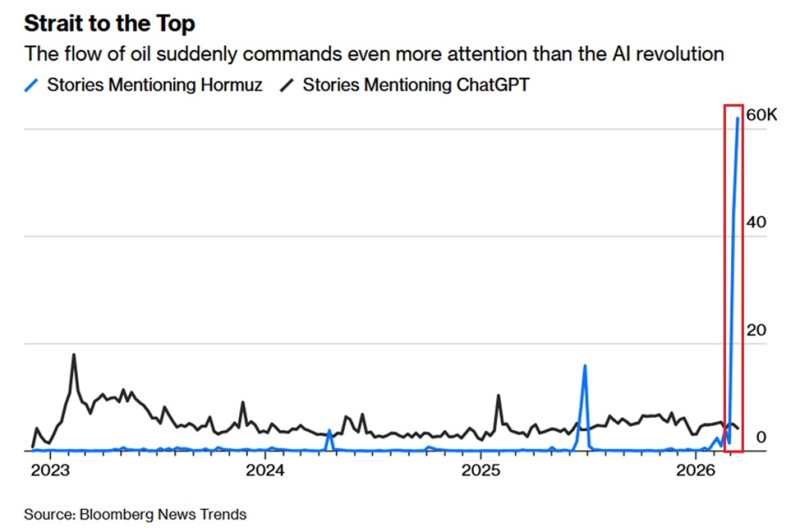
The spike represents a 4,084% increase since the end of February alone. By comparison, ChatGPT coverage at its February 2023 peak reached only 17,990 stories. Current Hormuz coverage now exceeds that figure by 1,359%, a gap that reflects just how sharply global oil supply disruption analysis has displaced tech narratives in market discourse.
Coverage of the Strait of Hormuz now exceeds mentions of ChatGPT by 1,359%.
The 2026 surge marks an unprecedented shift: energy supply risk has overtaken technology themes in global financial media. Shipping through the Strait remains heavily constrained amid the ongoing Iran conflict, amplifying fears about oil supply stability. Reviewing oil price history milestones shows how consistently geopolitical shocks reshape pricing dynamics during periods of regional tension.
With about one-fifth of global oil flows tied to this single chokepoint, disruptions carry outsized consequences for commodity markets. The current media dominance underscores how rapidly sentiment pivots when supply routes face real threats. For a deeper look at why energy markets are so reactive, energy market volatility trends remain essential reading for anyone tracking crude.
 Saad Ullah