Marina Lyubimova
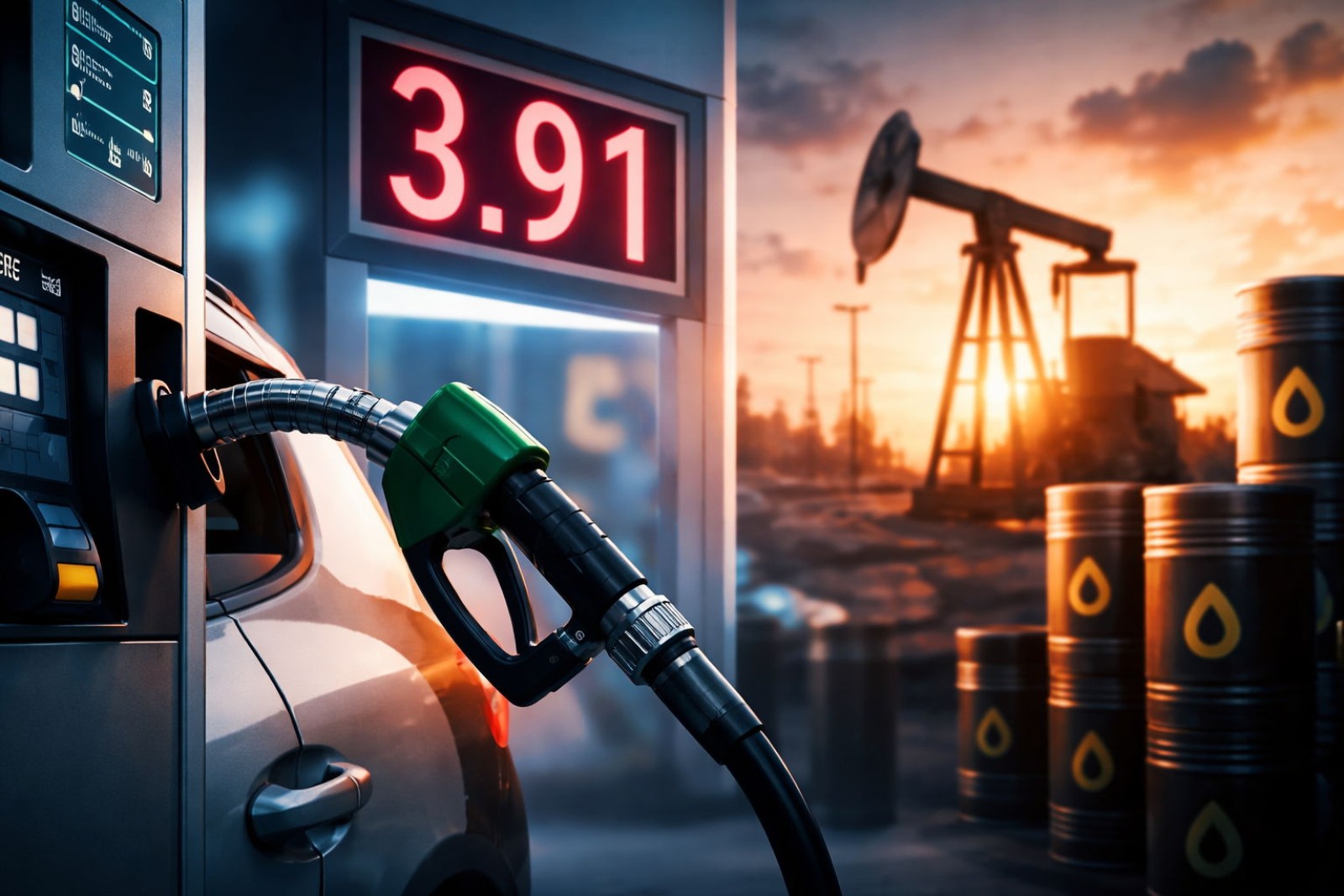
U.S. gasoline prices have hit $3.91 per gallon, snapping a long stretch of stability and catching energy markets off guard. The move follows more than a year of range-bound trading between $3.00 and $3.50, making the current breakout one of the sharpest short-term jumps in recent memory. The national average is now up $0.03 from the prior day and $0.79 higher than it was a year ago.
Nearly $1 Rise in 3 Weeks: The Fastest Spike Since 2022
According to data cited by Coin Bureau, prices have surged close to $1 within just three weeks, a pace not seen since 2022 when gasoline briefly topped $5 per gallon.
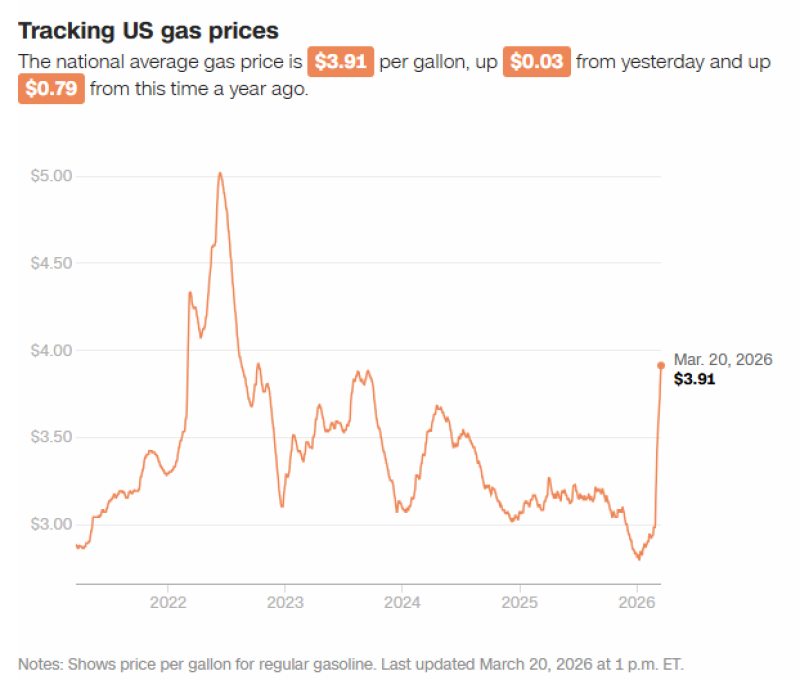
The March 2026 chart shows a steep acceleration following a dip below $3.00 earlier this year, with prices reversing sharply and trending higher with little sign of near-term relief.
Oil Above $100 Drives Pump Prices Higher
The trigger behind the retail surge is crude oil crossing the $100 mark, a key psychological level that historically amplifies consumer fuel costs. A similar dynamic played out in WTI Oil Hits $114: Geopolitical Risks Trigger Biggest Surge Since 2022, when supply disruptions pushed crude to multi-year highs, sending pump prices across the country sharply higher.
Prices have risen by nearly $1 in just three weeks, the fastest spike since 2022.
Rapid intraday swings in the oil market have also contributed to the unstable pricing environment, as detailed in WTI Oil Near $100 After Historic 30% Intraday Reversal. These violent swings make forward planning difficult for both consumers and businesses that rely on stable fuel costs.
The inflationary spillover from rising gas prices extends well beyond the pump. Transportation and production costs climb in tandem, amplifying broader price pressures across the economy. As explored in Gasoline Prices Hit Low-Income Budgets 3x Harder Than Wealthy Households, the burden falls disproportionately on households with less financial flexibility, raising concerns about consumer spending and economic stability heading into Q2 2026.
 Marina Lyubimova