
 Saad Ullah

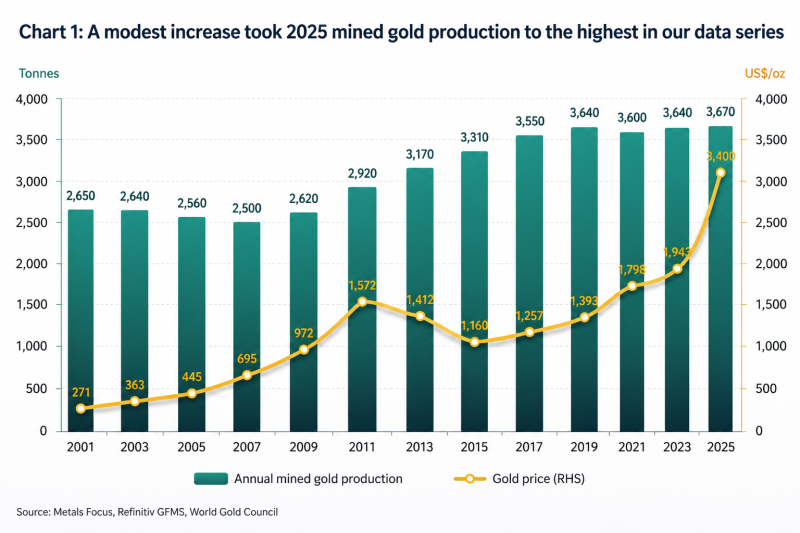
In 2025 the amount of gold that miners produced reached approximately 3 670 tonnes - this figure is the highest in recorded history - but the growth in production is small when a person compares it to how much the cost of the metal has increased.
By looking at the data, a trend in the gold market is visible. It shows that prices rose quickly in recent years but the mining of gold grew only at a slow pace. Since the start of the 2000s, annual output grew from about 2 600 tonnes to current levels. The rate at which production grows is much lower than it was ten years ago.
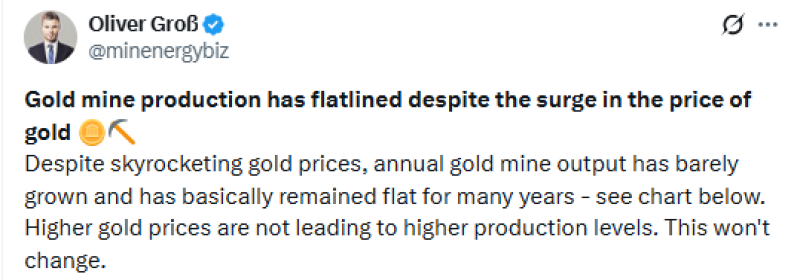
As market observers look at those facts, they describe this situation more often. As an example Oliver Groß stated:
The difference between price and supply exists because the mining industry faces physical and organizational limits. Gold supply is not able to change fast when prices go up. Due to multiple factors, this response is slow:
- the many years it takes to plan and build new mines
- the lower amount of gold found in each ton of rock at sites that are already open
- the use of all known metal in some areas and a lack of new large scale deposits
- the higher amounts of money needed for work and operations
Groß also stated that the problems will last for a long time. To explain the challenges for the industry, he pointed to the fact that ore contains less gold than before and that companies are not finding major new deposits.
At the same time the price of gold has gone up at a fast rate. On the timeline after 2020, this change is especially clear. It happens because people are unsure about the global economy, central banks want more gold and investors are putting more money into the metal.
And the result is an increasing distance between how supply grows and how prices move. If production is at record levels, the market is still limited. With those conditions, gold remains a resource that is available only in limited quantities.
 Saad Ullah



