Usman Salis

Gold prices increased during the previous year while the amount of money entering Exchange Traded Funds (ETFs) rose significantly - those price gains occurred although real yields were high and stock markets were stable. In the past investors typically showed less interest in gold under those specific financial circumstances.
By examining recent data, it is apparent that the market treats gold in a new way.
ETF inflows are accelerating with higher prices
As prices rise the movement of money into ETFs becomes faster. For a long period, gold ETFs mostly received money from investors who wanted to protect assets during short periods of crisis - those investors bought gold when prices were low and sold it when markets became stable again.
But this behavior is now different.
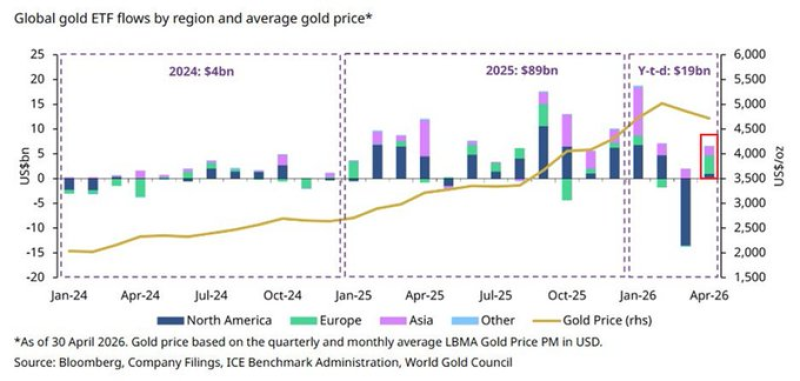
In 2024 the total money entering global gold ETFs was approximately $4 billion. In 2025 this amount grew to nearly $89 billion when the price of gold exceeded $3 000 for each ounce. To add to this investors put another $19 billion into gold ETFs during 2026. High prices now attract more money instead of making people buy less.
Regional demand is becoming fragmented
Due to the changes, demand in different geographic areas is no longer the same. The movement of money does not happen at the same time across the world. North America is still the market with the most ETF activity. In Asia, money enters ETFs more regularly. Europe has experienced times when more money left ETFs than entered them.
This difference is important because people buy gold for various reasons. In the United States, demand relates to the fact that the government spends more than it earns and the total debt of the nation is high. It also relates to worries about the long term value of the dollar. In Asia, the movement of money is more about the use of different currencies and the lack of certainty in international politics.
Gold is shifting from hedge to allocation
If we look at those trends, gold is moving from a temporary protection to a permanent part of a portfolio. The current period is not a typical reaction to fear but is a change in how individuals organize their assets.
Investors are using gold to gain exposure to specific factors:
- the growth of national debt
- the lack of stability in money systems
- the variety of assets held by central banks
- the separation of geopolitical regions
The chart is a sign of more than just the increase in gold prices. It is a sign that the level of trust in the world financial system is changing.
 Usman Salis