Victoria Bazir
ChatGPT functioned for individuals who use the software - codex assisted with the process of writing code. The API department provided services to developers from other companies and new businesses. Although those offerings used the same underlying models, they functioned as separate types of products.
But this arrangement is currently in a state of transition.
As reported by WIRED, Greg Brockman is starting to manage the plan for products across ChatGPT, Codex and the API platform within one single group. For the next phase, Thibault Sottiaux is responsible for the main products and the platform, while Nick Turley is moving to the department for large businesses.
On the surface this reorganization is a change in how the company builds its products rather than just a change in leadership.
In the view of OpenAI, it is likely that future artificial intelligence will not exist in separate categories like chat programs, coding tools or API services. To many this strategy is logical because AI products are beginning to act with more independence.
When models have the capacity to write code, operate tools, remember information and complete tasks with many steps, the division between consumer software and developer tools is no longer present. A chatbot functions as a layer for operations. Models for coding function as engines for work processes. APIs function as components of a system that performs tasks instead of being tools that developers use alone.
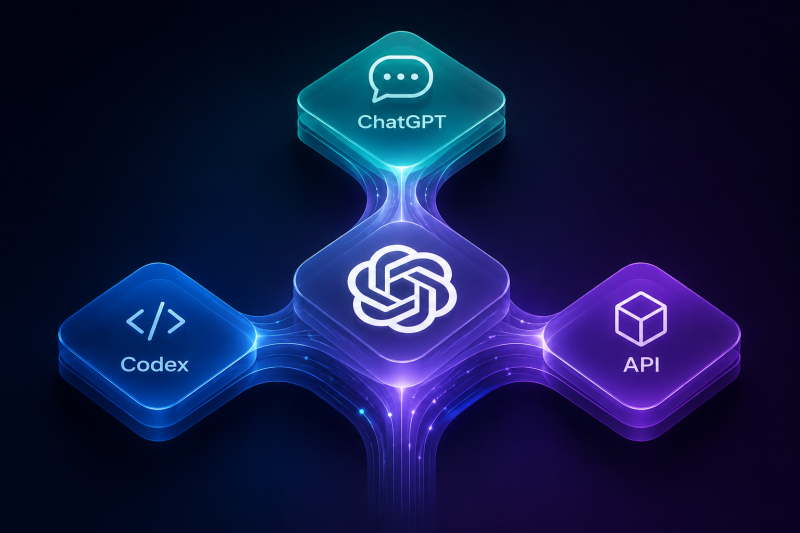
And the fact that Codex supports both consumer and business products is significant.
It appears that OpenAI does not think that software for code generation is only for a small group of developers. The ability to generate code is becoming a basic function within larger AI systems.
By looking at the rest of the industry, one can see that other companies are following this path.
For instance Google is placing Gemini into software for productivity. Microsoft is presenting Copilot as a layer for work tasks instead of a chat interface. Anthropic is moving Claude toward the completion of tasks that require a long context.
Due to the changes, the market is moving away from single prompts and toward AI systems that last over time and coordinate actions between different applications. With this new structure, OpenAI is responding to that change.
The company is combining consumer AI, tools for developers, automation for businesses and the framework for autonomous agents into one ecosystem of products. In the beginning people defined generative AI by its interfaces.
To many observers, the next stage of development is defined by AI operating systems.
 Victoria Bazir