Sergey Diakov
- A Kid from Liverpool Who Never Took a Regular Job
- The Beatles Era: 600 Million Records and a Financial Education
- Wings, Catalog Deals, and the $200 Million Tour That Proved His Point
- Paul McCartney Net Worth Reaches $1.2 Billion: The Billion-Dollar Moment
- Paul McCartney's 6 Rules for Getting to the Top
Not many people who grew up in Liverpool's public housing in the 1940s end up with a billion dollars in the bank. Paul McCartney did. And the remarkable thing is that it wasn't luck. It was decades of smart decisions, relentless creativity, and a genuine understanding that the music you write can keep paying you long after the applause fades. This is how he got there.
A Kid from Liverpool Who Never Took a Regular Job
Paul McCartney was born on June 18, 1942, in Liverpool, England. His dad Jim was a cotton salesman who played trumpet in a jazz band on weekends, and his mum Mary was a midwife who sometimes cycled to patients in the middle of the night through the snow. They weren't poor, but they weren't comfortable either. It was a typical working-class household in post-war England, where a piano in the living room counted as something special.
Paul never had a "first job" in the way most people understand it. He didn't stack shelves or deliver papers. He taught himself guitar by ear as a teenager, swapping the trumpet his dad bought him for his 14th birthday because rock and roll had taken over his brain completely. By 1956 he was already looking to play in a band. Then on July 6, 1957, he wandered into a church fete in Woolton and met a 16-year-old named John Lennon, who was playing with his skiffle group the Quarrymen. Lennon liked what he heard and invited Paul to join. That afternoon in a Liverpool churchyard turned out to be one of the most consequential moments in music history.
Those early Quarrymen gigs paid almost nothing. Sometimes it was enough for a pint and a bag of chips. But Paul and John had started doing something unusual for young musicians of the era: instead of just learning other people's songs, they were writing their own. Sitting in Paul's front room on Forthlin Road, they knocked out tune after tune. That habit, formed in a terraced house in a working-class neighbourhood, became the foundation of a paul mccartney net worth story that would one day hit ten figures.
The Beatles Era: 600 Million Records and a Financial Education
The Quarrymen eventually became The Beatles. By 1962 they were packing out the Cavern Club in Liverpool's city centre, manager Brian Epstein had cleaned up their image, and producer George Martin had signed them to EMI. What followed was one of the most extraordinary decades in entertainment history. The band put out 12 studio albums, 13 EPs, and 22 singles. Every single release went Gold. They sold over 600 million records combined, a figure that has never been matched.
But here's the thing people don't always appreciate about those Beatles years: McCartney wasn't getting rich the way you might imagine. The income got split four ways, then whittled down further by management commissions, record label cuts, and the fairly brutal standard contracts of the early 1960s music business. The songs he and Lennon wrote together, including "Yesterday," which has since been covered by over 2,200 artists and remains the most recorded song in history, were licensed through a company called Northern Songs under terms that left the actual writers with a fraction of what they deserved. McCartney wouldn't fully appreciate the cost of that arrangement until years later, when Michael Jackson famously outbid him for the Beatles publishing catalog in 1985.
"I was in Scotland playing on my guitar, and I remembered this whole idea of 'you were only waiting for this moment to arise' was about the Black people's struggle in the southern states. I was using the symbolism of a blackbird."Paul McCartney, 2002 KCRW Interview
Still, by the time the Beatles broke up in 1970, McCartney's share of what the band had built was worth an estimated $400 million in today's money. Not a bad starting point. But he was just getting warmed up.
Wings, Catalog Deals, and the $200 Million Tour That Proved His Point
After the split, McCartney didn't slow down. He launched his solo career and formed Wings with his first wife Linda in the early 1970s. Critics at the time weren't always kind, but the public was. "Band on the Run," released in 1973, became a global hit and generated royalties that McCartney kept entirely to himself, no more four-way splits. "Live and Let Die," "Silly Love Songs," "Jet" - the hits kept coming, and Paul kept cashing checks that went to nobody but him.
Then in 1976, he made the move that would define his financial legacy more than any album or tour. He bought the Buddy Holly music catalog for around $40 million. Most people at the time thought it was an odd thing for a rock musician to do. In hindsight, it might be the shrewdest investment in the history of the music business. That catalog alone now generates more annually than the original purchase price. Through his company MPL Communications, McCartney quietly built one of the most valuable music publishing portfolios anywhere in the world, snapping up rights to thousands of songs from artists including Carl Perkins and many others, at prices that made sense before streaming turned old recordings into permanent income streams.
In 1989, McCartney went back on the road for the first time since the Beatles, and the world went slightly mad. His first major solo world tour grossed over $200 million and included a concert in Rio de Janeiro with more than 184,000 paying fans in attendance, a world record at the time. His 2002 Driving World Tour brought in around $126 million, still his highest-grossing solo run. In any year he tours, McCartney typically earns between $50 and $70 million just from live performances, with individual shows grossing up to $4 million per city.
Paul McCartney Net Worth Reaches $1.2 Billion: The Billion-Dollar Moment
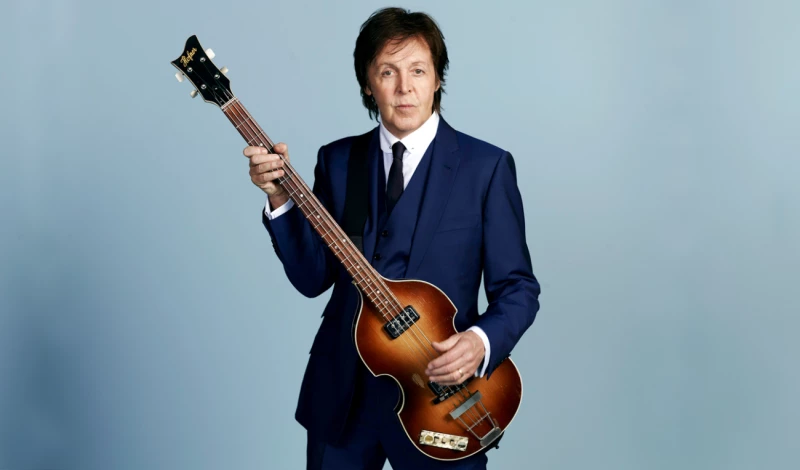
In May 2024, the Sunday Times Rich List confirmed what many had suspected for years: paul mccartney net worth had crossed £1 billion for the first time, making him the first British musician ever to reach billionaire status. He was 81 years old. The fortune had climbed steadily from around £750 million in 2018, and the timing of the 2024 milestone had a few unexpected contributors. His Got Back world tour, which wrapped up in late 2024, added significantly to the pile. The release of "Now and Then" in November 2023, billed as the final Beatles song, created a fresh wave of public interest in everything McCartney-related. And then there was Beyonce.
When Beyonce reimagined McCartney's 1968 song "Blackbird" on her Grammy-winning album Cowboy Carter, the track debuted at number 27 on the Billboard Hot 100 and racked up 14 million streams in its first week. A song written more than half a century ago, suddenly alive again for an entirely new generation. By 2025, the Sunday Times Rich List put his fortune at £1.025 billion.
Today, McCartney earns over $50 million a year from music alone in non-touring years, a number that can reach $100 to $120 million when he's on the road. MPL Communications, his real estate holdings across multiple countries, his art collection, and his ongoing Beatles royalties all feed into that total. For the songs he co-wrote with Lennon, he receives around 20% of the royalties, which still amounts to tens of millions annually given how relentlessly Beatles music shows up in films, ads, and streaming playlists worldwide. He has 18 Grammy Awards, 32 number-one hits on the Billboard Hot 100, and has been inducted into the Rock and Roll Hall of Fame twice: with The Beatles in 1988 and as a solo artist in 1999.
Paul McCartney's 6 Rules for Getting to the Top
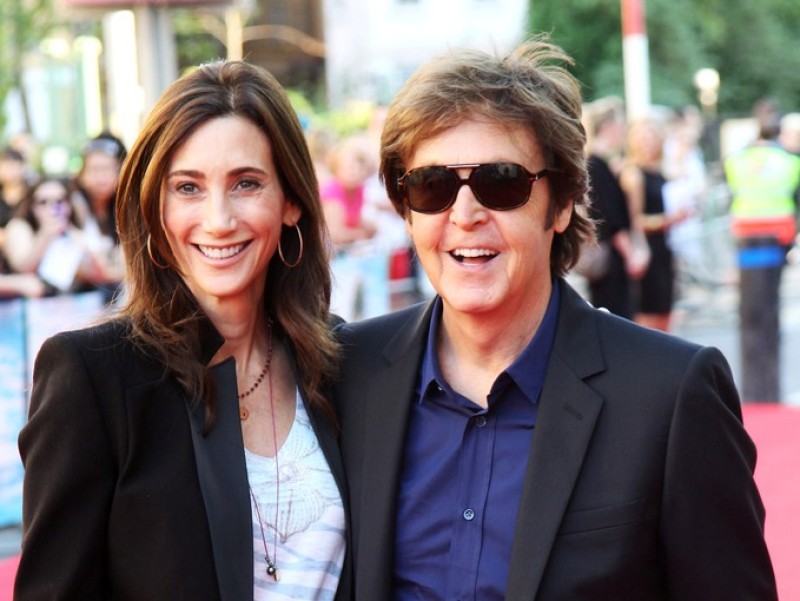
Six decades in, the shape of McCartney's career reveals some consistent patterns. These aren't slogans he puts on motivational posters. They're just things he's actually done, over and over, across a very long career.
- Get good before you think about getting paid.McCartney spent years playing for almost no money in Liverpool pubs and social clubs. He was obsessively focused on the music itself, and the money came later as a byproduct of being genuinely excellent at something.
- Own what you make.Losing the Beatles catalog to Michael Jackson was painful and galvanizing. It pushed McCartney to build MPL Communications and acquire other catalogs on his own terms. He turned a bitter lesson into one of the smartest long-term business moves in music history.
- Work with people who make you better.The Lennon-McCartney partnership remains the most commercially successful songwriting collaboration ever. Throughout his career, McCartney has consistently sought out collaborators who challenge him, from John Lennon and George Martin to Radiohead producer Nigel Godrich and classical composer Carl Davis.
- Never stop making things.At 76, McCartney released Egypt Station, which debuted at number one on the Billboard 200, his first solo album to do so. At 82, he wrapped up a global concert tour. The man simply doesn't treat creativity as something that has an expiry date.
- Think like an owner, not just a performer.The Buddy Holly catalog. The real estate portfolio. MPL Communications. McCartney understood early that real, lasting wealth comes from owning assets, not just showing up and performing. Income stops when you stop; assets keep working on their own.
- Remember where you came from.McCartney founded the Liverpool Institute for Performing Arts in 1995, built inside the same school building he attended as a boy. That kind of authenticity is not a PR strategy. It's what keeps an audience loyal across 60 years and multiple generations of fans.
Paul McCartney net worth at $1.2 billion isn't just a number. It's the end result of starting with nothing in Liverpool, learning to write songs that people couldn't get out of their heads, and then spending six decades making smarter decisions than almost anyone else in the music business. From church fetes and pub gigs to selling out stadiums at 82 and watching Beyonce push his half-century-old songs back into the charts, it's a story that's genuinely hard to top.
 Sergey Diakov