Alex Dudov
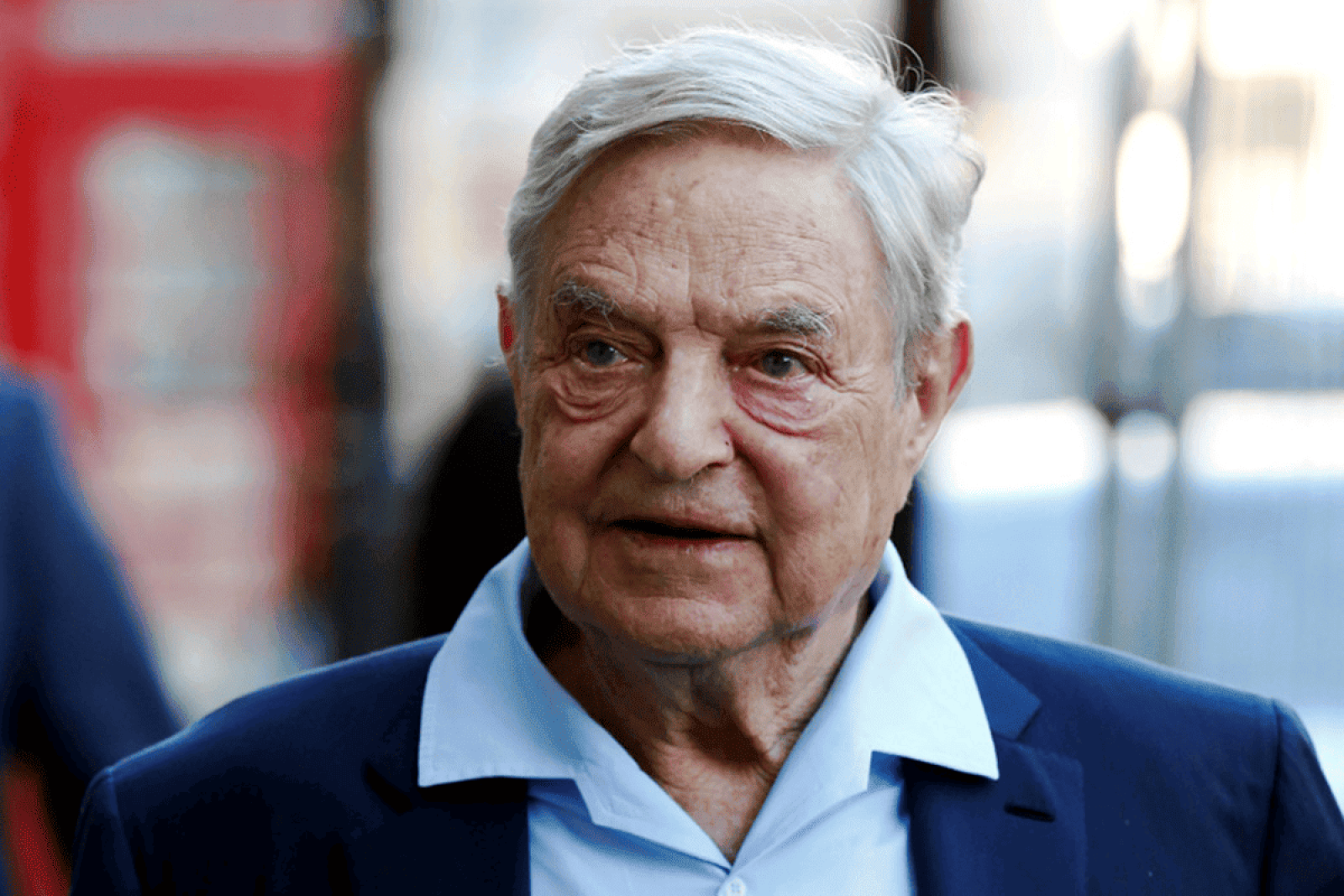
George Soros didn't grow up with money. He grew up with survival. Born as György Schwartz on August 12, 1930, in Budapest, Hungary, he lived through one of the darkest chapters in European history. His Jewish family survived Nazi occupation by obtaining false identity papers and hiding their identities at considerable personal risk. That early experience — reading danger correctly and acting decisively — would shape everything that came after. In 1947, he moved to London, enrolled at the London School of Economics, and began quietly figuring out how the world actually worked.
George Soros First Job and Early Career in Finance
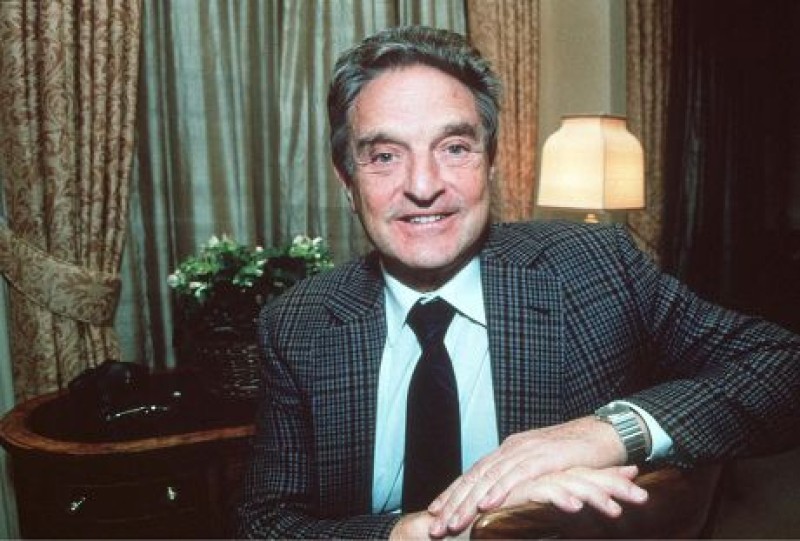
In 1954, Soros landed his first financial role at Singer & Friedlander, a merchant bank in London. He started as a clerk, eventually moving into the arbitrage department — a back-office function that most people at the time considered unglamorous. But it gave him something more valuable than a title: a direct view of how price differences between markets could be quietly exploited.
A colleague pointed him toward an opportunity in New York, and in 1956 Soros moved to the United States to work as an arbitrage trader at F. M. Mayer, where he specialized in European stocks that were gaining traction with American institutional investors. Three years later he moved to Wertheim & Co., where he spent several years as a securities analyst.
His goal at the time was surprisingly modest. He wanted to save $500,000 — enough to return to England and study philosophy under Karl Popper, whose ideas about open societies had left a deep impression on him at university. He never made it back to philosophy school. The markets had other plans.
How Soros Built the Quantum Fund and Earned His Reputation
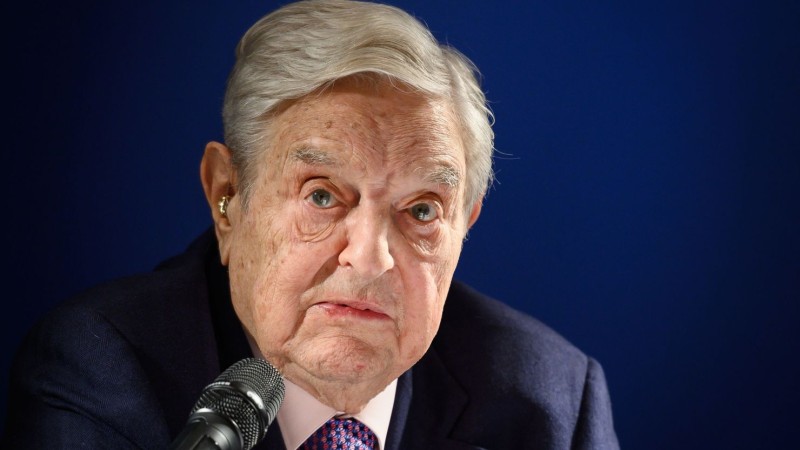
In 1970, Soros co-founded Soros Fund Management, which later evolved into the Quantum Fund — a vehicle that would become one of the most profitable investment operations in financial history. The fund was built around a concept Soros called reflexivity: the idea that markets don't simply reflect reality, they actively shape it, because participants' beliefs and actions feed back into the very conditions they're trying to assess.
That framework gave him an edge that purely data-driven traders didn't have. Over several decades, the Quantum Fund averaged annual returns of roughly 20 to 30 percent — a sustained performance that put it in a category largely by itself.
The defining moment came in September 1992. Soros had been watching the British pound for months, convinced that its position within the European Exchange Rate Mechanism was politically unsustainable. He built a short position worth $10 billion against the currency. When the UK government finally capitulated and withdrew the pound from the mechanism on what became known as Black Wednesday, Soros walked away with approximately $1 billion in profit — in a single day. The trade earned him a nickname that stuck: "The Man Who Broke the Bank of England."
George Soros Net Worth in 2025: The Real Number Is Much Larger
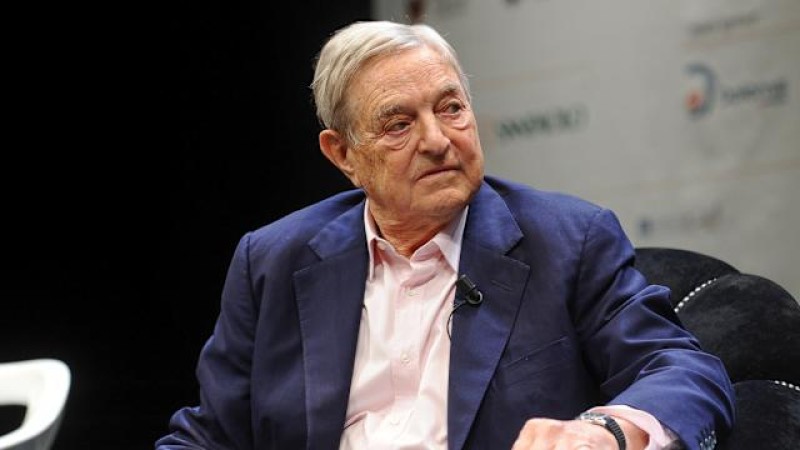
Forbes currently lists George Soros net worth at approximately $7.2 billion as of early 2025. That figure is accurate in the narrow sense — it reflects his remaining personal assets — but it leaves out most of the story.
Over his lifetime, Soros generated a total fortune estimated at more than $40 billion. He donated $32 billion of it to the Open Society Foundations, including a single transfer of $18 billion in 2017. Forbes, acknowledging the scale of this, named him the most generous giver in terms of percentage of net worth. What's listed today is what he kept, not what he built.
His family office, Soros Fund Management, currently manages approximately $25 billion in assets, covering both personal investments and the endowments of his philanthropic foundations. Annual income flows primarily from returns on those assets. In 2023, Soros handed operational control of the Open Society Foundations to his son Alexander. In January 2025, President Biden awarded him the Presidential Medal of Freedom.
The $32 Billion He Gave Away: Open Society Foundations
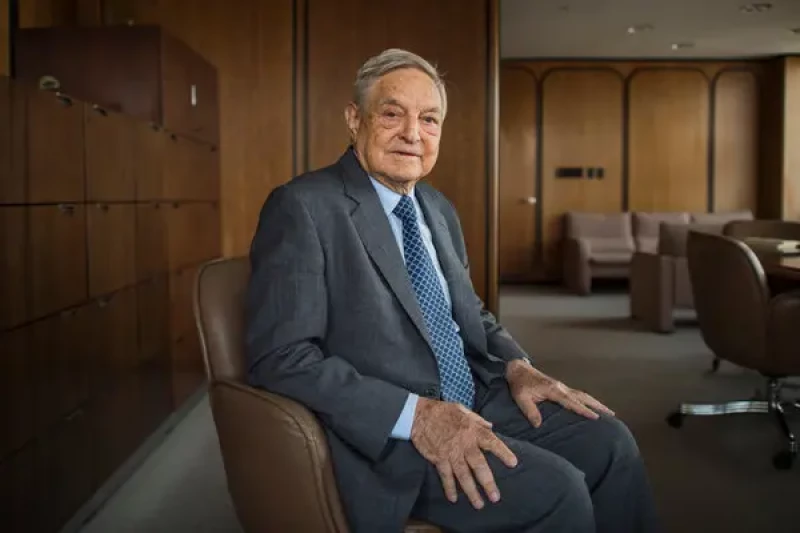
What separates Soros from most billionaires isn't the size of his fortune — it's the deliberate pace at which he gave it away while still alive and still directing where it went. In 1979, he launched the Open Society Foundations, which grew into a global network operating in more than 100 countries.
His early donations included scholarships for Black students in apartheid South Africa and funding for civil society organizations in communist Hungary. After the fall of the Berlin Wall, he helped establish the Central European University in Budapest. The scope expanded from there.
The foundations focused on a consistent set of priorities:
- Democracy and governance accountability
- Freedom of expression and access to information
- Education and university scholarships worldwide
- Public health and justice initiatives
- Support for communities facing discrimination and marginalization
By any measure, Soros directed more than 80% of his lifetime earnings into these causes — a proportion that has few parallels among individuals of comparable wealth.
Key Principles: How Soros Thinks About Wealth and Success
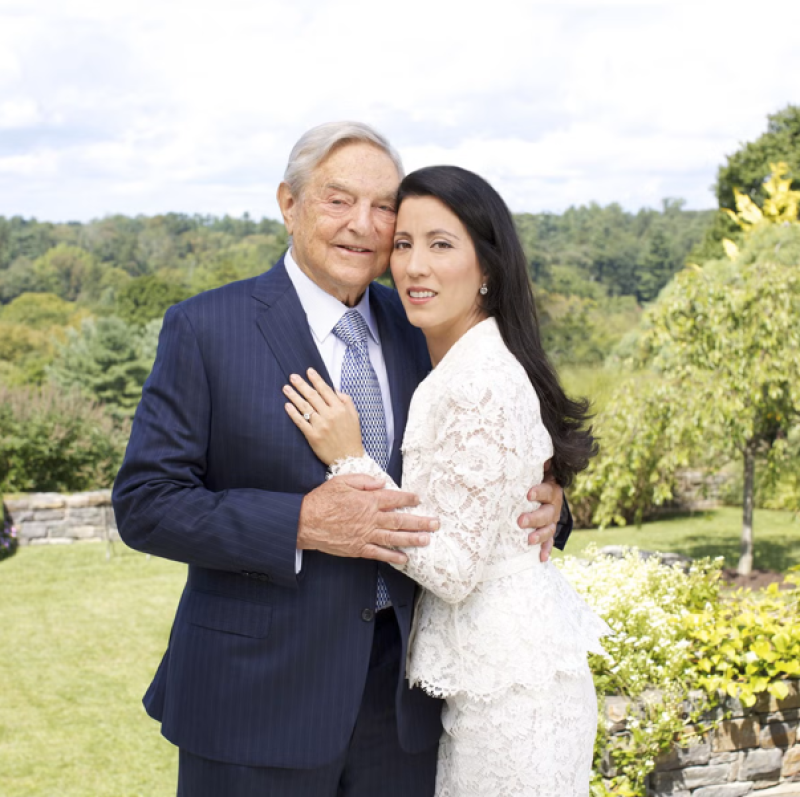
Soros never wrote a conventional self-help book, but his philosophy on money and success runs through decades of interviews, writings, and trades. A few things stand out consistently.
He built his entire investment framework on the assumption that he — and everyone else — operates with incomplete and biased information. The advantage doesn't come from being right more often. It comes from correcting mistakes faster than the market does. That idea sounds simple. Very few people actually apply it.
He thought in systems rather than individual assets. The British pound trade wasn't really a currency bet — it was a political and institutional analysis that happened to express itself through a currency position. He was always trading the bigger picture.
His theory of reflexivity runs against the efficient market hypothesis that dominated academic finance for decades. Soros believed that markets are inherently unstable because participants don't just respond to prices — they influence them. That insight, developed under Karl Popper's influence at LSE, shaped everything he did in the markets.
Finally, he treated independence as the actual reward of financial success — not luxury or status. The fortune gave him the freedom to act on his convictions at scale, and he used that freedom to fund revolutions, challenge governments, and attempt to reshape what open societies actually look like in practice.
The man who once set his sights on saving $500,000 and retiring to philosophy ended up generating $40 billion, giving away $32 billion of it, and spending the rest of his life acting on ideas most people only read about.
 Alex Dudov