Usman Salis
According to market data and previously disclosed investment details, the U.S. government invested approximately $8.9 billion into Intel on August 22, 2025, acquiring 433.3 million shares at an average price of $20.47 per share.
Intel stock closed Friday at $124.91, valuing the government’s position at approximately $54.13 billion.
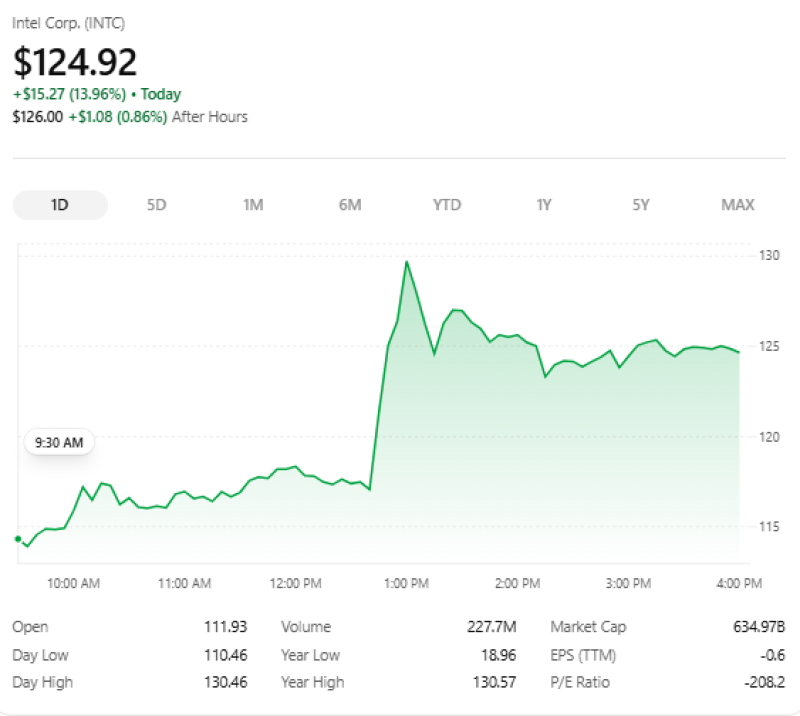
The chart above highlights Intel’s explosive rally following the government-backed investment, with shares climbing more than 500% from the original entry price.
At the time of the deal, Intel was still struggling with slowing growth, manufacturing delays, and increasing pressure from rivals in the AI chip race. However, Washington viewed the semiconductor giant as strategically critical to the future of domestic chip production and U.S. technological independence.
The investment quickly became one of the largest and most closely watched government-backed semiconductor bets in recent history.
Over the following months, sentiment around Intel changed dramatically. Growing demand for AI infrastructure, expanding domestic fabrication capacity, and renewed confidence in U.S.-based semiconductor manufacturing pushed investors back into the stock.
Intel’s recovery also coincided with a broader AI-driven rally across the semiconductor sector, where capital aggressively rotated into companies tied to data centers, AI compute, and advanced manufacturing.
The numbers behind the move are staggering. Intel shares have risen from $20.47 to nearly $125, transforming the original $8.9 billion investment into a stake worth more than $54 billion at current prices.
That leaves the U.S. government with an unrealized gain of roughly $45 billion in less than a year. For markets, the rally has become a major trend-based story of 2026, illustrating how quickly sentiment can reverse in the AI era. A company that many investors once considered a declining legacy chipmaker is now being re-evaluated as a core beneficiary of the global semiconductor and artificial intelligence boom.
The surge is also fueling broader discussions about industrial policy, national semiconductor strategies, and the growing role governments may play in supporting critical technology infrastructure in the years ahead.
 Usman Salis