Marina Lyubimova

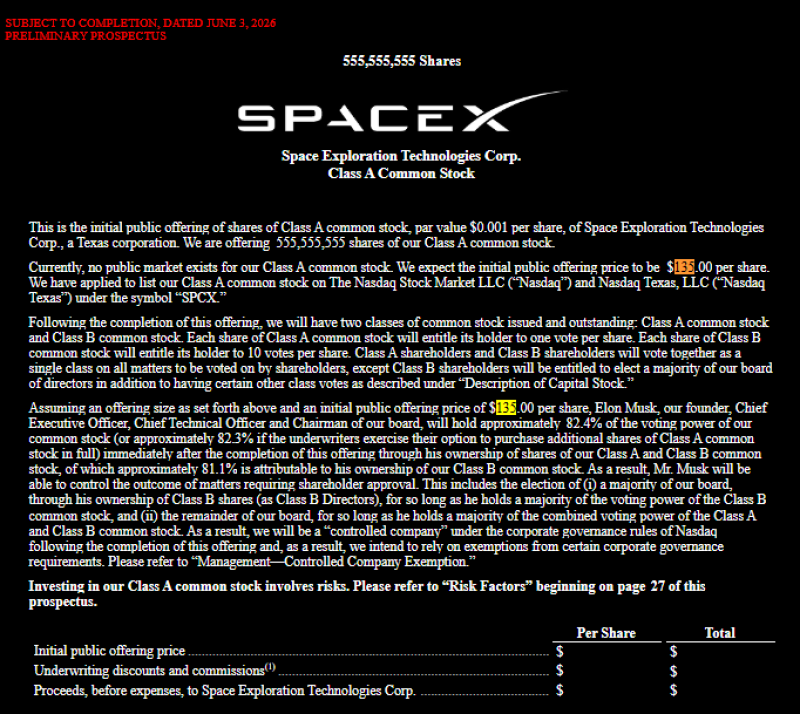
The headline figure is difficult to ignore. At an expected IPO price of $135 per share, SpaceX is targeting a valuation of roughly $1.75 trillion. Yet the prospectus suggests that valuation is only part of the story.
Buried beneath the IPO headlines is a company spending at a scale more commonly associated with national infrastructure projects than aerospace manufacturers.
SpaceX Is Spending Like Infrastructure, Not Aerospace
The largest figure in the filing is not revenue, profit, or valuation. It is capital expenditure.
During the first quarter of 2026, SpaceX invested $10.1 billion into its business. Approximately $7.72 billion of that total was directed toward AI-related infrastructure and initiatives.
The spending profile resembles large-scale infrastructure builders more than aerospace manufacturers. The filing points to a business expanding simultaneously across satellite communications, artificial intelligence, launch systems, and supporting digital infrastructure.
- Total Capex: $10.1B
- AI-Related Capex: $7.72B
- Other Capex: $2.38B
The scale becomes more striking when compared with the company's financial results. SpaceX generated $18.7 billion in revenue during 2025 but reported a net loss of $4.9 billion. In the first quarter of 2026, revenue reached $4.7 billion while net losses widened to $4.3 billion. The company is clearly optimizing for expansion rather than profitability.
Starlink Has Quietly Become the Business
Launches built the brand. Starlink now generates most of the revenue. According to the prospectus, Starlink accounted for nearly 70% of company revenue in 2025, making it the economic engine behind the broader SpaceX ecosystem.
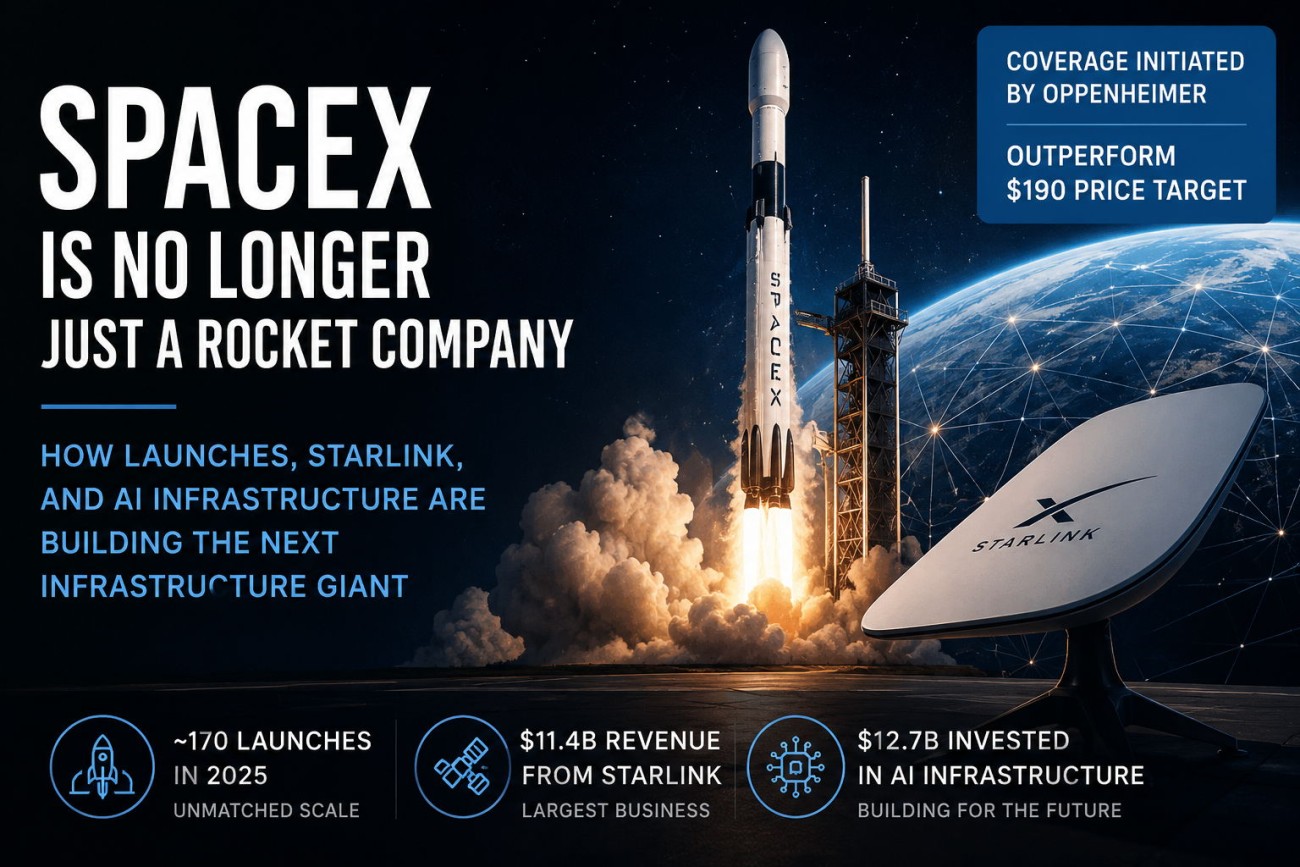
The network serves approximately 10.3 million subscribers across 164 countries and operates more than 9,600 satellites in orbit.
Data:
- Starlink: 70%
- Other Segments: 30%
The distinction matters because it changes how the company can be understood.
The public narrative around SpaceX has long centered on reusable rockets, Mars ambitions, and launch milestones. Financially, however, the company increasingly resembles a global communications platform with aerospace capabilities attached to it.
As Starlink grows, comparisons with traditional aerospace contractors become less useful. Telecommunications, connectivity, and digital infrastructure may become more relevant benchmarks.
Cash Is Moving Out Faster Than Revenue Is Growing
Another figure stands out in the filing. At the end of 2025, SpaceX held $24.75 billion in cash. By the end of the first quarter of 2026, that figure had declined to $15.85 billion.
- End 2025: $24.75B
- Q1 2026: $15.85B
A decline of nearly $9 billion in a single quarter illustrates the financial demands of the company's current strategy.
The reduction reflects the cost of expansion rather than operational stress, but it highlights the amount of capital required to build and maintain SpaceX's ecosystem. The company also reported total debt of $29.1 billion through the first quarter.
Viewed together, the figures describe an organization deploying capital aggressively across multiple long-term initiatives at the same time.
A Different Company Than Many Expected
The prospectus offers the first audited public look at one of the world's most closely watched private companies.
What emerges is not simply a rocket company preparing for a stock market debut. The filing describes a business generating nearly $19 billion in annual revenue, supported primarily by a global satellite communications network, investing more than $10 billion in a single quarter, and maintaining one of the most ambitious expansion programs in the technology sector.
Elon Musk will retain approximately 85.1% of voting control following the IPO, preserving the governance structure that has shaped the company since its founding. At the same time, public investors will gain visibility into a business that until now operated largely behind closed doors.
The 2% decline following the filing is unlikely to be remembered. What may matter more is what the prospectus revealed: a company generating nearly $19 billion in annual revenue, spending at a pace rarely seen outside the largest technology firms, and relying increasingly on a satellite network rather than rockets for growth. The IPO offers the first public look at how SpaceX intends to finance its next phase—and that story is considerably larger than a single trading session.
 Marina Lyubimova